

Summary
- It said uncertainty is intensifying over the direction of the Fed’s rate policy as employment indicators send mixed signals.
- It noted that with inflation still above the Fed’s target and 175bp of rate cuts already delivered, questions are being raised about the justification for further cuts.
- It said Wall Street expects the Fed to remain in a wait-and-see mode for now, and that the rate-futures market is not fully pricing in the possibility of additional rate cuts through June.
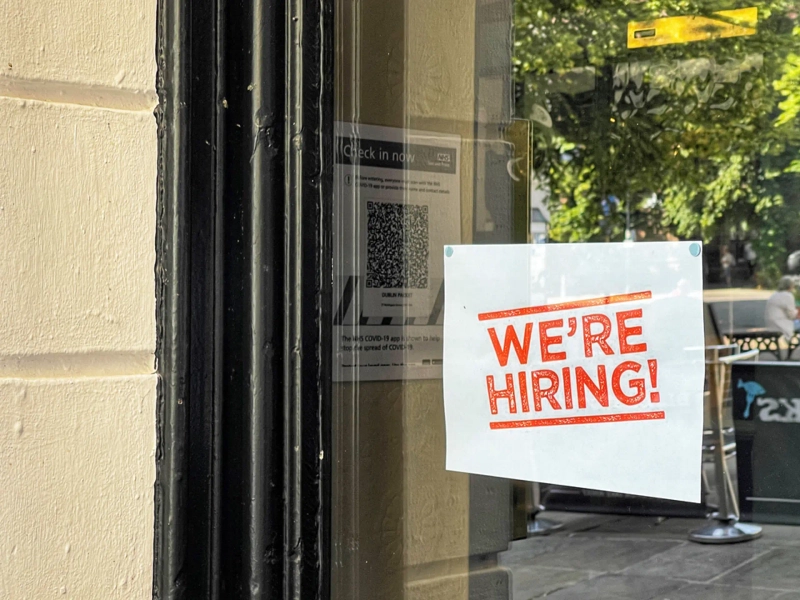
With the release of the December jobs report—set to provide a read on the state of the U.S. labor market—imminent, divisions within the Federal Reserve (Fed) over interest-rate policy are instead deepening.
On the 8th (local time), Reuters reported that as the labor data send mixed signals, the gap in views between “hawks” (favoring tighter policy) who cannot let go of inflation concerns and “doves” (favoring easier policy) seeking to support growth has widened to its largest in decades.
On the day, the U.S. Bureau of Labor Statistics will release the December nonfarm payrolls report. Economists expect payrolls to rise by 60,000, while the unemployment rate is seen edging down to 4.5% from the prior month’s 4.6%.
The problem is that previously released leading indicators are sending contradictory signals, amplifying market uncertainty. Private payrolls for December published by ADP, a private employment research firm, came in below expectations, showing weakness. By contrast, the ISM services employment index over the same period hit its highest level in about a year. The Job Openings and Labor Turnover Survey (JOLTS) also remains open to interpretation: while job openings in November fell far more than expected, layoffs plunged.
Reuters noted, “There is agreement on the broad trend that the labor market is slowing, but it is questionable whether conditions are dire enough to justify further cuts after rates have already been lowered by 175bp (1.75% points).” Inflation is currently approaching 3%, above the Fed’s 2% target.
Cracks are also emerging inside the Fed. At the Federal Open Market Committee (FOMC) meeting last December, there were three dissenting votes for the first time since 2019. In particular, the dot plot showed that 7 of the 19 participants argued for holding rates steady or raising them.
With President Donald Trump expected to nominate a successor to Chair Jerome Powell later this month, a leadership transition at the Fed is another variable. Powell, who steps down in May, has been seen as a leading dove and a broker. But as the voices of regional Fed bank presidents worried about persistent inflation grow louder, his ability to hold the committee together is seen as weaker than before.
On Wall Street, expectations are leaning toward the Fed maintaining a wait-and-see stance for the time being. The rate-futures market indicates that an additional rate cut (0.25% points) will not be fully priced in through June.


![[Analysis] "Bitcoin open interest at its lowest level since 2022…could be a precursor to a rebound"](https://media.bloomingbit.io/PROD/news/a37221f6-d367-4cce-a3bf-9def20b45757.webp?w=250)