

China Also Controls Antipyretics and Analgesics…Another Weapon to Pressure the U.S.
Summary
- The Wall Street Journal reported that China controls supply chains in three areas: lithium-ion batteries, legacy semiconductors, and pharmaceutical ingredients.
- It noted that Chinese companies such as CATL and BYD show high market shares in the lithium-ion battery market and are tightening controls on technology leakage.
- It said that because a large portion of pharmaceutical ingredients imported by the United States are Chinese-made, export controls such as supply cuts could threaten the U.S. market.
Batteries·legacy chips·pharmaceuticals…supply chain control
72% of acetaminophen is Chinese-made
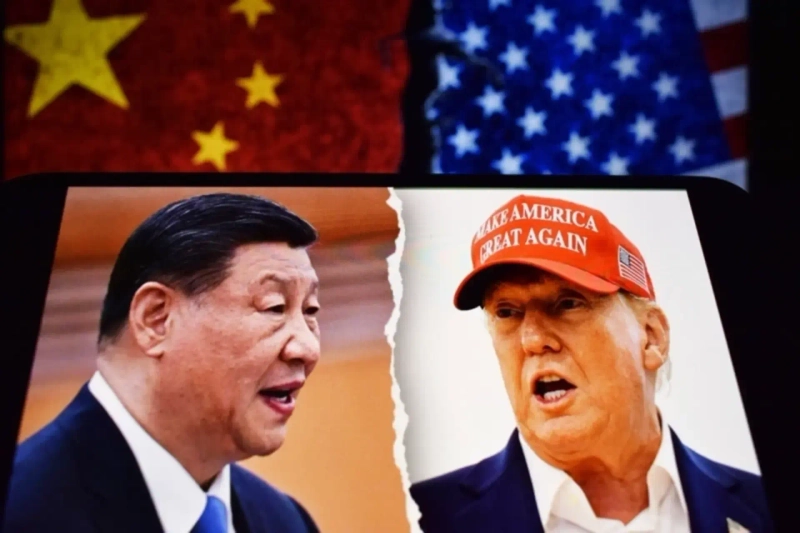
An analysis has emerged that, besides rare earths, China has another card to pressure the United States.
On the 6th, the Wall Street Journal (WSJ) said China controls the supply chains in three areas—lithium-ion batteries, legacy (mature-process) semiconductors, and pharmaceutical active ingredients. Like rare earths, these three sectors could be weaponized.
China has dominated these three sectors' supply chains thanks to decades of industrial policy. As Chinese companies took over the supply chains, they began flooding the global market with low-priced products. WSJ's analysis says that afterward Chinese authorities have been threatening competitors through export controls.
For lithium-ion batteries used in electric vehicles, home appliances, and energy storage, the world's two largest battery manufacturers are China’s CATL and BYD. Market shares in the lithium-ion battery market stand at about 28% and 12% for CATL and BYD, respectively.
China has recently tightened controls to prevent the overseas leakage of lithium-ion battery manufacturing technology.
In terms of legacy semiconductor manufacturing capacity, China's share rose from 19% in 2015 to 33% in 2023. China has spent billions of dollars building manufacturing facilities to achieve semiconductor self-sufficiency. Countries are experiencing worsening profitability and being pushed out of the market due to China's oversupply of legacy semiconductors.
China's share has also become significant in some pharmaceutical ingredient supply chains. Last year, of the active pharmaceutical ingredients the United States imported, 90% of the anti-inflammatory/painkiller ibuprofen, 74% of vitamin C, and 72% of the antipyretic and analgesic acetaminophen were Chinese-made.
Acetaminophen is the main ingredient of Tylenol. The United States is relatively dependent on Indian generics. However, a significant portion of the active ingredients for Indian generics comes from China.
The WSJ said, "Because using pharmaceuticals as a political tool could be a sensitive matter, China is unlikely to threaten supply cuts," while also reporting that "in March 2020 Xinhua pointed out that if China controlled exports of pharmaceuticals and medical supplies, COVID-19 would spread in the United States."
Beijing=Eunjeong Kim, correspondent kej@hankyung.com

Korea Economic Daily
hankyung@bloomingbit.ioThe Korea Economic Daily Global is a digital media where latest news on Korean companies, industries, and financial markets.