

PiCK
Fed, internal rift over October rate cut… Additional cut in December also uncertain [Fed Watch]
Summary
- According to the minutes, officials were deeply divided during the decision process for an October policy rate cut.
- Most officials saw a December rate hold as appropriate, while only a few mentioned the possibility of a cut, making further cuts uncertain.
- The Fed agreed to halt reduction of Treasury and MBS holdings (QT) from December, and there was broad support among officials.
Minutes: "Many saw holding rates in December as appropriate"
Views split between slowing employment and inflation risks
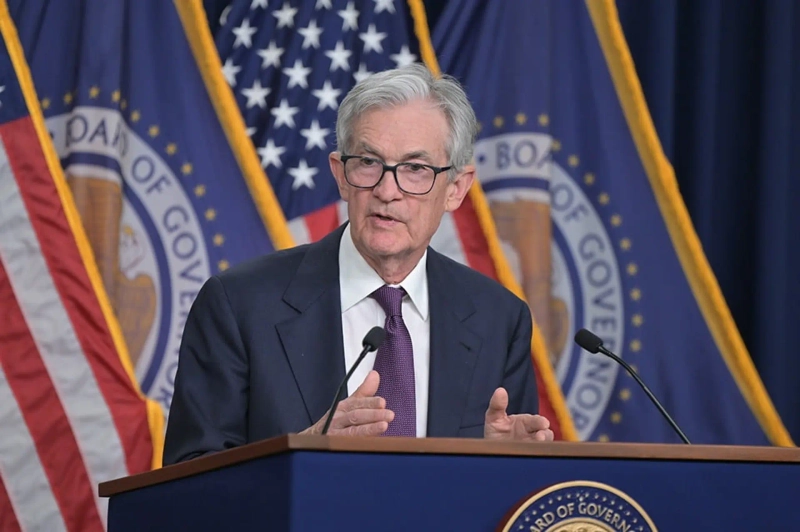
The U.S. central bank (Fed) appeared to have significant disagreements among officials during the process of cutting the policy rate in October. The minutes of the Federal Open Market Committee (FOMC), released on the 19th (local time), showed large differences in interpretation over whether a slowing labor market or sticky inflation posed the greater economic risk, and that the future policy path remained unclear.
At the October meeting the FOMC set the federal funds rate at 3.75–4% annually after lowering it by 0.25 percentage point. However, the minutes suggested a prevailing skeptical view toward an additional cut in December. The minutes recorded that "many" participants saw it as appropriate to hold rates for the remainder of the year, while only "several" left open the possibility of a December cut.
This sentiment aligns with Chair Jerome Powell's remark at the post-meeting press conference that "a December rate cut is not a done deal." According to FedWatch, the market's once nearly certain expectation of a December cut had fallen to 29.6% as of that day.
The minutes said officials differed in their assessments between a labor market showing signs of slowing and inflation that showed "little sign of consistently returning" to the 2% target.
There was also disagreement over how "restrictive" policy was for the economy. Some officials viewed that "even after this cut, the degree of restraint still weighed on growth," while others assessed that "the resilience of economic activity signaled that policy was not sufficiently restrictive."
Officials' leanings were clearly split. Those classified as doves — Steven Miran, Christopher Waller, and Michelle Bowman — emphasized the need for cuts due to worries about a weakening labor market. By contrast, Federal Reserve Bank presidents Jeffrey Schmid (Kansas City), Susan Collins (Boston), and Alberto Musalem (St. Louis) expressed concern that further cuts could jeopardize achieving the inflation goal. Chair Powell, Vice Chair Philip Jefferson, and New York Fed President John Williams were said to be taking a cautious approach.
The minutes also noted that the 44-day suspension of major economic data releases due to a government shutdown increased uncertainty in policy decisions. Powell likened it to "driving in a fog," though Waller recently offered a different interpretation, saying "there is enough information to make policy judgments."
The minutes confirmed that the Fed agreed to stop reducing Treasury and MBS holdings (QT) beginning in December. The Fed's balance sheet has shrunk by more than $2.5 trillion during the recent tightening, but still stands at about $6.6 trillion. There appeared to be broad support among officials for halting QT.
New York = Shin-young Park, correspondent nyusos@hankyung.com

Korea Economic Daily
hankyung@bloomingbit.ioThe Korea Economic Daily Global is a digital media where latest news on Korean companies, industries, and financial markets.