

PiCK
China, after facing off with the US and Japan, keeps rates unchanged for 6 months
Summary
- People's Bank of China said it has held the benchmark loan prime rate (LPR) unchanged for 6 consecutive months.
- Market experts say that caution about the possibility of further rate cuts is gaining traction.
- Reuters analyzed that due to economic uncertainty and concerns about debt, targeted credit support is more likely than across-the-board rate cuts.
LPR 1-year at 3%·5-year at 3.5% maintained
"Households and firms worry about debt amid uncertainty"
Caution on rate cuts gaining traction
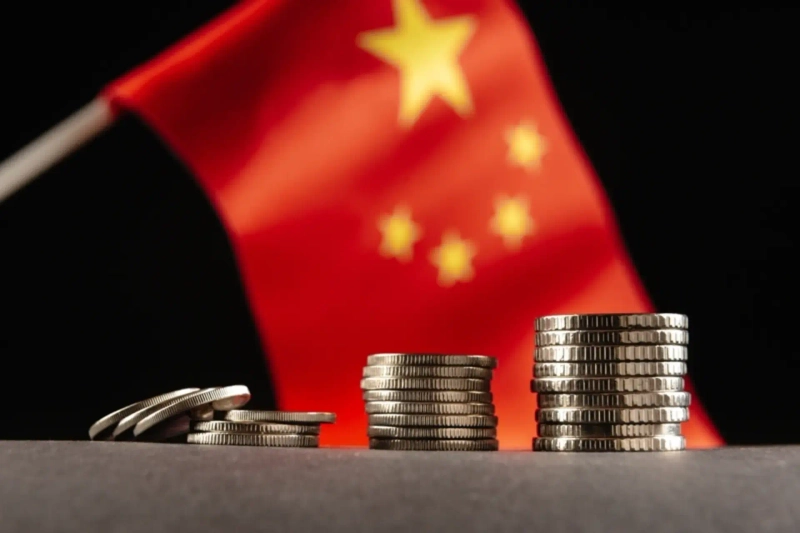
China has held its benchmark policy rate for 6 consecutive months.
The People's Bank of China on the 20th kept the 1-year loan prime rate (LPR), the benchmark for general loans, at 3% per annum and the 5-year LPR, which serves as the benchmark for mortgage loans, at 3.5% per annum.
In China, each month 20 major commercial banks submit rates to the interbank funding center that reflect their own funding costs and risk premiums, and the People's Bank of China reviews and then announces the compiled LPR. For commercial banks, the LPR effectively serves as the benchmark rate.
Chinese authorities cut the LPR by 0.25% percentage points in October last year amid continued domestic demand and property sector slumps. With pressure to stimulate the economy rising as it coincided with a trade war with the second-term Donald Trump US administration, they made additional cuts of 0.1% percentage points in May.
But there have been no further cuts since. Market experts also expected China to hold the LPR this month. All 23 experts who responded to a Reuters survey predicted a rate hold this month.
Reuters judged that China has shifted toward a 'less accommodative monetary policy' rather than a full-scale rate cut. In a report on monetary policy implementation for the third quarter released this month, the People's Bank of China, in addition to its previous 'strengthening of countercyclical adjustments,' stated, "We must manage countercyclical and procyclical adjustments well."
It was interpreted as an intention to prioritize medium- to long-term economic stability over short-term aggressive countercyclical measures as a stimulus.
Experts say this supports the 'caution' view that China will not immediately adopt easing measures such as rate cuts. Analysis suggests the focus of future rate policy will shift from full-scale cuts to targeted credit support.
In fact, new lending by Chinese banks plunged month-on-month last month, indicating reduced demand. Reuters judged, "Economic uncertainty and trade tensions between the US and China are causing households and firms to worry about taking on additional debt."
Beijing=Kim Eun-jung, special correspondent kej@hankyung.com

Korea Economic Daily
hankyung@bloomingbit.ioThe Korea Economic Daily Global is a digital media where latest news on Korean companies, industries, and financial markets.