

"Don't give up investing because of a correction... Stock investment is essential in an era of falling currency value"
Summary
- Jang Eui-seong, head of Mirae Asset Securities' center, said not to stay away from investing during a market correction and to actively select stocks and enter in installments.
- He said that in an era of falling currency value, stock investment is essential and portfolios should be diversified across domestic and foreign markets and gold and bonds.
- He particularly forecasted that the AI industry and domestic bio companies have medium- to long-term growth potential and that the market is likely to resume an upward trend despite volatility.
Jang Eui-seong, Head of The Sage Family Office Center, Mirae Asset Securities
"AI bubble talk is ultimately premature"
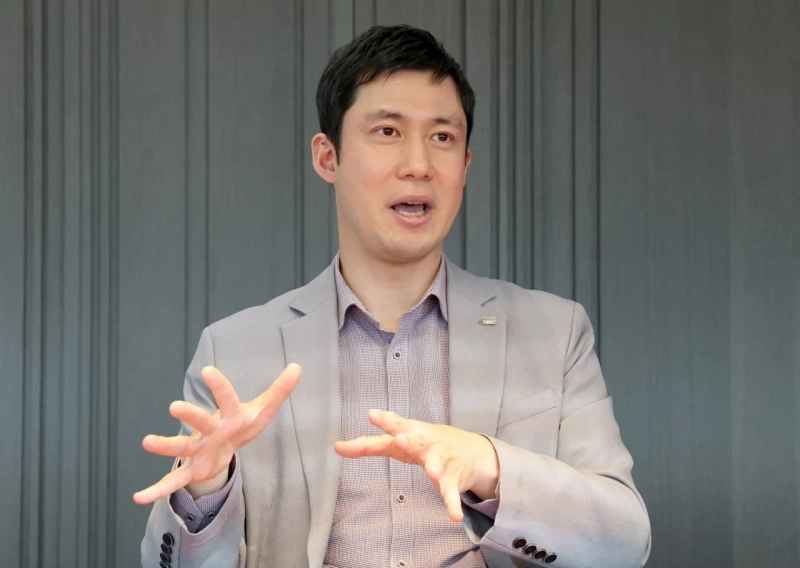
"You should not stay away from investing just because a correction has come. In a period when the value of money is falling, active investing is essential."
Jang Eui-seong, head of The Sage Family Office Center at Mirae Asset Securities (photo), said in an interview with The Korea Economic Daily that "it is natural to undergo a correction because the stock market had risen for a while," and "since it is impossible to precisely gauge when a correction will end, selectively choosing stocks and entering in installments at such times can improve returns."
"A natural correction... there is still room to rise"
Jang, a private banker (PB) with 18 years of experience, leads The Sage Family Office, launched by Mirae Asset Securities last May by gathering top-performing PBs to provide WM services for ultra-high-net-worth clients. This branch, which proclaims itself a 'family office that manages assets well,' ranked first in returns within Mirae Asset Securities in the last quarter. In about six months since its launch, assets under management have grown to nearly 3 trillion won. Entrepreneurs, professional asset holders, and entertainers visit this branch for asset management.
Jang predicted, "The recent correction is largely influenced by short-term global liquidity, so it will not last long." He said, "The U.S. market is home to leading AI companies, so the medium- to long-term upward trend is solid, and the domestic market also has room to rise through next year," and "even with volatility, the trend will not be broken and the market will resume an upward trend."
"In the domestic market, the profit-upward trend of the leading semiconductor sector is emerging, and a structural environment is being formed where foreign investors can engage in long-term investment due to various market activation policies. In an environment where multiples (corporate valuation multiples) can be well received, large caps are driving earnings, so I think there is room for further rise for a while."
He said, "Domestic bio companies are also worth watching." He explained they are producing results such as technology exports to global big pharma (major pharmaceutical companies). Jang said, "Korean bio stocks used to show a [cheon-sudap] movement mostly vulnerable to external variables, but now it's different," and "companies that are gradually becoming pharmaceutical platform companies and thus have fundamentals that can enable medium- to long-term earnings growth are increasing."
Regarding the 'AI bubble' talk in some parts of the market recently, he said, "It is premature to talk about a bubble regarding the still early-stage AI market." His analysis is that companies with earnings have led the rally so far, so it differs from the dot-com bubble era when even companies without earnings saw stock price rises.
"The current AI market is at the stage of investing in infrastructure such as chips. If compared to the period when the internet was introduced, it's the time when the lines were being laid. There remain market stages such as AI agents, AI-as-a-service, and physical AI like AI robots. It is almost nonsense to discuss a bubble from stage one in such a period."
Jang added, "AI is not only a corporate area but also a field of competition between countries," and predicted, "Since technology competition among major countries such as the U.S. and China will continue, investment in the AI sector will continue for some time."
In a period of falling currency value... 'If you do nothing, you lose'
He said, "Because the value of money continues to fall, if you do nothing, the value of my assets will decline," and "among financial assets, stocks are the easiest for individual investors to access, so now people must pay attention to stock investment."
He explained that this sentiment has recently become clear even among ultra-high-net-worth individuals. Jang said, "These days, many high-net-worth individuals who spent half their lives holding cash and rarely investing newly visit the branch."
"Unlike before, recently major countries are feeling that the value of their currencies is rapidly falling, and there are more asset holders who think 'if I just sit still I will lose money.' They feel the need to invest but do not know how, so they seek expert services."
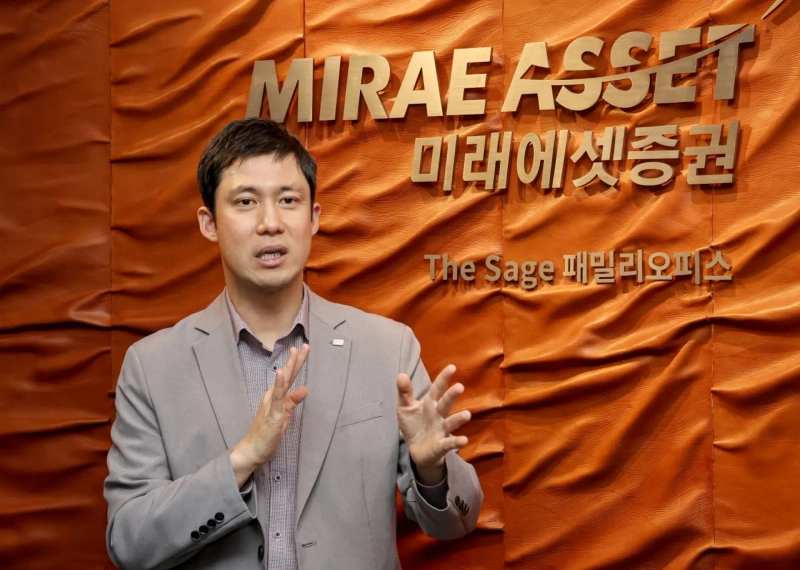
He said, "Until last year most portfolios were centered on foreign stocks, but this year many construct domestic market weights similar to the U.S. market," and "depending on investment temperament and cash schedule, for stock investment I basically recommend domestic market 45%, U.S. market 45%, and emerging markets such as China 10%."
He said, "I think the domestic market can rise further next year, but we do not 'all in' on the domestic market because investing in dollar-based assets is also necessary considering exchange rates," and "I also view the medium- to long-term upward possibility of the U.S. market highly."
He said, "Diversifying asset portfolios with gold and bonds is also essential," and "for gold investment, one can use KRX gold spot or U.S. gold exchange-traded funds (ETF)." He added, "Since bonds have tax-saving effects, they are a more favorable option than deposits," and "bond investment should focus on dollar-based U.S. bonds, mixing short-, medium-, and long-term bonds depending on the cash schedule to advise on portfolio composition."
His advice is that even non–high-net-worth individuals should have an appropriate asset allocation structure. He said, "Most individual investors lose money because they try to grow a small seed money quickly by investing everything or using leverage," and "rather than trying to get rich quickly, protecting and steadily growing assets has a much higher success rate."
Reporter Seon Han-gyeol always@hankyung.com

Korea Economic Daily
hankyung@bloomingbit.ioThe Korea Economic Daily Global is a digital media where latest news on Korean companies, industries, and financial markets.