

Seohak ants poured in '18 trillion' in 2 months…'reversal result'
Summary
- This year the National Pension Service's overseas stock investment increased more aggressively than individual investors.
- Individual investors' net purchases of overseas stocks also grew significantly, reaching an extraordinary scale about three times that of last year.
- This expansion of domestic residents' overseas stock investment is being interpreted as affecting the exchange rate rise and the financial market.
National Pension Service, sharp increase in overseas stock investment amounts
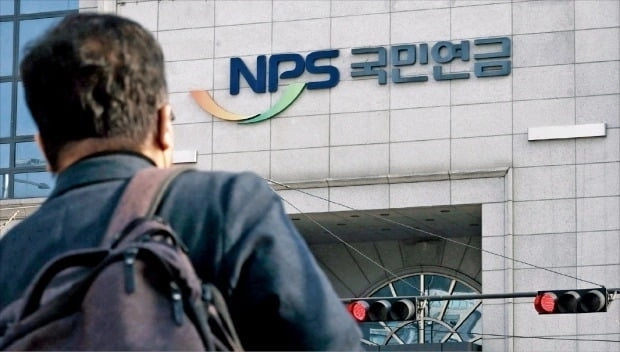
So far this year, the National Pension Service has been investing in overseas stocks more aggressively than individual investors. Attention is drawn because the expansion of domestic residents' overseas stock investment is being pointed to as a cause of the exchange rate rise.
According to the Bank of Korea on the 30th, 'general government' overseas stock investment for Q1–Q3 this year totaled 24,514,000,000 dollars. It increased 92% from the same period last year (12,785,000,000 dollars). In the same period, 'non-financial corporations, etc.' overseas stock investment rose from 9,561,000,000 dollars to 16,625,000,000 dollars, a 74% increase. The Bank of Korea explained that it is not unreasonable to interpret 'general government' as the National Pension Service and 'non-financial corporations, etc.' as individual investors.
Looking at investment amounts alone, the National Pension Service invested more than individual investors, the so-called 'Seohak ants.' The National Pension Service's overseas stock investment scale rose from 1.3 times that of Seohak ants in Q1–Q3 last year to 1.5 times in Q1–Q3 this year, widening the gap. The share of the National Pension Service in total domestic residents' overseas stock investment was also 34%, more than 10 percentage points (p) higher than individual investors (23%).
It can be interpreted that the National Pension Service is having a relatively larger impact on the foreign exchange market than individual investors.
It is also true that the concentration of individual investors' overseas stock investment has become particularly pronounced over the past two months.
According to the Korea Securities Depository, individual investors net purchased 12,337,000,000 dollars worth of overseas stocks in October–November. October recorded an all-time high of 6,813,000,000 dollars, and November (1–28) also saw strong buying at 5,524,000,000 dollars.
If these figures are simply added to the Bank of Korea statistics, individual investors' overseas stock investment for Jan–Nov this year grows to a total of 28,962,000,000 dollars. This is an extraordinary scale, nearly three times that of the same period last year (9,909,000,000 dollars).
This movement also coincided in timing with the exchange rate's upward trend.
The won/dollar exchange rate hovered mostly below the 1,400 won level in August–September, showing a stable trend, but rose steeply after the Chuseok holiday. Verbal intervention by foreign exchange authorities failed to have much effect, and on the 24th of this month the intraday rate surged to 1,477.3 won, a seven-month high since April 9 (1,487.6 won).
Experts cite changes in the macroeconomic environment, such as the dollar supply and demand trends of actors like the National Pension Service and Seohak ants and burdens of investing in the U.S., as causes of the exchange rate rise. Some say attention should be paid to the fact that the presence of Seohak ants has grown.
Reporter Lee Song-ryeol, Hankyung.com yisr0203@hankyung.com

Korea Economic Daily
hankyung@bloomingbit.ioThe Korea Economic Daily Global is a digital media where latest news on Korean companies, industries, and financial markets.