

Lee Eok-yeon "Heightened vigilance in financial markets…boldly implement market stabilization measures if necessary"
Summary
- The Financial Services Commission said it will boldly and preemptively implement market stabilization measures if necessary in response to the recently increased volatility in financial markets.
- The government said it will extend and operate the market stabilization program next year and plans to supply up to KRW 37.6 trillion in liquidity.
- Participants said that reduced expectations for rate cuts, increased issuance of government and public corporation bonds, and uncertainty over monetary policy could increase volatility in the bond market next year.
Financial market situation review meeting
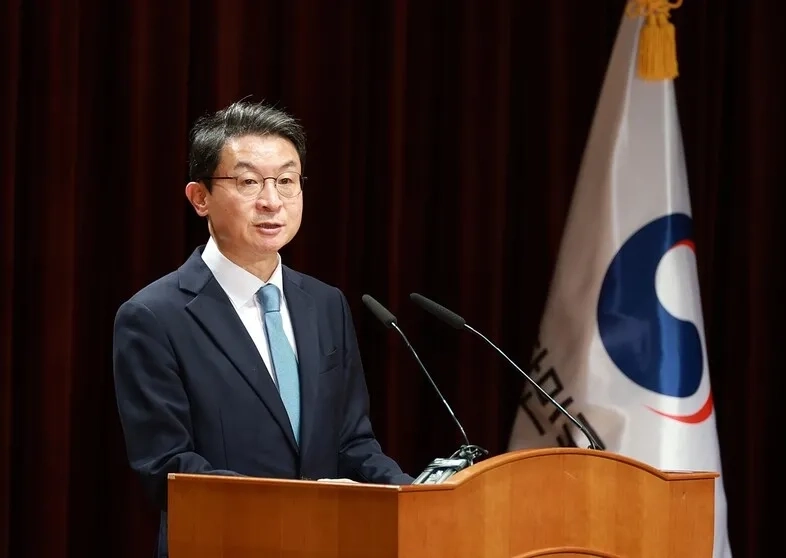
The financial authorities said that, in response to the increased volatility in financial markets such as the bond and foreign exchange markets, "if necessary, we will implement market stabilization measures boldly and preemptively." They also decided to extend and operate the market stabilization program next year.
On the 15th, the Financial Services Commission, chaired by Lee Eok-yeon, held a financial market situation review meeting with experts including the Financial Supervisory Service, the Korea Institute of Finance, and the Korea Development Institute (KDI) to discuss the outlook and risk factors.
Chair Lee reviewed the Korean economy and financial markets over the past year, saying, "In the first half of the year, financial market instability somewhat increased due to tariff impositions by the U.S. Trump administration and domestic political uncertainty, but the economy and the stock market showed a recovery as a result of the new government's policy efforts and improvements in corporate earnings such as semiconductors."
However, he diagnosed that vigilance toward the domestic financial market has widened as government bond yields have recently been on the rise and volatility in the foreign exchange market has expanded.
Chair Lee said that despite the increased volatility in the financial markets, the economy's crisis response capacity is sufficient, noting, "Given the healthy, world No. 9 level of foreign exchange reserves, low CDS (credit default swap) premiums, and other solid fundamentals, our economy has sufficient resilience and crisis-response policy capability to cope with various domestic and external uncertainties."
Nonetheless, as market volatility could widen going forward, the FSC said it will closely monitor market conditions in close cooperation with relevant agencies and, if necessary, will implement market stabilization measures boldly and preemptively.
Participants focused particularly on conditions in the bond market and the short-term money market for next year.
They said risk factors such as reduced expectations for a Bank of Korea rate cut, forecasts of increased issuance of government and public corporation bonds next year, and uncertainties over major countries' monetary policies could increase volatility in the bond market. They advised that the government's active role in stabilizing financial markets will continue to be necessary.
To stabilize the recently risen won–dollar exchange rate, participants agreed that managing market expectations is a priority, along with efforts to resolve foreign currency supply and demand imbalances and structural improvements to the economy.
The government also decided to extend and continue operating the market stabilization program next year.
Chair Lee said, "To prepare for the possibility of increased volatility within the financial markets, the role of a market safety net needs to be continuously maintained," and announced plans to extend and continue operating the currently running market stabilization program.
Accordingly, the FSC and policy financial institutions (Korea Development Bank, Industrial Bank of Korea, Korea Credit Guarantee Fund) plan to supply up to KRW 37.6 trillion in liquidity next year to stabilize the bond and short-term money markets.
Chair Lee emphasized that, regarding the bond and short-term money markets, "based on past experience where even small events caused sensitive market reactions and rapid transmission of volatility, it is necessary to thoroughly check various risk factors in advance."
He especially urged, "Next year, we should check the maturity structure of corporate bonds, bank bonds, and other asset-backed bonds, and examine the size of bonds held by the financial sector and the soundness conditions resulting from rising interest rates."
Min-kyung Shin, Hankyung.com reporter radio@hankyung.com

Korea Economic Daily
hankyung@bloomingbit.ioThe Korea Economic Daily Global is a digital media where latest news on Korean companies, industries, and financial markets.