

U.S. core CPI at four-year low, but credibility questioned; markets 'uneasy'
Summary
- The U.S. November core CPI hit a four-year low, but the market warned that the indicator's credibility is weakened due to data collection gaps.
- Some economists and investment banks pointed out the possibility that CPI figures were distorted and said they should not be overinterpreted as a sign of price stability.
- After the November CPI release, expectations for rate cuts increased, but experts said it is necessary to wait until the December CPI to be sure.
Markets liken it to 'Swiss cheese' and warn against overinterpretation
White House: "Striking contrast with Biden's inflation crisis"
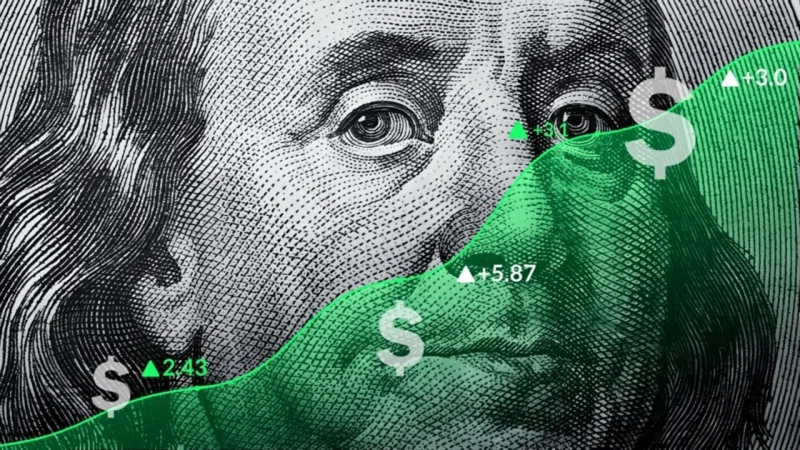
The U.S. consumer price index (CPI), released for the first time in two months due to the U.S. federal government shutdown (temporary work stoppage), showed a 'slowing' pace. The U.S. Bureau of Labor Statistics (BLS) said on the 18th (local time) that November CPI rose 2.7% year-on-year. The Donald Trump administration, which had faced voter discontent over prices, welcomed the report, but markets cautioned that the indicator may be distorted because it did not reflect prices for the entire month, and that it is difficult to conclude that inflation has returned to a stable trend.
○ Indicator distorted by Black Friday effect
The November CPI released that day came in below the Dow Jones-compiled experts' forecast (3.1% increase). It showed a smaller rise than the previously reported figure (September·3.0%). Core CPI, which excludes the volatile energy and food components, rose 2.6% year-on-year, the lowest since April 2021 (3.0%). Like the CPI, it came in below market expectations (3.0%) and recorded a lower rate than in September. Bloomberg News said, "It could be interpreted as a brief respite from the persistent inflationary pressures that have continued for months."
The October CPI, originally scheduled for release on the 10th, was canceled because data collection became difficult amid the suspension of budget preparation. This was the first time the BLS did not release a monthly CPI figure. The BLS said, "Some indices of the October CPI were calculated using non-survey data, and the November CPI survey resumed on November 14."
Wall Street was wary of this point. They argued that the November CPI, calculated based on flawed October data, cannot be trusted. According to Reuters, some economists likened this report to 'Swiss cheese' with holes and warned against giving the figures too much significance. Wells Fargo also advised, "Do not take it at face value." Gregory Daco, EY-Parthenon chief economist, said, "It provided a downward-biased view of inflation beyond simply being noisy and full of gaps."
Markets particularly questioned housing costs, which account for about one-third of the CPI. Housing costs were shown to have risen 3.0% year-on-year, also the lowest in four years. The Wall Street Journal (WSJ) diagnosed that "due to the lack of accurate October data, the BLS likely set some component growth rates of housing costs for that month at 0%."
The fact that the BLS resumed price surveys only in mid-November also likely distorted the statistics. Because it overlapped with the U.S.'s biggest sale season, Black Friday (November 28), discounted product prices may have been reflected.
○ White House: "Trump solved inflation"
Despite market skepticism, the White House praised the Trump administration for resolving price issues. White House spokeswoman Karoline Leavitt said in a statement that day, "As President Trump told Americans last night (in his address), inflation continues to fall and wages continue to rise, and the United States is heading toward a historic economic boom." She added, "Today's report shows inflation came in much lower than market expectations," emphasizing that "it is a stark contrast to the 9% inflation crisis caused by Joe Biden."
Her remarks were interpreted as conscious of recent drops in approval ratings. In a poll released on the 17th by PBS and NPR and pollster Marist, only 36% of respondents said President Trump was handling the economy well. It is the lowest across Trump's first and second terms. The Democratic Party's landslide victories in last month's New Jersey and Virginia gubernatorial races and the New York mayoral race were widely interpreted as influenced by the burden of living costs. With next year's midterm elections approaching, the Trump administration needs to highlight achievements showing it has resolved price issues.
Experts say to determine whether the November CPI is a statistical error or the beginning of a slowdown in inflation, one should wait for the December CPI release.
Following the CPI release, expectations for monetary easing increased slightly. According to the CME FedWatch tool, the interest rate futures market priced in a 45.9% probability that the policy rate would be cut by 0.25 percentage points at the Federal Open Market Committee (FOMC) meeting in March next year. That expectation for a cut rose from a week earlier (41.4%).
Reporter Han Gyeong-je

Korea Economic Daily
hankyung@bloomingbit.ioThe Korea Economic Daily Global is a digital media where latest news on Korean companies, industries, and financial markets.