

Are the Korea-U.S. non-tariff barriers talks postponed because of Coupang? [Sang-eun Lee's Washington Now]
Summary
- Reported that the Korea-U.S. high-level trade talks appeared to be postponed due to disagreements over digital regulation.
- Stated that the U.S. considers the regulatory pressure and data issues on U.S.-listed companies such as Coupang to be 'regulatory overreach' and is applying pressure.
- Reported that Korean negotiators stated the Coupang data breach and the digital regulation issue are unrelated.
A high-level trade meeting between Korea and the United States, scheduled for the 18th, was postponed. Regarding the reason for the postponement, the Korean government said they agreed to push it to next year while coordinating the agenda, but the U.S. side interpreted it as the U.S. government expressing dissatisfaction with the Korean government pursuing digital regulations.
According to Korean negotiators, Korea's Ministry of Trade, Industry and Energy and the U.S. Trade Representative (USTR) had planned to hold a closed-door meeting of the Korea-U.S. Free Trade Agreement (FTA) Joint Committee in Washington, D.C. on the 18th (local time), but recently decided to delay it. The Joint Committee was established after the 2012 Korea-U.S. FTA. The FTA's core promise of tariff elimination was effectively undermined after the tariff policies of the Donald Trump administration, but it still operates as a framework to discuss non-tariff barriers. This Joint Committee was to be the first held since the Korea-U.S. tariff negotiations.
Regarding the postponement, the U.S. political outlet Politico reported on the afternoon of the 17th that the Trump administration viewed a digital-related bill that it considers discriminatory, which Korea is pursuing, as a problem and that the meeting was "canceled." According to Politico, one source said, "The U.S. administration believes Korea is not keeping its commitments on priority issues including the digital field."
It is true that the digital field is currently the most central issue in discussions on non-tariff barriers between the two countries. In a joint fact sheet, the two countries stated, "Ensure that U.S. firms do not face discrimination or unnecessary barriers in laws and policies related to digital services." The U.S. side claims this phrase meant they received a promise not to introduce an Online Platform Act, while Korea argues it means they will "not discriminate."
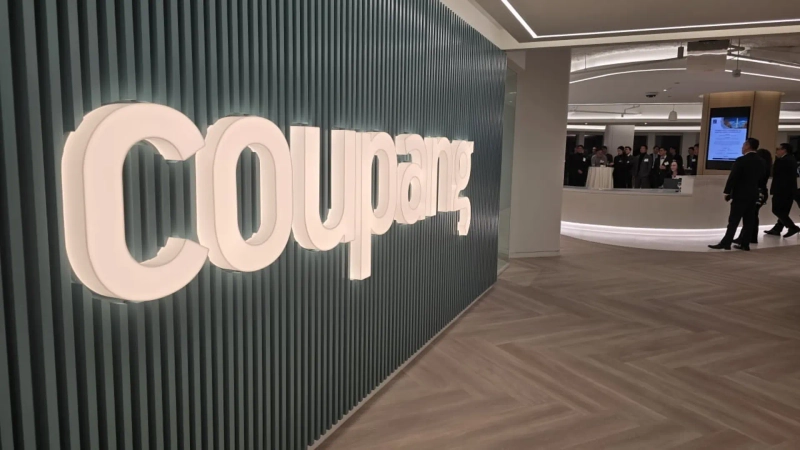
Meanwhile, Coupang suddenly became involved. Politico's evening article on the 17th made no mention of Coupang, but alongside that article a claim that "one of the reasons the meeting was postponed was that Coupang is being treated unfairly" spread through major Korean media.
Politico then added in its article on the 18th that "the meeting was canceled after a National Assembly hearing on Coupang that U.S. officials regard as regulatory overreach." Weber Shandwick, which handles publicity for the Computer & Communications Industry Association (CCIA), shared the two articles and argued that the excessive regulatory pressure and data-related investigations against U.S.-listed companies such as Coupang that surfaced in the National Assembly audit and other forums were regarded as "regulatory overreach" and unfair treatment, and that this was a major background for the meeting's cancellation. It also emphasized that "the U.S. has even suggested the possibility of initiating a Section 301 investigation under trade law, continuing strong pressure on Korea."
Whether the USTR actually stepped in to contain Coupang's data breach is questionable. Korean negotiators say the meeting was postponed regardless of that hearing, and that the decision to postpone was made earlier. The USTR spokesperson did not respond to a query from the Korea Economic Daily.
Korean negotiators reacted that such reports were absurd. They said the recent Coupang data breach and the digital regulation issue are completely unrelated. A trade official explained, "The Joint Committee is a ministerial-level meeting usually held once a year, and because it is not a simple discussion but a place to create implementation plans, it is a venue where all working-level consultations are completed before producing results." He added, "In discussing dates, it was judged that holding it within the year was unrealistic, and the core of the Coupang issue is a personal data leak, not the Online Platform Act, so it is unrelated."
Coupang has secured a large office in a prime area in front of the U.S. Capitol in Washington, strengthening contact not only with the government and Congress but also with the media. According to lobbying disclosures released by the U.S. Senate, Coupang spent $3.87 million (about 5.7 billion won) on lobbying last year, and $2.51 million (3.7 billion won) through the third quarter of this year.
Publicity or lobbying is not a bad thing. It is natural for a company to publicize its activities and at times defend itself. However, the current situation could be interpreted as if Coupang is trying to use the bilateral negotiation process as leverage to escape criticism. If the USTR made this decision because of Coupang, it would mean an individual company's complaints are rocking interstate negotiations; if not, those supporting Coupang are interpreting the situation to suit themselves, which undermines trust between the two countries. First, it is necessary to examine whether responsibility for the personal data breach could reasonably escalate into a Korea-U.S. dispute.
Washington=Sang-eun Lee, correspondent/Rian Kim/Jaeyoung Han, reporters

Korea Economic Daily
hankyung@bloomingbit.ioThe Korea Economic Daily Global is a digital media where latest news on Korean companies, industries, and financial markets.