

Bloomberg names cryptocurrencies, AI trading and Korean stocks among this year's big trades
Summary
- Bloomberg said this year cryptocurrencies, AI trading, and Korean stocks were prominent in the global investment market.
- Major cryptocurrency trades, Trump meme coins, AI trades, and the K-rally experienced both gains and sharp volatility, Bloomberg reported.
- Various cases appeared, including rallies and failures in certain assets such as some short positions, defense stocks, and U.S. Fannie Mae·Freddie Mac, which saw sharp price increases.
"Amid an overall uptrend, many leveraged investments produced both gains and sharp volatility"
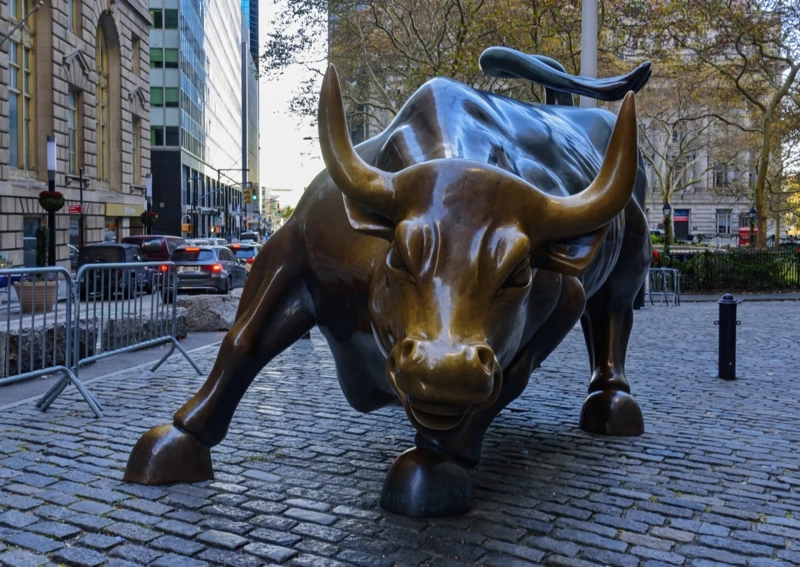
Bloomberg, marking the year-end, introduced this year's most notable investments. These included cryptocurrency trading and AI trading, as well as the Korean stock market — the top-performing major market — among 11 trades that defined the era or represented failed investment cases.
On the 29th (local time), Bloomberg said that global markets this year saw an overall rise in equities alongside cryptocurrency investment strategies reliant on leverage, producing unexpected gains and sharp volatility at the same time. In some cases, overinflated company valuations and trend-following investments that were once successful ultimately ended in failure.
Trump-related cryptocurrency trades
The most prominent were cryptocurrencies related to U.S. President Trump. From his campaign period through his presidency, Trump promoted himself as a cryptocurrency president. Even the president and his family ran large cryptocurrency-related businesses. Trump and First Lady Melania Trump launched their own meme coins, and his sons formed a company called World Liberty Financial and enabled the WLFI token to be traded.
Each coin surged when introduced, driven by enthusiasm among supporters, but all proved to be temporary phenomena. Currently, Trump's meme coin is down 80% from its peak and Melania's meme coin is down 99% from its peak.
Bitcoin, which often acts as a leading indicator, also plunged from its October peak and is expected to finish the year down.
AI trades
AI trading was the most spotlighted trade this year, but some viewed it as a potential target for the next "big short" due to excessive investment.
Scion Asset Management, run by Michael Burry — who became famous for predicting the 2008 subprime mortgage bubble — disclosed in early November that it held put options on Nvidia and Palantir. The strike prices were 47% below Nvidia's then-closing price and a staggering 76% below Palantir's.
Burry likely reduced or closed those positions afterward, but skepticism about the high valuations of major AI companies and the investment case spread rapidly. It is unknown how much Burry made, but according to a post he made on X, he bought Palantir puts at $1.84. That option rose as much as 101% in three weeks.
Debasement trade
The "debasement trade" refers historically to rulers like Emperor Nero diluting currency value to cope with fiscal troubles.
With massive debt in major advanced economies such as the U.S. and Japan and a lack of political will to address it, investors turned from government bonds to alternative assets like gold and cryptocurrencies. As a result, appetite for Treasuries and the dollar waned. In October, worries about the U.S. fiscal outlook coinciding with the longest-ever government shutdown fears brought the debasement trade to a peak. That month, both Bitcoin and gold hit all-time highs.
However, Bitcoin subsequently plunged amid a broad crypto weakness, while demand for government bonds revived and yields stabilized.
K rally: surge in Korean stocks
This year, the Korean stock market recorded the highest rise among major global markets in a reversal and dramatic run. With the newly inaugurated President Lee Jae-myung's active market-stimulatory policies, Korean stocks surged more than 70% and are moving toward 5,000 points.
An increasing number of Wall Street banks, including JPMorgan Chase and Citigroup, say reaching a KOSPI 5,000 in 2026 is possible. Demand for Korean stocks has risen as Korea is viewed as Asia's top AI investment destination amid the AI boom.
Despite this, domestic Korean investors lack confidence in their own market. While foreign capital flowed into Korean stocks, Korean retail investors diverted a record $33 billion to overseas high-risk investments such as U.S. stocks, cryptocurrencies, and leveraged ETFs.
Chanos vs. Saylor Bitcoin duel
Earlier this year, as Bitcoin prices surged and the shares of Michael Saylor's Bitcoin-focused company MicroStrategy soared, famed short-seller Jim Chanos saw an opportunity. In May, Chanos announced plans to short MicroStrategy — arguing its stock had risen beyond its Bitcoin holdings and the premium was excessive — while buying Bitcoin.
Chanos and Saylor engaged in a public dispute at the time. But by November 7, when Chanos said he had closed his position, MicroStrategy's stock had fallen 42%.
Heading into year-end, the stocks of Bitcoin-focused firms fell even more than Bitcoin itself. Chanos's strategy proved largely successful.
Japanese bonds become a dream stage for short sellers
Macro investors had suffered losses from shorting Japanese government bonds in recent years. Many had shorted, expecting Japan — which holds massive government debt — to have to raise rates. But the Bank of Japan's rate hikes took longer than expected, keeping yields low and increasing losses for JGB short sellers.
This year was different. Yields on Japanese government bonds surged broadly, turning the $7.4 trillion Japanese government bond market (about 1,700 trillion won) into a dream stage for short sellers.
The 10-year JGB yield surpassed 2%, hitting multi-decade highs, and the 30-year yield rose by more than 1 percentage point to record highs. Bloomberg's Japanese government bond yield index fell more than 6% year-to-date as of December 23, the largest decline among major global markets. Given Japan's highest government debt-to-GDP ratio among advanced economies, pessimistic views on its bonds are likely to persist.
Defense industry stock trades
Defense industry trades drew attention under Trump's administration and the new world order.
Geopolitical shifts led to large gains in the defense sector, which asset managers had once treated as a risky asset.
After President Trump said he would reduce military aid to Ukraine, European governments increased defense spending massively, sending defense contractors' stocks soaring in Europe. Germany's Rheinmetall rose about 150% year-to-date, and Italy's Leonardo jumped more than 90%.
367% surge in Fannie Mae and Freddie Mac revenge
Since the financial crisis, U.S. mortgage finance firms Fannie Mae and Freddie Mac have been controlled by the U.S. government. Expectations of re-privatization led their over-the-counter shares to surge 367% through September.
In August, news that the Trump administration was considering an IPO that would value Fannie and Freddie at over $500 billion pushed shares to their peak. Plans discussed include selling 5–15% of total shares to raise about $30 billion in an IPO. The timing of any IPO is uncertain, but IPO prospects are viewed optimistically.
Billionaire hedge fund manager Bill Ackman, who held large positions in these stocks, and Michael Burry both at one point suggested that the two companies — once in need of government rescue — "may no longer be the Toxic Twins."
Bloomberg also cited last year's Turkish lira carry trade, which made huge gains, as a failed trade this year due to political turmoil. It pointed to some financial firms taking losses on loan claims after Tricolor and First Brand's bankruptcies as another failed case. Quoting Jamie Dimon, chairman of JPMorgan, Bloomberg warned that "if you see one cockroach, there are probably more," suggesting these issues could worsen next year.
Kim Jeong-ah, contributing reporter kja@hankyung.com

Korea Economic Daily
hankyung@bloomingbit.ioThe Korea Economic Daily Global is a digital media where latest news on Korean companies, industries, and financial markets.