

Xi Jinping openly targets the US and Japan, emphasizes win-win with South Korea
Summary
- President Xi said he places China–Korea relations in an important position in peripheral diplomacy and maintains policy continuity and stability toward Korea.
- He said China and South Korea emphasized industry and supply chain linkage and cooperation in emerging fields such as artificial intelligence (AI), green industries, and the silver economy.
- After the summit, the two countries signed 15 cooperation documents in areas including economic and trade cooperation.
Summit at the Great Hall of the People in Beijing on the 5th
"China–Korea relations placed in an important position in peripheral diplomacy"
"Surpass social systems to achieve common development"
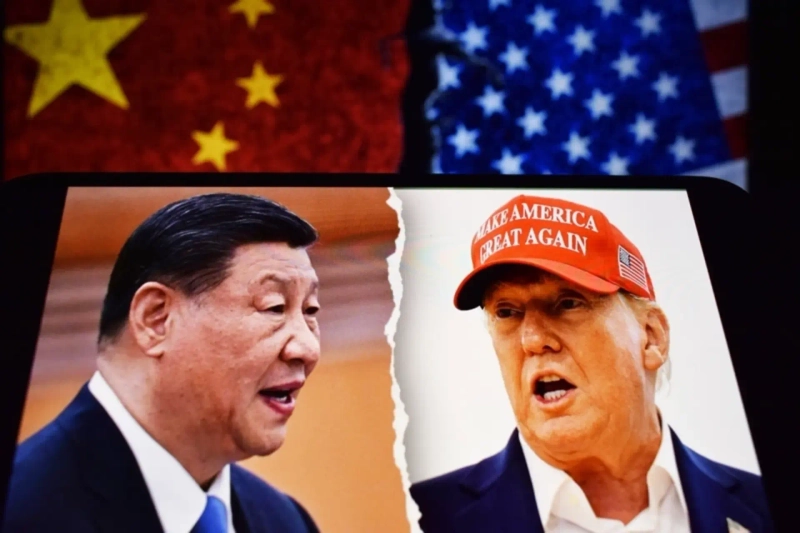
Chinese President Xi Jinping met with President Lee Jae-myung on the 5th and strongly expressed the desire for Korea–China friendship. He also emphasized that Northeast Asian peace and stability must be jointly safeguarded. Highlighting that Korea and China defeated Japanese militarism at the cost of sacrifices, he directly targeted Japan.
On the second day of President Lee's state visit to China, the two met for a summit at the Great Hall of the People in Beijing. It was the first summit diplomacy for both presidents this year. The two leaders met again two months after their summit in late November last year on the occasion of the Gyeongju Asia-Pacific Economic Cooperation (APEC) summit.
According to China Central Television (CCTV), President Xi said at the meeting, "China has always placed China–Korea relations in an important position in peripheral diplomacy," and "maintains policy continuity and stability toward Korea." He added, "China will, together with Korea, firmly adhere to the direction of friendly cooperation and, following the principles of reciprocity and win-win, promote the China–Korea strategic cooperative partnership to advance on a healthy track."
He also stressed that "the welfare of the peoples of both countries should be substantially improved, and they should provide positive momentum for regional and global peace and development."
He emphasized a history of mutual achievements. He said, "The two countries have achieved mutual accomplishments and common development beyond differences in social systems and ideologies," and added, "We should continue this excellent tradition, continuously enhance mutual trust, respect each other's chosen development paths, take each other's core interests and major concerns into consideration, and properly resolve differences through dialogue and consultation."
He said, "China and Korea are economically closely connected, and their industries and supply chains are deeply intertwined," and "we should strengthen the linkage of development strategies and policy coordination and further enlarge the pie of common interests." In particular, he explained that more cooperative results should be produced in emerging fields such as artificial intelligence (AI), green industries, and the silver economy.
Criticism of Japan and the United States also followed. President Xi said, "The current international situation is becoming more complex and unstable," and "China and Korea bear an important responsibility for safeguarding regional peace and promoting global development." He added, "We must firmly stand on the historically correct side and make the right strategic choices," and said, "Some 80 years ago, the two countries endured enormous national sacrifices and achieved victory against Japanese militarism."
He said, "Today we must cooperate more to safeguard peace and stability in Northeast Asia," and "as beneficiaries of economic globalization, China and Korea jointly oppose protectionism, practice genuine multilateralism, and contribute to an equitable and orderly multipolar world and inclusive and universal economic globalization."
After the summit, the two countries signed 15 cooperation documents in fields including scientific and technological innovation, ecological environment, transport, and economic and trade cooperation.
CCTV also focused on reporting that Peng Liyuan, President Xi's wife, socialized with Kim Hye-kyung, President Lee's wife, prior to the summit. It particularly emphasized the honor guard formation and the playing of both countries' national anthems while evaluating the significance of the bilateral summit in detail.
Beijing = Correspondent Kim Eun-jung kej@hankyung.com

Korea Economic Daily
hankyung@bloomingbit.ioThe Korea Economic Daily Global is a digital media where latest news on Korean companies, industries, and financial markets.