

'Tariffs' Impact…U.S. December Manufacturing Activity Contracts by Largest Margin in a Year
Summary
- The Institute for Supply Management said the U.S. December manufacturing index fell to 47.9, marking the largest contraction in a year.
- It reported that the Trump administration's tariff policy has dealt a major blow to the manufacturing sector by reducing new orders and raising input costs.
- It said that technology investment led by artificial intelligence (AI) and tax-cut policies could lead to a partial rebound in manufacturing in 2026.
Manufacturing pain as new orders decline and tariffs raise input costs
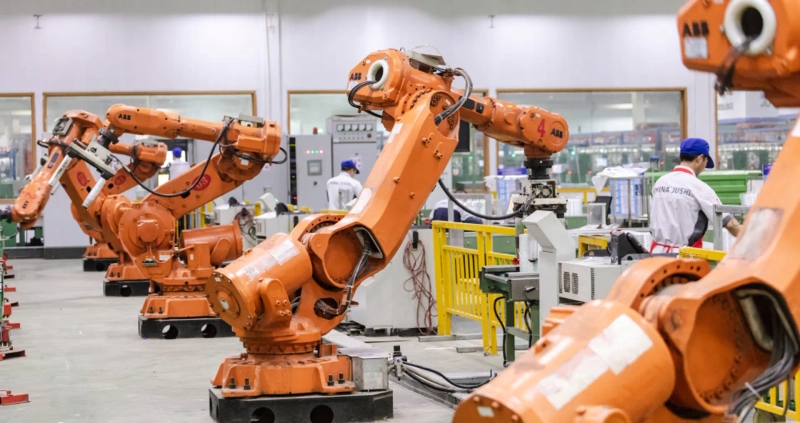
In 2025, marked by Trump's tariffs, U.S. manufacturing activity contracted by the largest margin in a year. New orders fell and input costs rose due to tariffs, prolonging the sector's difficulties.
On the 5th (local time), the Institute for Supply Management (ISM) said the U.S. manufacturing index for December fell to 47.9 from 48.2 the previous month. The figure recorded below 50 for the 10th consecutive month. Fifty is the threshold dividing contraction and expansion.
The fact that the U.S. manufacturing index has continued to decline for 10 consecutive months suggests that the Trump administration's policy of imposing tariffs in the name of reviving U.S. manufacturing has dealt a heavy blow to domestic manufacturers.
According to Reuters, the average tariff on U.S. imports estimated by the Yale Budget Research Institute rose from 3% at the end of the year before President Trump to an average of 17% at the end of last year. This implies import prices became 14% points more expensive.
In this indicator, raw material costs recorded 58.5 last month, 6 points higher than at the end of 2024. This is interpreted as reflecting high tariffs on raw materials such as steel and aluminum.
Amid weak demand, manufacturing employment fell for the 11th consecutive month. This is the longest employment downturn in about five years by ISM measures. The U.S. Bureau of Labor Statistics (BLS) manufacturing employment index for November fell to its lowest level since March 2022.
According to Reuters, excluding sectors that have prospered from the artificial intelligence boom, the import tariffs that President Trump touted as a means to revive domestic manufacturing are weakening the sector. Economists have argued that returning manufacturing to its former glory is impossible due to structural problems such as labor shortages.
Nevertheless, economists expect that, aided by a surge in technology investment led by the artificial intelligence (AI) sector and the Trump administration's tax-cut policies, manufacturing could partially rebound in 2026.
Kim Jeong-a, guest reporter kja@hankyung.com

Korea Economic Daily
hankyung@bloomingbit.ioThe Korea Economic Daily Global is a digital media where latest news on Korean companies, industries, and financial markets.