

A 'Smile' for Korea, a 'Wolf' for Japan... What's China's Big Picture?
Summary
- Chinese state media emphasized the need for South Korea-China cooperation and stressed supply chain stability and economic linkages.
- It noted that about 200 Korean entrepreneurs accompanied President Lee Jae-myung on the China visit, highlighting the Korean industry's confidence in the Chinese market.
- It suggested that the Chinese government's export ban on dual-use items could indicate a potential expansion of security conflict between China and Japan.
Chinese state media continue to offer positive evaluations of the China visit's outcomes
Summit highlights need for long-term cooperation
China-Japan ties escalate into security clashes beyond the Taiwan issue
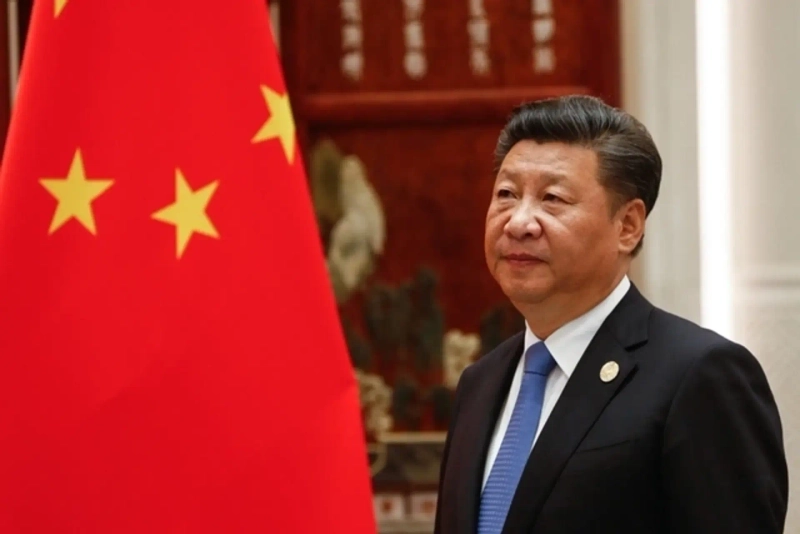
Chinese state media are rushing to give positive assessments of President Lee Jae-myung's visit to China. They appear to be using the summit between the president and Chinese President Xi Jinping as an opportunity to underscore the need for South Korea-China cooperation in the face of the U.S. and Japan.
People's Daily, the Chinese Communist Party organ, argued in a commentary on the 7th that international media interpret the president's visit to the site of the Provisional Government of the Republic of Korea in Shanghai as "sending a clear signal that historical issues have not yet been concluded," saying international media view his choice to reflect on historical memory there in that light.
It went on to emphasize, "As countries that likewise suffered enormous national sacrifices in World War II, China and South Korea must together preserve the achievements of the World War II victory and jointly safeguard peace and stability in Northeast Asia." It added, "This is a necessary condition for upholding historical justice and a necessary condition for creating a peaceful future for the region."
Earlier, on the 5th, at the Beijing summit with the president, Xi emphasized that South Korea and China have experience fighting together against Japanese militarist aggression. People's Daily, going further, is thus interpreting the president's Shanghai visit in terms of "South Korea-China cooperation against Japan."
It also continued criticism directed at the United States, the central pillar of trilateral cooperation among South Korea, the United States, and Japan. People's Daily indirectly targeted the U.S., saying, "Against unilateralism and protectionism, China and Korea strengthening open cooperation and upholding multilateralism is not only beneficial for each country's development but also helps protect the stability of regional and global industrial and supply chains."
"Such bilateral cooperation contributes to promoting an equal and orderly multipolar world and a universally inclusive economic globalization," it said.
That day, People's Daily said, "Although new changes have occurred in the content of China-Korea economic and trade relations in recent years, the basic reality that the two countries' interests are interconnected has not changed," and emphasized, "China has consistently worked to link development strategies and coordinate policies with Korea based on the ideology that a neighbor's achievements help oneself."
"An economic delegation made up of about 200 Korean entrepreneurs accompanied the president to China, and the international community read from this the Korean industry’s passion and confidence to seize the opportunity that China presents," it explained. Given the close economic ties between the two countries and the deeply intertwined industrial and supply chains, the logic is that cooperation is mutually beneficial.
Meanwhile, on the same day the Chinese military stated that the Chinese government's export ban on dual-use items (goods that can be used for both civilian and military purposes) aimed at Japan is a response to Japan's moves to enhance its military capabilities.
Jun Zhengping, the SNS account run by the Chinese People's Liberation Army News Propaganda Center, claimed, "The export ban on dual-use items toward Japan demonstrates a responsible attitude toward peace and stability in the Asia-Pacific."
Jun explained, "Dual-use items refer to goods, technologies, and services that have both civilian and military uses or can enhance military potential and encompass materials related to weapons of mass destruction and their delivery systems," adding, "If they flow disorderly into the military domain, they may increase regional security risks."
"Moreover, the tendency of Japanese militarism to rise is clear, defense budgets are increasing every year, and military deployments have become frequent," he said, adding, "This has caused widespread concern and vigilance among neighboring countries."
With the Chinese military linking Japan's military buildup to export controls, there is speculation that China may expand the front of Sino-Japanese conflict beyond the "Taiwan issue" to encompass Japan's overall security policies.
China is wary of Japanese Prime Minister Sanae Takaichi's push to fast-track revisions of the "three major security documents"—the National Security Strategy, the National Defense Strategy, and the Defense Buildup Plan. Revisions of these three security documents are seen as a gauge for how far Japan, which constitutionally renounces war and the use of force permanently, might advance toward becoming effectively a "state capable of waging war."
Beijing=Special Correspondent Kim Eun-jung kej@hankyung.com

Korea Economic Daily
hankyung@bloomingbit.ioThe Korea Economic Daily Global is a digital media where latest news on Korean companies, industries, and financial markets.