

'Unprecedented' Samsung Electronics, quarterly operating profit 20 trillion won…sales also "record high" [Comprehensive]
Summary
- Samsung Electronics announced that it recorded both a quarterly operating profit of 20 trillion won and sales of 93 trillion won, all at record highs.
- It said that the memory boom, strong DS division performance, and reduced losses in loss-making divisions were the main factors behind the performance improvement.
- It stated that due to surging memory prices, production capacity superiority, and global supply contracts, the semiconductor segment's growth stands out.
Up 208.17% year-on-year
Sales 93 trillion won marks an all-time 'high'
'All-time high' quarterly operating profit in about seven years
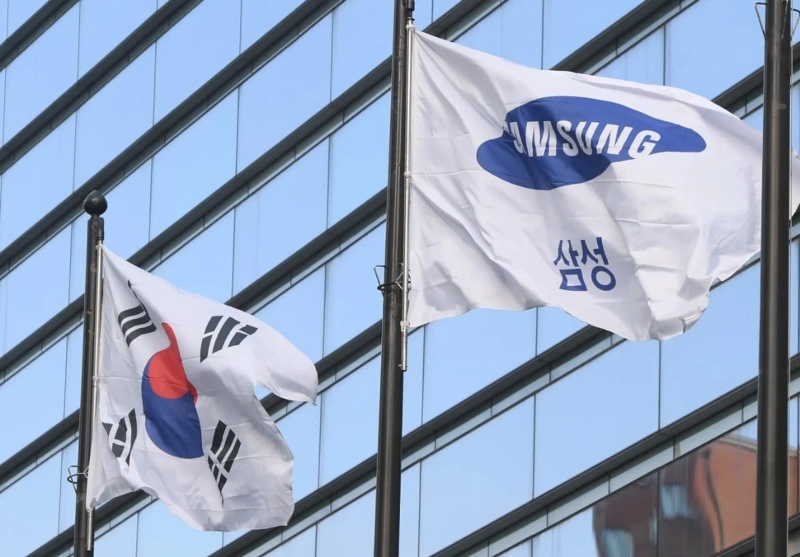
Samsung Electronics became the first Korean company to record a quarterly operating profit of 20 trillion won. Sales also set an all-time high at 93 trillion won. This was driven by continued AI infrastructure investment and the start of a memory super-cycle.
Samsung Electronics said on the 8th that it recorded provisional fourth-quarter consolidated sales of 93 trillion won. This was a 22.71% increase from the same period last year, marking the first time quarterly sales surpassed the 90 trillion won level. Operating profit rose 208.17% to 20 trillion won.
The 20 trillion won operating profit is significant. Not only did it break the record for the highest quarterly operating profit in about seven years, it also set the record as the first Korean company to achieve a quarterly operating profit of 20 trillion won. Samsung Electronics had previously recorded a then-record quarterly operating profit of 17.57 trillion won in Q3 2018. It also immediately surpassed the quarterly record-high sales of 86.0617 trillion won achieved in Q3 last year.
Samsung's results far exceeded securities firms' consensus. According to the earnings consensus compiled the previous day by financial information firm FnGuide, sales were projected at 90.6016 trillion won and operating profit at 17.8208 trillion won.
The Device Solutions (DS) division, which is responsible for the semiconductor business, is expected to have been the 'top contributor.' Although divisional results were not disclosed that day, securities firms estimate the DS division's fourth-quarter operating profit last year at about 16–17 trillion won.
The industry consensus is that, buoyed by a surge in demand for AI and server capacity, the memory market has entered a 'hyper-bull' (super-strong market) phase that surpasses 2018, which was the biggest boom in memory market history. Market research firm Counterpoint Research analyzed that memory prices surged 40∼50% in Q4 last year.
Samsung's commodity DRAM production capacity is overwhelming among the global memory 'Big 3.' On a monthly wafer input basis it is about 505,000 wafers, surpassing competitors SK hynix (395,000) and Micron (295,000). This is why observers believe Samsung likely received the greatest benefits among the Big 3.
The significantly reduced deficits of the Foundry (contract semiconductor manufacturing) division and the System LSI division are also expected to have positively influenced the performance improvement. As of the first half of last year, the two divisions' quarterly deficits reached the mid-2 trillion won range, but are estimated to have decreased to around 800 billion won in Q4. In July last year, Samsung Electronics signed a supply contract worth 23 trillion won with U.S. Tesla for its foundry division. It is also expected to secure orders from AMD for 2-nanometer (㎚) chips.
The Device Experience (DX) division, which handles smartphones and home appliances, is estimated to have slightly declined from the previous quarter. The Mobile Experience (MX) business unit is believed to have generated around 2 trillion won in operating profit due to reduced effects from new product launches such as the Galaxy Z series.
The Visual Display (VD) division, which handles TV and consumer electronics, and the Digital Appliances (DA) division are expected to post operating losses of about 100 billion won, similar to the previous quarter, due to seasonal off-season factors. Samsung Display is believed to have recorded operating profits of 1–2 trillion won thanks to expanded OLED supply to North American customers. Harman, which handles the automotive electronics business, is estimated to have operating profit of around 500 billion won.
Park Subin Hankyung.com reporter waterbean@hankyung.com

Korea Economic Daily
hankyung@bloomingbit.ioThe Korea Economic Daily Global is a digital media where latest news on Korean companies, industries, and financial markets.