Tax breaks ‘three-package’ to bring forward KOSPI 5,000
Summary
- The government said it will apply income deductions and separate taxation of dividend income at 9% to the National Growth Fund, and absorb losses first through a subordinated tranche.
- The KOSDAQ venture fund income deduction will be expanded to KRW 2 million per year, enabling tax savings of KRW 700,000 on a KRW 20 million investment.
- Through the domestic-only Productive Finance ISA, National Growth ISA, and Youth ISA, the government said it will expand tax-exempt benefits for domestic stock and fund investments and strengthen the institutionalization of digital assets.
Forecast Trend Report by Period


‘Bold tax breaks’ to spur domestic investment
Income deduction for investments in the National Growth Fund
Double benefit via separate taxation of dividends at 9%
KOSDAQ funds: KRW 2 million deduction every year
Save KRW 700,000 in taxes on a KRW 20 million investment
New domestic-only ‘Productive Finance ISA’
Tax-exempt benefits to be expanded sharply versus the current scheme
Subscribers to the government-led National Growth Fund, set to be launched in the second half of the year, will receive both an income deduction and preferential separate taxation of dividend income at a low rate. A domestic market-only ISA—significantly expanding the tax-exempt benefits of the Individual Savings Account (ISA)—is also expected as early as the third quarter. The income-deduction cap for KOSDAQ venture funds will be expanded from KRW 3 million (10% of the investment amount) to KRW 2 million annually.
◇ National Growth Fund due in Q3
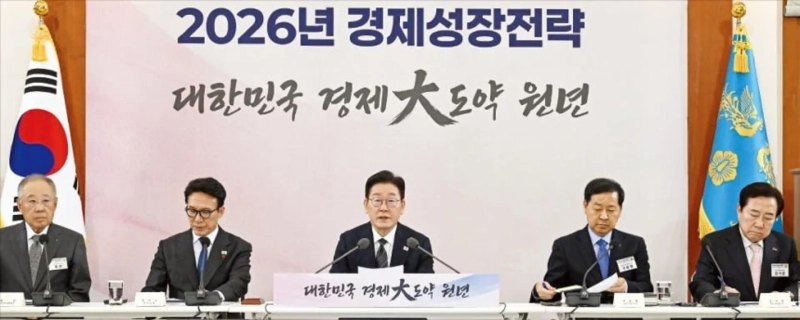
Among the measures in the government’s ‘2026 Economic Growth Strategy’ unveiled on the 9th, the policy drawing the most attention is a set of three tax-break investment products aimed at channeling idle liquidity into the stock market.
The National Growth Fund public offering (National Growth-type fund), expected to launch in Q3, will offer separate taxation benefits on dividend income. The tax rate is being reviewed at 9% or below (9.9% including local income tax), the same level applied to New Deal funds under the Moon Jae-in administration. Retail investors who hold the fund long term will be eligible for an income deduction equal to a certain percentage of their investment. The government plans to take a subordinated tranche of up to 20% of fund assets, absorbing losses first. The fund will be formed at a total size of KRW 600 billion.
Tax benefits for KOSDAQ venture funds will also be expanded. These products are required to invest more than half of their assets in venture companies or in shares of small and mid-sized firms listed on the KOSDAQ market within the past seven years. The income-deduction limit—currently capped at KRW 3 million in total within 10% of the investment amount—will be expanded to KRW 2 million per year. The 10% cap condition remains unchanged. This means that if an investor puts KRW 20 million into a KOSDAQ venture fund this year, they can receive a KRW 2 million income deduction, and if they invest the same amount again next year, they can receive another KRW 2 million deduction. A salaried worker earning at least KRW 100 million annually (assuming a 35% income tax rate) can save KRW 700,000 in taxes by investing KRW 20 million in a KOSDAQ venture fund.
◇ Expanded ISA tax exemptions
A new ‘Productive Finance ISA’ will also be introduced, allowing investments in domestic stocks and funds as well as policy funds. The Productive Finance ISA will be launched in two versions: the ‘National Growth ISA’ and the ‘Youth ISA.’ The National Growth ISA will offer greater tax benefits than the current ISA. Under the current ISA, gains and losses are netted and up to KRW 2 million (KRW 4 million for low-income ISA holders) is tax-exempt; amounts above KRW 2 million are subject to separate taxation at 9% (9.9% including local income tax).
The Youth ISA will be available to young people aged 19–34 with annual gross pay of KRW 75 million or less. It will provide an income deduction for part of the investment amount and separate preferential tax treatment for interest and dividend income. Subscribers cannot hold it concurrently with the Youth Future Savings Deposit or the National Growth ISA.
To boost housing supply, the government will extend the tax-benefit scheme for listed REITs that is set to sunset this year. Currently, dividend income generated from investing in listed REITs for at least three years is taxed at 9%, up to an investment cap of KRW 50 million. The government plans to expand the separate taxation benefits for dividend income from listed REITs.
To institutionalize digital assets, the government will pay 25% of Treasury disbursements in digital currency (deposit tokens) by 2030. It decided to pilot the use of deposit tokens in the electric-vehicle charging infrastructure project led by the Ministry of Climate, Energy and Environment in the first half of this year.
It will also push ahead with digital-asset institutionalization. Within the year, the government will prepare the ‘Digital Asset Phase 2 legislative package,’ including an authorization regime to assess stablecoin issuers’ capital requirements and rules requiring reserve assets of at least 100% of the issuance amount. The measures aim to prevent issuer distress from spreading into investor losses. In conjunction with Phase 2 legislation, it will also devise regulatory rules for cross-border transfers and trading of stablecoins.
Reporter Kim Ik-hwan lovepen@hankyung.com Reporter Nam Jeong-min peux@hankyung.com

Korea Economic Daily
hankyung@bloomingbit.ioThe Korea Economic Daily Global is a digital media where latest news on Korean companies, industries, and financial markets.