"U.S. Treasuries to be driven more by Trump administration fiscal policy than the Fed" [People on Wall Street Park Shin-young Met]
Summary
- CIO Anders Persson said the U.S. Treasury market will be influenced more by fiscal policy and the outlook for the fiscal deficit and government debt than by monetary policy.
- He said the front end is directly linked to expectations for Fed rate cuts, making it more volatile but also offering investment opportunities, and that it is too early to extend long duration.
- He cited fiscal policy risk, overheated AI expectations, and a loosening of private credit underwriting standards as key investment themes this year, saying these could create volatility and opportunities across Treasuries and the credit market.
Forecast Trend Report by Period


Interview with Anders Persson, CIO at global asset manager Nuveen
"Companies have already passed about 50% of tariff effects on to consumers"
"Front-end Treasuries are more influenced by the Fed, offering investment opportunities"
"Even if Treasuries flood the market this year, it can be absorbed"
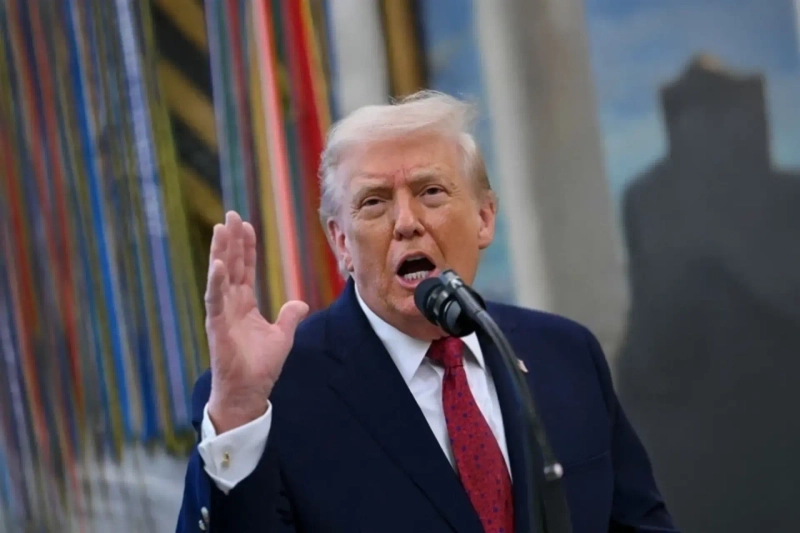
An analysis suggests that the U.S. Treasury market will be influenced more by U.S. government fiscal policy than by the Federal Reserve’s (Fed) monetary policy. However, the front end may see relatively larger swings under the influence of monetary policy, offering opportunities in short-term bonds.
Anders Persson, Chief Investment Officer (CIO) for Global Fixed Income at global asset manager Nuveen, said this in a Zoom interview with The Korea Economic Daily on the 16th (local time). On U.S. tariff policy, Persson estimated that U.S. companies have so far passed on about 50% of the cost to consumers. He also said that while the U.S. economy is showing K-shaped consumption, he does not expect delinquency rates on cards and loans among low-income households to surge. Below is the Q&A.
▶ The U.S. Treasury market has remained stable despite tensions between President Donald Trump and the Federal Reserve (Fed).
"I think it’s a very interesting phenomenon. Considering the stream of news and various issues that have emerged so far this year, the bond market has been quite stable. That’s because the market is trying to distinguish between what is actually likely to happen and to separate simple soundbites (a provocative one-liner) from substantive policy changes, rather than reacting to certain (media) headlines or inflammatory remarks themselves."
▶ Regardless of who becomes the next Fed chair, wouldn’t they conduct monetary policy with an eye on the Trump administration?
"Especially on the Fed chair issue, the nominee has to be confirmed by the Senate. In other words, checks and balances will operate in any scenario. The market believes these institutional safeguards are sufficiently robust, and while it may respond as things evolve, I think it is not overreacting right now."
▶ What is the biggest risk in the relationship between the Trump administration and the Fed?
"A development the market could be more concerned about is how the Supreme Court rules on the case involving Fed Governor Lisa Cook. If the ruling is interpreted to mean the president has the authority to remove Fed officials, then the market’s focus could shift significantly. There was also an announcement that the U.S. Department of Justice (DOJ) would investigate Chair Powell over issues related to a building, but this, too, will take considerable time before any actual outcome emerges. The market is not overreacting for now. In that sense, I’d say the market is showing considerable patience."
▶ What trend do you expect for long-term yields?
"Going forward, I think the market’s key focus will be on the fiscal side. The White House will want rates to come down, but the Fed can only directly influence the front end of the yield curve. The long end is likely to remain relatively anchored around current levels, with the fiscal deficit and government debt outlook as the key variables.
We think front-end rates can fall alongside Fed rate cuts, but long-end rates will remain tied to the fiscal outlook. The 10-year is likely to move within a (relatively stable) range, while the 30-year will be more sensitive to deficit concerns."
▶ There are forecasts that U.S. Treasury issuance could reach a record high this year. Do you think the market can absorb that supply without a sharp spike in the term premium?
"For now, we think the market can absorb supply of this magnitude. Of course, the supply outlook could change depending on how things develop. Based on Treasury Secretary Scott Bessent’s remarks, they are approaching issuance with an eye toward balancing short- and long-term issuance. Concerns raised last year about foreign central banks potentially halting Treasury purchases also have not materialized in a major way. The fact that long-end yields are anchored at high levels (meaning bond prices have already fallen a lot) also helps ease these supply-demand concerns. Still, it’s something to keep monitoring."
▶ If Treasury market volatility spikes sharply, which part of the yield curve would be most vulnerable?
"There will be volatility in 2026 as well, but I don’t expect it to be as large as in the past few years. One of the global investment themes this year is that attention is shifting from monetary policy to fiscal policy.
Central bank policies are increasingly diverging. The Fed and the BOE are in a rate-cutting phase, the ECB is on pause, and the Bank of Japan is raising rates. The market has already priced in a significant portion of this. In such an environment, U.S. Treasuries are also likely to move in a range-bound pattern."
▶ Which segment is relatively attractive for long-term investors?
"The attractive segment is still the front end. We don’t think it’s time yet to take on long duration aggressively. The front end is more directly linked to expectations for Fed rate cuts. Volatility may actually show up more in the front end, which can provide investment opportunities. This year, I think it’s important to use those opportunities flexibly."
▶ Some argue that fiscal dominance has weakened the effectiveness of monetary policy.
"That’s one of our core investment themes. Fiscal policy is becoming increasingly important and is having a larger impact on the yield-curve structure and the term premium.
That doesn’t mean monetary policy is not important, but the market has already priced in much of it. Fiscal issues, by contrast, will take center stage going forward. That’s true not only for the U.S., but also for Europe and Japan."
▶ Corporate bonds from companies like Microsoft are trading at lower yields than U.S. Treasuries.
Are institutional investors starting to view U.S. corporate bonds as a safer haven than Treasuries?
"This phenomenon has long been seen in emerging markets—cases where very strong corporates are perceived as more stable than the sovereign. In the U.S., too, companies like Microsoft have very strong credit fundamentals and a structural growth engine in AI. But that doesn’t mean confidence in U.S. Treasuries has been undermined. The two markets have different supply-demand structures and technical factors."
▶ How do you assess the credit quality and risks of AI companies’ bonds?
"The bond market is already assessing that. There have been large issuance cases like Oracle, and spreads on some BBB-rated bonds have widened significantly. We are diversifying AI-related investment opportunities not only through corporate bonds but also through data-center infrastructure, ABS, utilities, and other channels. There are many similarities with past internet and telecom investment cycles."
▶ If tariff risks continue this year, how much will they affect the U.S. economy?
"We look at tariffs from two perspectives. First is how much of the tariff cost companies pass on to consumers. So far, we think about 50% has been passed through.
Second is the Supreme Court ruling. But regardless of the ruling, it’s highly likely the administration will maintain tariffs through other means. If tariffs were completely repealed and there were no substitute measures, growth could rise and inflation could fall, but that is not the base case."
▶ Delinquency rates among low-income households are rising and K-shaped consumption is emerging. Will U.S. consumers’ debt-servicing capacity hold up into the second half of this year?
"Delinquency rates (on credit cards and loans, etc.) have risen, but recently they have stabilized. For now, we do not expect a sharp surge (in delinquencies). If employment holds up and rates come down, consumers should be able to hang on. But we need more data."
▶ How do global investors assess Korean government bonds?
"The recent rise in Korean government bond yields is largely driven by the global rise in rates and relative-value adjustments. It’s the same flow as in the U.S., Europe, and Japan. Some fiscal concerns are reflected as well, but global factors are larger."
▶ What risks is the market underpricing, and what is the biggest investment opportunity this year?
"First is fiscal policy risk. The market is still overly focused on monetary policy.
Second is that expectations for AI are too high. Disappointing results could affect not only equities but also the credit market. Third is the possibility that underwriting standards (loan and investment screening) loosen in areas such as private credit. That could create volatility and, at the same time, opportunities."
New York=Correspondent Park Shin-young nyusos@hankyung.com

YM Lee
20min@bloomingbit.ioCrypto Chatterbox_ tlg@Bloomingbit_YMLEE