FX, bonds: Won-dollar extends decline…market focuses on NPS strategy
Summary
- It said the won–dollar exchange rate this week is closely linked to the yen’s moves and the possibility of joint intervention by the U.S. and Japan.
- It noted that the asset allocation strategy to be discussed by the National Pension Service (NPS) Fund Management Committee on the 26th is expected to significantly affect the won–dollar exchange rate.
- It explained that the three-year Korean Treasury yield rose, and that the possibility of a supplementary budget and the Bank of Japan’s stance toward an early policy-rate hike are factors behind market weakness.
Forecast Trend Report by Period


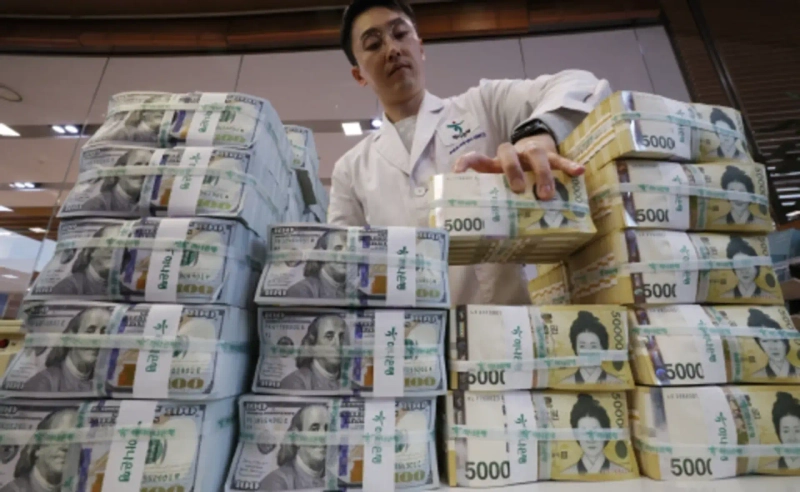
This week, the won–dollar exchange rate is likely to track moves in the yen closely. After the yen–dollar pair plunged on signs of coordinated intervention by the Japanese and U.S. governments, the won–dollar rate also fell sharply over the weekend. The asset allocation strategy to be discussed at the National Pension Fund Management Committee on the 26th is also expected to have a major impact on the exchange rate.
U.S. President Donald Trump had pressured Denmark and seven other European countries with “Greenland tariffs,” but withdrew the move on the 22nd as a wave of U.S. asset selling (“Sell America”) spread. In the process, U.S. stocks, bonds and the dollar weakened in tandem. The dollar index, which measures the greenback against six major currencies, fell 0.41% from the previous session to 98.378 on the 23rd.
Against this backdrop, signs of U.S. and Japanese moves to support the yen have emerged. According to Reuters and others, markets learned that the Bank of Japan (BOJ) and the Federal Reserve Bank of New York conducted “rate checks,” querying major banks about market conditions. Rate checks are typically carried out ahead of intervention by FX authorities. This fueled speculation that the two countries could launch joint intervention to support the weakening yen.
The won has recently been closely tracking the yen’s movements. Accordingly, in overnight trading on the 23rd, the won–dollar rate closed at 1,462.50 won, down 2 won from the previous day. Both daytime and overnight sessions extended a decline for a third consecutive day versus the prior session.
The yield on the three-year Korean Treasury bond ended the session at 3.137% per annum, up 0.028% from the previous day. Ahn Ye-ha, a researcher at Kiwoom Securities, said, “Comments about the possibility of a supplementary budget helped drive market weakness,” adding, “The Bank of Japan’s stance toward an early policy-rate hike could also act as an additional negative factor.”
Reporter Nam Jeong-min peux@hankyung.com

Korea Economic Daily
hankyung@bloomingbit.ioThe Korea Economic Daily Global is a digital media where latest news on Korean companies, industries, and financial markets.