Yen strengthens on talk of U.S.-Japan intervention… Japan stocks down 1.8%
Summary
- The report said the yen climbed as much as 1.5% against the dollar on the possibility of market intervention by U.S. and Japanese authorities, with the signal coming from the New York Fed’s rate check.
- It added that the stronger yen sent the Nikkei 225 down 1.79%, while bonds also strengthened as the 10-year Japanese government bond yield fell to 2.235%.
- Experts said the New York Fed’s rate check is a precursor to action, warning that without follow-through, speculative pressure could build to push the yen’s value lower.
Forecast Trend Report by Period


New York Fed ‘rate check’ hints at possible joint intervention by the two countries
Japan’s 10-year JGB hits 2.235%
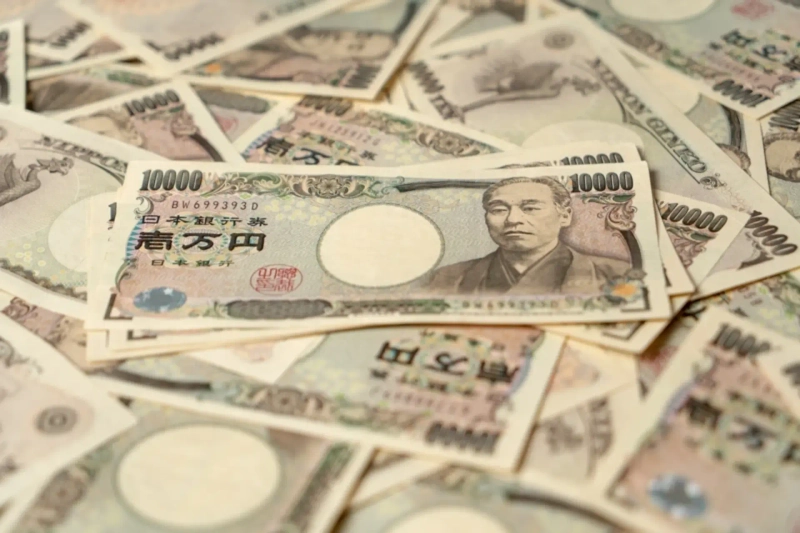
The yen rose as much as 1.5% against the dollar on concerns that U.S. and Japanese authorities could intervene in markets. The stronger yen pushed the Nikkei 225 down 1.79%.
According to Bloomberg and other foreign media outlets on the 26th (local time), the yen climbed to 153.40 per dollar, the highest level since mid-November, after the Japanese government warned it was ready to take action. The move followed signals that the two countries could jointly step in to defend the yen, after the Federal Reserve Bank of New York carried out a rate check over the weekend.
Japanese government bonds also strengthened. On the day, the benchmark 10-year JGB yield extended its rebound, falling 2 basis points (1bp=0.01%) to 2.235%.
The yen’s sharp rise is putting pressure on the dollar while fueling gains in some Asian currencies such as the South Korean won and the Singapore dollar.
Chief Cabinet Secretary Minoru Kihara said at a regular briefing that Japan would work closely with the United States and act in line with the joint agreement between the two countries’ finance ministers in September last year.
Masahiko Lu, chief bond strategist at State Street Global Advisors, said, “This looks like a controlled, policy-engineered realignment.”
Prime Minister Sanae Takaichi said it would not be appropriate for the prime minister to comment on matters “for the market to decide,” but Finance Minister Satsuki Katayama said she has discretion, including intervention measures. Katayama added that she is monitoring exchange-rate moves with great urgency.
A stronger yen is expected to help ease the burden of household living costs in Japan, a key concern for the Takaichi government. For the United States, a weaker dollar could also support President Trump’s push to revitalize U.S. manufacturing.
Traders’ reports that the New York Fed contacted financial institutions to conduct a “rate check” to gauge the yen’s exchange rate, along with recent close communication between Governor Katayama and Treasury Secretary Scott Bessent, point to the possibility of joint intervention.
Lu of State Street said, “Historically, Treasury rate checks are a precursor to action.” He added, “If no action follows, speculative pressure will intensify as the market tests the Treasury’s resolve by pushing the yen lower.”
The yen rose more than 5 yen against the dollar, gaining nearly 3% over two sessions. This marks the biggest advance since April last year, when markets were thrown into turmoil by President Trump’s tariff offensive.
ADVERTISEMENT
The yen’s extreme weakness had also spilled over into turmoil in Japan’s government bond market. Yields on the longest-maturity JGBs hit record highs early last week before pulling back.
Kim Jeong-a, contributing reporter kja@hankyung.com

Korea Economic Daily
hankyung@bloomingbit.ioThe Korea Economic Daily Global is a digital media where latest news on Korean companies, industries, and financial markets.