PiCK
Thanks to Trump… EU and India strike biggest FTA in 20 years, covering 25% of global GDP
Summary
- The EU and India said they have concluded the largest FTA, covering 2 billion people and 25% of global GDP.
- Under the deal, tariffs will be eliminated or reduced on 96.6% of EU exports to India and 99.5% of India’s exports to the EU, expanding trade.
- India said it will expand opportunities in the EU market for exports of automobiles, wine and labor-intensive goods, boosting investor confidence.
Forecast Trend Report by Period


Biggest FTA covering 2 billion people and 25% of global GDP
Prime Minister Modi praises the India-EU pact as the “mother of all agreements”
US Treasury’s Bessent criticizes the India-EU FTA
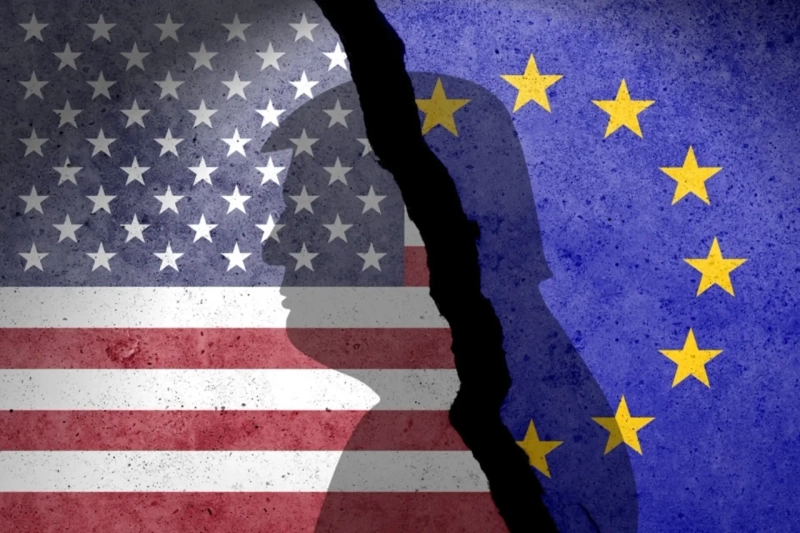
The European Union (EU) and India have concluded a free trade agreement after 20 years of negotiations. Backlash to US President Donald Trump’s hardline tariff tactics is driving compromise among other countries.
On the 27th (local time), the European Commission said in a press release that “the EU and India announced the conclusion of the largest free trade agreement (FTA), covering 2 billion people and 25% of global gross domestic product (GDP).”
Indian Prime Minister Narendra Modi also announced the deal that day, hailing the India-EU free trade agreement as the “mother of all agreements.” He said the accord would strengthen India’s manufacturing and services sectors and boost investor confidence in India, Asia’s third-largest economy.
European Commission President Ursula von der Leyen wrote on X that “we have concluded the most significant agreement in history,” adding that “we have created a free-trade area of 2 billion people that will benefit both sides.”
The European Commission projected that the agreement will eliminate or reduce tariffs on 96.6% of EU exports to India, doubling EU goods exports by 2032. Export items range from automobiles and industrial products to wine, chocolate and pasta. India’s Ministry of Commerce and Industry said the EU will eliminate or reduce tariffs on 99.5% of goods imported from India over the next seven years.
The breakthrough in negotiations that had struggled for two decades reflects the rapidly shifting global landscape amid President Trump’s tariff threats. As a result, countries are focusing on reducing economic dependence on the United States and China.
The pact is being seen as a strategic backstop to offset the impact of volatile US trade policy.
President Trump has yet to issue an official response to the EU-India trade deal, but is unlikely to be pleased. Treasury Secretary Scott Bessent has already criticized the EU for pressing ahead with a trade agreement with India.
India, too, is rushing to conclude trade agreements with various countries to shed its image as a protectionist economy and to offset the impact of the 50% tariffs imposed by President Trump.
Amitendu Palit, head of trade and economic research at the Institute of South Asian Studies, said Trump’s unpredictability is strengthening countries’ resolve to set aside conflicts and resentment and unite. He added that “diversification has become an absolutely essential requirement.”
According to Bloomberg, India agreed to import up to 250,000 European-made vehicles at preferential tariff rates—more than six times the volume allowed under recent agreements. The European Commission also said India will gradually cut tariffs on premium European wines from 150% to 20%.
India is expected to find major opportunities in the EU market for exports of labor-intensive goods such as apparel, jewelry and footwear, which have been hit hard by Trump’s 50% tariffs. The EU also offered binding commitments on student mobility and post-graduation visas, as well as concessions across 144 services sectors.
The agreement will be formally signed after a legal review, which is expected to take about six months. Ratification by the European Parliament is also required.
A few days ago, the EU also finalized a separate trade agreement it had long negotiated with Mercosur, a South American bloc. That deal is also expected to help the EU reduce reliance on the United States and China.
India is likewise working to find new markets. India has concluded its fourth trade agreement, following deals with the UK, Oman and New Zealand.
Modi also plans to build cooperative ties with the Mercosur bloc, Chile, Peru and the Gulf Cooperation Council (GCC) to secure strategic resources and expand India’s international influence.
According to official Indian data, EU-India trade totaled $136.5 billion in India’s fiscal year ended March 2025, accounting for more than about 17% of India’s total exports. India is the EU’s ninth-largest trading partner.
Meanwhile, the EU and India also announced a new security partnership in the defense sector. The two sides agreed to strengthen cooperation in the defense industry. This is expected to help improve EU defense companies’ access to the Indian market, as India currently imports a large amount of weapons from Russia. The agreement is largely political in nature, and comes as the EU seeks to broaden its alliances while President Trump shakes the transatlantic alliance. The EU has recently concluded similar agreements with the UK and Canada.
Hosuk Lee-Makiyama, director of the European Centre for International Political Economy (ECIPE), told CNBC that the EU-India trade agreement is one of the best deals the two sides can strike. He noted that “with the US and China still reluctant to open new markets, there was reason for both sides to pursue a deal that could have a positive impact on each other, even amid the Trump administration’s expected backlash.”
Kim Jung-ah, contributing reporter kja@hankyung.com

Korea Economic Daily
hankyung@bloomingbit.ioThe Korea Economic Daily Global is a digital media where latest news on Korean companies, industries, and financial markets.