Bessent also lashes out… “No trade deal with South Korea until the National Assembly approves it” [Lee Sang-eun’s Washington Now]
Summary
- U.S. Treasury Secretary Scott Bessent said there will be no trade deal until South Korea’s National Assembly approves the special law on investment in the United States.
- Trump said he would raise reciprocal tariffs on automobiles and other items from 15% to 25% because South Korea has not approved the trade deal, increasing risks to South Korean companies’ U.S.-bound exports and investment.
- As U.S. pressure prompts South Korea’s government and political circles to move on the special law on investment in the United States and prepare countermeasures, uncertainty over future investment and tariffs could persist.
Forecast Trend Report by Period


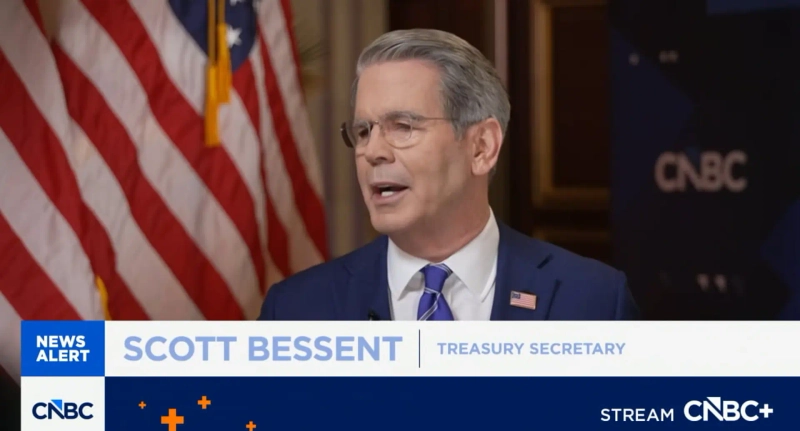
U.S. Treasury Secretary Scott Bessent said on the 28th (local time) that “because South Korea’s National Assembly has not passed the trade deal, there is no trade deal with South Korea until they ratify it.”
Bessent made the remarks in response to a question in a CNBC interview that day asking whether President Donald Trump is raising tariffs on South Korea because it has not approved the trade deal.
When the host asked, “What signal does this send to other countries that have already concluded negotiations and even announced them?” Bessent replied, “Just sign the agreement.”
Asked whether “South Korea will be subject to a 25% tariff until ratification is complete,” he answered clearly, “I think this helps move things along.” In other words, he appeared to believe that Trump’s mention of higher tariffs would lead to passage of the bill. The host and Bessent used the word “ratify,” which can be interpreted as “ratification,” but in the overall context it is understood to mean passage of the special law on investment in the United States.
While Commerce Secretary Howard Lutnick, who has led the U.S.–South Korea tariff talks, has not mentioned the issue directly on social media and elsewhere, Bessent’s statement that “there is no trade deal until approval” can also be read as hinting at friction with South Korea’s counterpart, the Ministry of Economy and Finance. Recently, Deputy Prime Minister for the Economy Koo Yun-cheol said in an interview with Reuters on the 16th that the likelihood is “low” when asked whether investments could begin in the first half of this year.
In the interview, Koo added, “For example, even if a nuclear power plant is selected, there are procedures that must be gone through such as site selection, design, and construction, so the size of initial investment funds will be much smaller than that.” He was referring to the annual cap of $20 billion in investment in the United States agreed by the two countries. He said that “given the current FX situation, at least this year (the investment scale) will not be large.” Reuters ran the story under the headline, “South Korea’s $350 billion investment in the U.S. unlikely to begin in the first half of this year.”
Bloomberg, citing Koo’s remarks, sent a story on the 20th under the headline “South Korea delays $20 billion investment due to the exchange rate.” In the article, Bloomberg wrote that when it asked the Ministry of Economy and Finance for its position, it reaffirmed Koo’s earlier remarks that investment would be difficult in the first half. Bloomberg later published an additional report on the 22nd saying that this “does not mean it will not invest $20 billion,” but President Trump likely felt the need to tighten his “grip” again.
Earlier, Choi Ji-young, director general for international economic affairs at the ministry, said at a recent briefing with reporters held after Bessent’s verbal intervention on the exchange rate (an X post on the 14th) that the government conveyed to the U.S. Treasury the view that “if FX market volatility and instability increase, it could limit implementation of investment in the United States.” When Koo met Bessent in Washington, DC, on the 12th, there was a shared understanding that the won was weakening excessively, and Bessent unusually tried to support South Korea through public comments. However, subsequent interviews by Koo appear to have been conveyed to the Trump administration with the nuance that South Korea “may not keep its promise.”
Bessent’s categorical statement that “there is no trade deal until the National Assembly approves it” runs counter to what the two countries agreed. When the fact sheet was released last November, the two sides decided to apply tariff cuts “from the 1st day of the month in which the relevant law is introduced in the legislature.” With tariff cuts already being applied under that arrangement, changing the timing to “until approval” would excessively heighten uncertainty for South Korean companies. Even if the U.S. ultimately stops at verbal threats without actually restoring tariffs, significant additional risk has already been priced into South Korean companies’ export and investment decisions in the U.S., as they are already bearing substantial costs.
On the 26th, Trump said, “Because the South Korean legislature has not codified our historic trade deal into law, I am accordingly raising all reciprocal tariffs on automobiles, timber, pharmaceuticals, and everything else from 15% to 25%.” However, he did not specify when, and no follow-up actions such as an executive order with legal effect or publication in the Federal Register followed.
On the 27th, Trump went on to say, “We will work out a solution with South Korea.” This more clearly revealed an intent to use pressure to speed passage of the special law on investment in the United States.
The government is scrambling to put together countermeasures. Industry and Trade Minister Kim Jung-kwan will travel from Canada to Washington, DC, later that evening. He plans to meet with Commerce Secretary Howard Lutnick and others. Jamieson Greer, the U.S. Trade Representative (USTR), also said he would meet and talk with South Korean officials later this week. Greer said, “South Korea is an ally, and we do not harbor ill will.” The Democratic Party of Korea expects it may be able to wrap up the related procedures as early as next month.
Washington = Correspondent Lee Sang-eun selee@hankyung.com

Korea Economic Daily
hankyung@bloomingbit.ioThe Korea Economic Daily Global is a digital media where latest news on Korean companies, industries, and financial markets.