Fed holds rates despite Trump pressure… Powell stays silent on keeping his governor post [Fed Watch]
Summary
- The Fed said it held the benchmark rate at 3.5–3.75% at the January FOMC.
- The Fed said U.S. economic activity is expanding at a solid pace, but inflation remains somewhat elevated relative to the 2% target.
- Some members argued for a 0.25 percentage-point cut, highlighting internal differences over the monetary-policy path.
Forecast Trend Report by Period


January FOMC keeps benchmark rate at 3.5–3.75%
“U.S. economy expanding at a solid pace”
Powell avoids comments about the Trump administration
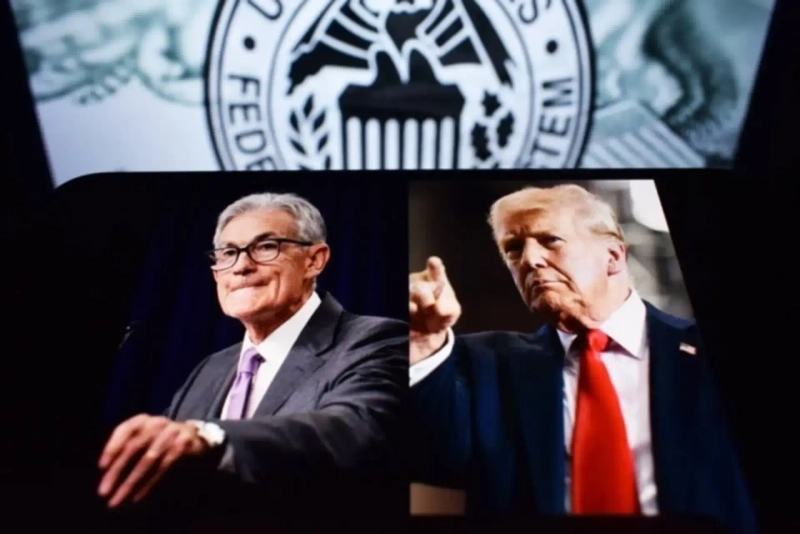
The U.S. central bank (Fed) held its January Federal Open Market Committee (FOMC) meeting on the 28th (local time) and kept the benchmark interest rate unchanged at 3.5–3.75%. After cutting rates by 0.25% point in each of September, October and December last year—three consecutive cuts—the Fed left rates unchanged at this FOMC. It was also the first rate hold since last July.
The decision is seen as a recalibration to gauge the effects of the recent series of cuts and to recheck trends in inflation and employment data.
“U.S. economy solid”
The Fed assessed the U.S. economy by saying that “economic activity is expanding at a solid pace.” It said job gains remain at a low level and the unemployment rate is showing signs of stabilizing. However, on inflation it judged that it is “still somewhat elevated.”
At a press conference after the FOMC, Fed Chair Jerome Powell said, “In (last year’s) December, the unemployment rate was 4.4% and there has been no significant change in recent months,” adding that “inflation has eased considerably from its mid-2022 peak, but remains somewhat elevated relative to our longer-run goal of 2%.” In other words, he said there is no need to cut rates to support employment stability or to raise rates to rein in inflation.
Inflation has indeed eased considerably from its mid-2022 peak, but remains somewhat elevated relative to the long-run 2% goal. Powell said, “Based on estimates from the Consumer Price Index, over the 12 months through December, total personal consumption expenditures (PCE) prices rose 2.9% and core PCE prices, which exclude volatile food and energy, rose 3.0%.”
Powell said, “A significant portion of the rise in goods prices is due to tariffs,” adding that “it is easier to resolve than demand-driven inflation, and tariffs are likely to act as a one-time price increase.”
On the timing and pace of additional rate cuts, he reaffirmed the position he laid out after the December rate cut, saying the Fed is “in a good position to respond to the risks we face between our dual mandate of price stability and maximum employment.” Still, he noted that “no one’s baseline is that the next rate move will be a hike,” indicating the Fed is not considering rate increases under the current conditions.
No comment on Trump pressure
At the briefing, reporters pressed Powell on the Donald Trump administration’s pressure for rate cuts, including the issuance of a subpoena. Powell, however, remained cautious and offered no further comment.
Asked why he had unusually issued a statement about the grand jury subpoena, he said, “Please refer to the statement released on the 11th. I will not elaborate or repeat it.” Asked whether he had complied with the subpoena, he replied, “I have nothing to say.”
Earlier, on the 11th, Powell released a public statement saying he had been served with a subpoena to appear before a grand jury in connection with renovations at the Fed headquarters building, criticizing the probe as an unprecedented executive-branch threat to the Fed’s independence.
Powell’s term as Fed chair ends in May, but he declined to say whether he would serve out his remaining term as a governor, saying, “I have nothing to say today.” Traditionally, Fed chairs step down from the Board of Governors when their chair term ends. But amid intensifying pressure from the Trump administration for rate cuts, speculation has grown that Powell could remain in his seat through the end of his governor term on January 31, 2028, to safeguard the Fed’s independence.
Supreme Court hearing on Gov. Cook: “the most important legal case”
Powell did explain why he attended the U.S. Supreme Court hearing related to the Trump administration’s attempt to remove Fed Governor Lisa Cook, saying, “This may be the most important legal case in the Fed’s 113-year history,” and adding, “I judged it would have been harder to explain why I did not attend.”
Meanwhile, the decision to hold rates was supported by 10 members, including Powell. By contrast, Steven Myron, an associate of President Donald Trump, and Governor Christopher Waller, a candidate to become the next Fed chair, dissented at this meeting, arguing the benchmark rate should be cut by 0.25% point. The vote was seen as another sign of internal differences over the monetary-policy path.
New York=Correspondent Park Shin-young nyusos@hankyung.com

Korea Economic Daily
hankyung@bloomingbit.ioThe Korea Economic Daily Global is a digital media where latest news on Korean companies, industries, and financial markets.