Gold and silver 'plunge shock'…down more than 10% in a single day—why? [Juwon Kim’s Commodities Focus]
Summary
- International gold and silver prices fell more than 10% in a single day, with the recent record rally giving way to a correction.
- Trump’s Kevin Warsh nomination, a strong PPI, diminished expectations for Fed rate cuts, and a stronger dollar were cited as drivers of the decline in gold and silver.
- Analysts said a combination of crowded long futures positions, higher margins, and shifts in ETF flows encouraged position reductions and amplified volatility.
Forecast Trend Report by Period


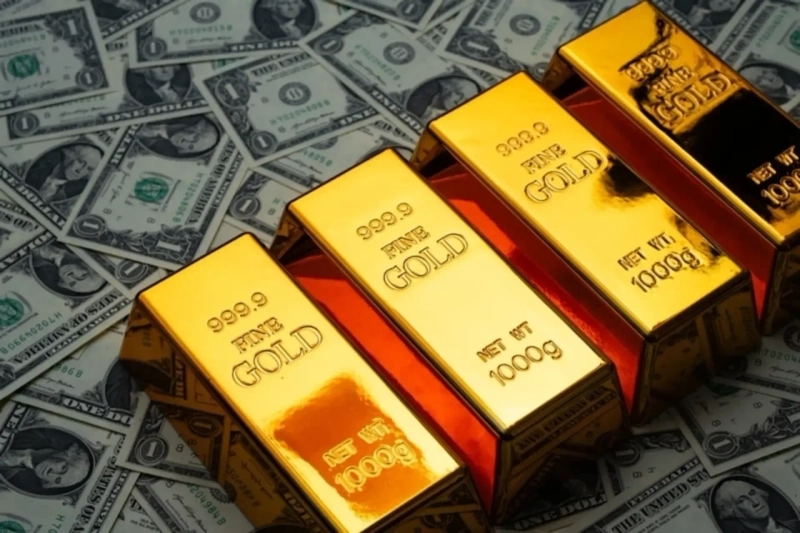
International gold and silver prices fell sharply. Analysts say the move was influenced by President Donald Trump’s nomination of Kevin Warsh, a former Federal Reserve governor, as a candidate for the next Fed chair. Others note that the selloff was amplified by investors cutting futures positions.
According to Reuters on the 31st, spot gold traded at $4,883.62 per troy ounce, down 9.5% from the previous session. That came just one day after it set a new high at $5,594.82, having for the first time ever broken above $5,500 per troy ounce. On the New York futures market, April-delivery gold futures also settled at $4,745.10 per troy ounce, down 11.4% on the day.
After first topping $5,000 per troy ounce on the 26th, international gold prices had continued their record rally on persistent buying. International silver prices, which had also rallied for months, saw an even steeper correction.
Reuters said spot silver plunged 27.7% to $83.99, dropping below $100 per troy ounce. It marked the largest single-day decline since 1982.
Spot gold also briefly fell to as low as $77.72 per troy ounce. Reuters added that the rout in gold and silver dragged other precious metals sharply lower as well, including platinum (-19.18%) and palladium (-15.7%).
Some in the industry say thin liquidity recently allowed FOMO-driven small inflows to trigger outsized price swings—meaning prices were being driven more by liquidity than by intrinsic value.
Gold’s drop on the day was largely tied to expectations for the Fed’s rate path. After Trump nominated Warsh, the dollar strengthened, and markets interpreted the move as potentially weakening expectations for aggressive rate cuts, according to analysts.
In addition, the producer price index (PPI) released that day came in stronger than expected (Reuters: +0.5% month-on-month versus an expected +0.2%), reinforcing the view that the Fed is less likely to cut rates.
Analysts also said a range of factors around gold and silver investing interacted at once—crowded futures positioning, higher margin requirements, shifts in ETF flows and a stronger dollar, among other structural drivers.
According to weekly COT (Commitments of Traders) data from the U.S. Commodity Futures Trading Commission (CFTC), as of the 27th, managed money in the silver (Comex 5,000 oz) futures market was net long.
Specifically, managed money (institutional investors who run entrusted client funds) held 19,423 long contracts in silver futures, versus 11,724 short contracts. That suggests managed money was positioning with greater weight on further upside in silver prices.
Gold (Comex 100 oz) also saw managed money long positions at 143,321 contracts, far exceeding 25,162 short contracts. Those figures themselves do not imply a plunge. But when prices have risen as sharply as they recently did, a rise in volatility can make cascading position reductions likely even on a small trigger—an effect that may have amplified the decline.
In such situations, margin can be decisive. Because futures trading is inherently leveraged, when volatility rises, exchanges and clearinghouses adjust margin requirements. CME Clearing, under CME Group, said in mid-January it would change the method of calculating precious-metals margins to a percentage of notional value.
On Jan. 27, it raised margins on silver futures from 9% to 11%. Requirements are higher for high-risk accounts. Higher margins mean more cash is needed to maintain the same position. For participants unable to meet those calls, cutting positions becomes the only option. That selling can in turn increase volatility, creating a vicious cycle of further margin hikes and further liquidations.
A turn in the dollar’s direction is another key factor. When the dollar strengthens, dollar-denominated metals become more expensive in non-dollar terms, pressuring demand. Many funds trade that relationship using quantitative models. Dollar moves can trigger model-driven trading, hedging and rebalancing faster than individual news, making prices move not like stairs but like an elevator.
Bloomberg said, “While Warsh’s nomination did serve as a catalyst for a pullback in gold and silver, it came somewhat late in terms of timing,” adding, “The market had simply been looking for an excuse to reverse a parabolic surge.”
Reporter Juwon Kim kjwan@hankyung.com

Korea Economic Daily
hankyung@bloomingbit.ioThe Korea Economic Daily Global is a digital media where latest news on Korean companies, industries, and financial markets.