Trade and diplomatic teams both return empty-handed… U.S. ‘25% tariff’ countdown begins
Summary
- It reported that fears of a tariff hike are spreading after U.S. President Donald Trump said he would raise tariffs on Korean products from 15% to 25%.
- It reported that the U.S., citing delays in legislation on a special law on investment in the U.S. and non-tariff barriers, is accusing Korea of failing to keep its promises and has moved to the stage of preparing Federal Register publication procedures for a reimposition of a 25% tariff.
- Experts warned that if tariffs are actually imposed, it would deal an enormous blow to the auto sector and domestic supplier industries, even as major companies’ U.S.-bound investment is already under way.
Forecast Trend Report by Period


Yeo Han-koo: “U.S. preparing to publish in the Federal Register”
No gains even from meetings with Cho Hyun and Rubio
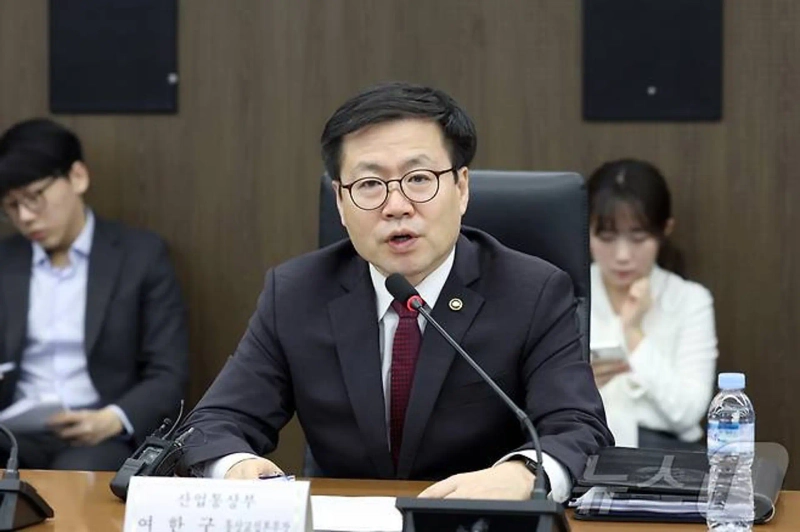
Concerns are growing that the tariff hike on Korean-made products, previously flagged by U.S. President Donald Trump, will become reality. Despite back-to-back trips to the United States by Korea’s top officials overseeing industry, trade and diplomacy to convey Seoul’s commitment to follow through on U.S.-bound investment, they failed to ease Washington’s dissatisfaction.
Yeo Han-koo, the trade minister at the Ministry of Trade, Industry and Energy, met reporters after wrapping up a four-day visit to Washington, D.C. on the 3rd (local time), saying he believed “U.S. relevant agencies are coordinating on publishing the notice in the Federal Register,” a procedural step for raising tariff rates.
Yeo said his focus in meetings with U.S. government and congressional officials was to explain Korea’s willingness to deliver on pledges related to investment in the United States and the removal of non-tariff barriers. He added that “the U.S. side may not fully understand where our system differs from theirs, so we will likely need to continue outreach (engagement with the U.S.).” He did not meet his counterpart, Jamieson Greer, the U.S. Trade Representative (USTR).
Foreign Minister Cho Hyun also held talks with U.S. Secretary of State Marco Rubio in Washington, D.C. the same day, but they were reportedly unable to have any substantive discussion on a renewed tariff increase.
On the 26th of last month, President Trump said, “Korea’s National Assembly is not passing a special law on investment in the U.S.,” adding, “I will raise tariffs on Korean products from 15% to 25%.”
Huh Yoon, a professor at Sogang University’s Graduate School of International Studies, said, “It looks as though the U.S. is using tariffs as a weapon to secure clear leadership over the sectors, modalities and scale of Korea’s investment in the U.S.”
Korea says it will follow through on investment; U.S. says it doesn’t believe it… tariff talks fail to find a breakthrough
All-out diplomacy and trade push falls flat… U.S. views legislative delays as an ‘excuse’
Fears of a tariff hike are spreading again as Korea’s top trade and diplomatic officials, dispatched in haste to avert President Donald Trump’s tariff threat, head home empty-handed. The United States appears to have demanded immediate follow-through and tangible outcomes from Korea’s investment in the U.S. Seoul is said to have cited “procedural issues,” including legislative gridlock in the National Assembly, as the reason for delays—prompting analysis that the “gap in perceptions” between the two sides is significant. Some also point to the complicated backdrop, including delays in the U.S. Supreme Court’s final ruling on reciprocal tariffs.
Yeo Han-koo fails to meet his counterpart
On the 3rd (local time), Yeo Han-koo told reporters in Washington, D.C. ahead of his return that “U.S. agencies are coordinating the procedures to publish details of the tariff-rate increase in the Federal Register.” This has fueled interpretations that a reimposition of a 25% tariff is now in its final countdown.
Yeo engaged with members of Congress in charge of trade issues and the U.S. Trade Representative (USRT), emphasizing that Korea’s digital legislation—such as the Online Platform Act—does not discriminate against major U.S. corporations, and that Korea’s commitment to carry out its U.S.-bound investment pledges remains unchanged.
However, a meeting with his counterpart, USTR head Jamieson Greer, did not materialize. Trade authorities said Greer’s schedule may have shifted due to developments such as the U.S.-India tariff agreement concluded on the 2nd, but the failure to meet has been read as a sign of a chilling tone between Seoul and Washington.
One trade expert noted that Greer, in a media interview last week, criticized “Korea not keeping its promises” while also saying he would “meet and talk with the Korean government,” adding, “It is hard to accept that a scheduled meeting fell through using India as the excuse.” The expert suggested Greer may have deliberately avoided the meeting.
Foreign Minister Cho Hyun visited the United States to attend a “resource security conference” and met Secretary of State Marco Rubio, but they were unable to meaningfully discuss tariffs. Analysts say the meeting was unlikely from the outset to break the impasse, given Rubio’s limited ability to exert real influence over tariffs and trade matters.
First, ease the ‘accumulated mistrust’
The United States has stressed that the legislative delay over the “special law on investment in the U.S.” is at the root of the current situation. Yet even after the National Assembly signaled its intent to pass the bill quickly, Washington has not withdrawn its 25% tariff threat.
Some trade experts cite the government’s insufficient communication with the U.S. side since the joint fact sheet released after the Korea-U.S. summit in November last year as a reason for Washington’s continued hard line. While the U.S. maintained its “promise to cut tariffs,” Korea went for an extended period without even placing the bill on a standing committee agenda. Subsequent explanations such as “our system differs from the U.S.” or “it was delayed due to the National Assembly schedule” may have looked like “stalling for time” to Washington.
Non-tariff barriers are also an issue. The Korea-U.S. fact sheet specified that, in exchange for tariff reductions, the two sides would address issues in agriculture, quarantine, digital, intellectual property and labor through the “Korea-U.S. FTA Joint Committee.” However, regarding a consultation plan Seoul presented to Washington last November, the U.S. side effectively derailed the joint committee itself, and the committee has yet to even set a schedule.
Choi Seok-young, head of the International Trade Institute at Lee & Ko, said, “This situation is not a sudden bout of U.S. obstinacy, but the result of accumulated mistrust,” adding, “In particular, non-tariff barriers involve pledges that often require legal revisions, so they are not easy to resolve in the first place.”
Some analysts say the government should move quickly to mollify Washington by presenting a “first investment project” without delay, separate from passing the investment bill. Huh Jung, a professor of economics at Sogang University, warned, “The executive branch should not shift blame to the legislature; it must put forward concrete proposals with the top priority of removing uncertainty,” adding, “If tariffs are actually imposed, it will deliver an enormous shock—starting with the auto sector—to domestic supplier industries, even as major conglomerates have already begun investing in the U.S.”
Reported by Kim Dae-hoon/Kim Rian/Ha Ji-eun / Washington=Lee Sang-eun, correspondent daepun@hankyung.com

Korea Economic Daily
hankyung@bloomingbit.ioThe Korea Economic Daily Global is a digital media where latest news on Korean companies, industries, and financial markets.