The Dollars Earned Went Right Back Out
Summary
- The Bank of Korea said residents’ overseas stock investment ($114.3479 billion), nearly matching last year’s current account surplus ($123.0538 billion), was behind the exchange rate staying elevated.
- Retail investors’ direct and indirect overseas stock investment is estimated at up to $45.0 billion, exceeding investment by public institutions such as the National Pension Service ($40.7 billion).
- The Bank of Korea said the rise in overseas investment substantially offset the effect of the current account surplus on FX supply and demand, adding to upward pressure on the won–dollar exchange rate.
Forecast Trend Report by Period


Overseas stock investment: 93% of the current account surplus
Retail investors invested more than pension funds
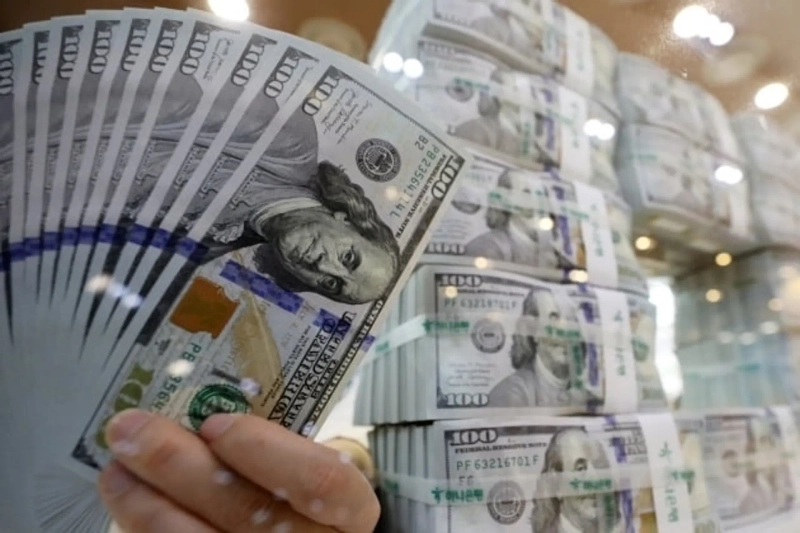
The Bank of Korea (BOK) said the won’s weak streak last year despite a record-high current account surplus was due to overseas equity investment flows that nearly matched the size of the surplus. In particular, retail investors accounted for the largest share of overseas stock investment.
On the 6th, as it released the 2025 balance of payments, the BOK also noted that last year’s overseas stock investment reached an all-time high. According to the BOK, residents’ overseas equity investment totaled $114.3479 billion last year, roughly tripling from $42.1566 billion in 2024.
That amount equals 92.9% of the current account surplus ($123.0538 billion), meaning most of the dollars earned from the surplus were sent back out through overseas investment. Typically, dollar inflows from a current account surplus push the exchange rate lower, but last year that relationship did not hold as overseas investment surged. The annual average exchange rate last year was 1,421.97 won per dollar, the highest on record.
By economic agent, retail investors recorded the largest amount of overseas equity investment. Officially, retail investors’ overseas stock investment was tallied at $31.4 billion, but including purchases of overseas-listed ETFs via asset managers, their direct and indirect investment is estimated to have reached $45.0 billion. That exceeds the investment amount of public institutions such as the National Pension Service ($40.7 billion) and is above the combined overseas equity investment by all economic entities in 2024 ($42.1 billion).
Kim Young-hwan, director-general of the BOK’s Economic Statistics Department I, said, “The increase in overseas investment is assessed to have offset to a significant extent the current account surplus effect, a fundamental factor, in terms of foreign exchange market supply and demand.”
The exchange rate remained elevated on the day as well. In the Seoul FX market, the won–dollar rate ended onshore daytime trading at 1,469.50 won per dollar, up 0.50 won from the previous session. Upward pressure emerged as foreign investors posted net selling of KRW 3.3270 trillion in the Korea Exchange’s main board market, but the move eased in the afternoon, trimming the day’s gain. News that the Ministry of Finance and Economy had issued $3.0 billion in dollar-denominated Foreign Exchange Stabilization Fund bonds on the 5th was also cited as a factor that helped cap the rise.
Kang Jin-gyu / Nam Jung-min, reporters josep@hankyung.com

Korea Economic Daily
hankyung@bloomingbit.ioThe Korea Economic Daily Global is a digital media where latest news on Korean companies, industries, and financial markets.