This time, the ‘U.S.-Canada bridge’… Trump and Carney clash again
Summary
- President Trump demanded an equity stake and toll revenue from the Gordie Howe International Bridge and said he would not allow it to open.
- The Canadian government said it covered most of the $4.7 billion construction cost and that the bridge is jointly owned with the state of Michigan, adding that the issue would be resolved well.
- The NYT said the bridge’s opening would affect traffic and revenue on the existing Ambassador Bridge, citing lobbying by the Moroun family.
Forecast Trend Report by Period


Trump: “Hand over half the ownership”
Pressuring Canada to seek leverage in China trade talks
Carney: “We covered the construction costs”
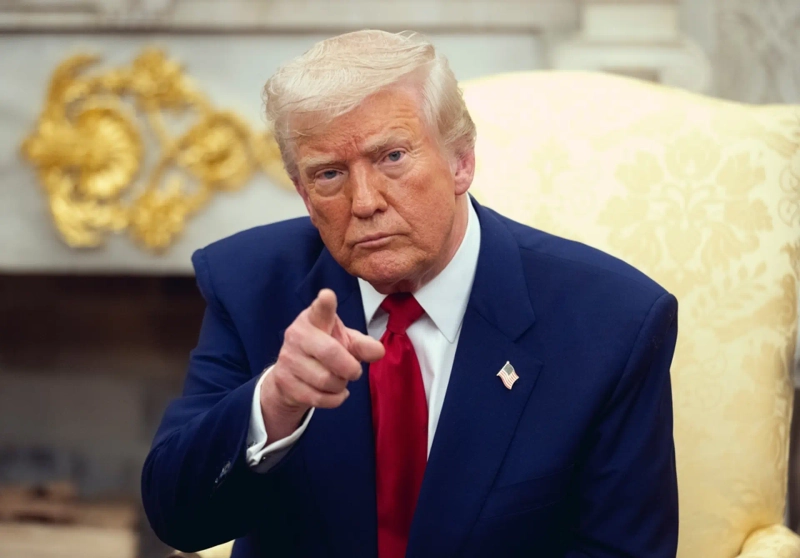
U.S. President Donald Trump has demanded an equity stake and toll revenue from the Gordie Howe International Bridge linking the United States and Canada, turning the project into a new flashpoint between the two countries. It marks another collision after Trump’s unilateral tariff moves, Canadian Prime Minister Mark Carney’s trip to China, and his criticism of the U.S. at the Davos forum.
White House press secretary Karoline Leavitt said at a briefing on the 10th (local time) that “President Trump cannot accept that Canada controls access to the Gordie Howe bridge and owns the land on both sides of the crossing.” She added, “The president believes the United States should own at least half of the bridge, share authority over (control of) crossings, and that the U.S. should enjoy the economic benefits generated by use of the bridge,” adding that “it is also unacceptable that more U.S.-made materials are not being used in building the bridge.” Her remarks came a day after Trump wrote on social media that he “will not allow the opening” of the Gordie Howe International Bridge scheduled for the second half of this year.
The Gordie Howe International Bridge at issue is a 2.5-km cable-stayed bridge connecting Detroit, Michigan, and Windsor, Ontario. Most of the $4.7 billion construction cost was provided by the Canadian government. Contrary to Trump’s claim, Michigan is also known to hold a portion of the bridge stake.
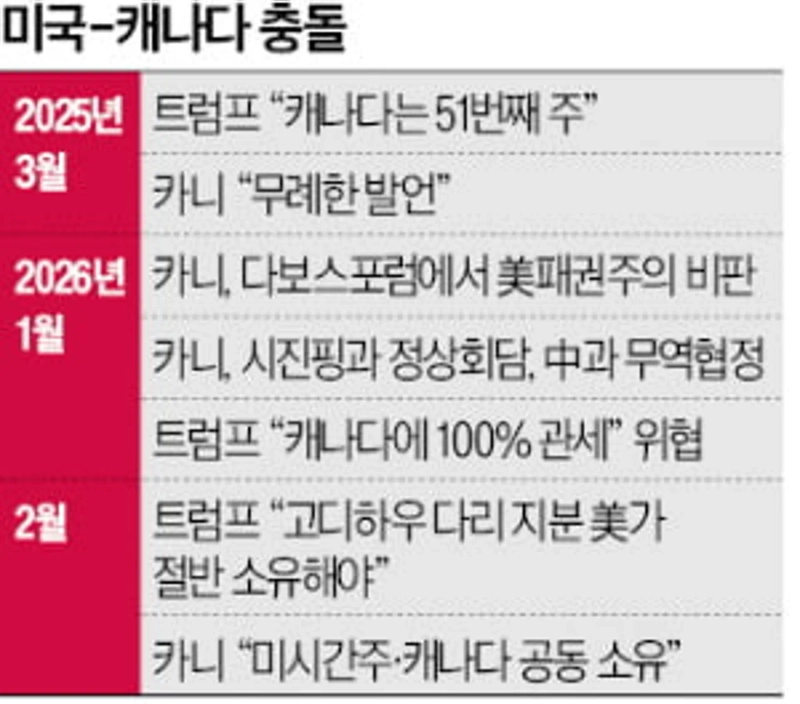
Carney told reporters at Parliament Hill that he “explained (in a call with President Trump) that Canada bore the costs of building the bridge and that ownership is shared by the state of Michigan and the Canadian government.” He added that he also “explained that not only Canadian steel and Canadian workers, but also U.S. steel and American workers took part (in building the bridge),” saying, “I think this will be resolved well.”
On the backdrop to Trump’s threat to block the opening, The New York Times (NYT) pointed to “lobbying by the family of billionaire tycoon Matty Moroun.” The Moroun family, a Detroit-based transportation dynasty, has operated the Ambassador Bridge linking Detroit and Windsor for decades. If the Gordie Howe International Bridge opens, traffic on the Ambassador is likely to fall, hitting the Moroun family’s income. The NYT reported that “Moroun met Commerce Secretary Howard Lutnick in Washington on the 9th, and Lutnick later called President Trump to discuss the issue.”
With Trump opposing the Gordie Howe bridge’s opening, another clash with Prime Minister Carney—who took office in March last year—appears likely. Soon after taking office last year, Trump threatened Canada by saying he would “make Canada the 51st state.” At the time, Carney pushed back, calling the remarks “rude and of no help to bilateral relations.”
Earlier this year, Carney visited Beijing and held a summit with Chinese President Xi Jinping. The two sides formed a “new strategic partnership” and also agreed to cut tariffs on Chinese-made electric vehicles and Canadian canola seed.
On the 20th of last month, shortly after the China trip, he delivered a speech at the Davos forum in Switzerland, saying “(international relations) are a system in which confrontation among major powers is intensifying, and in this system major powers use economic integration as a tool of coercion to advance their national interests,” in remarks critical of the United States and China.
By Kim Dong-hyun 3code@hankyung.com

Korea Economic Daily
hankyung@bloomingbit.ioThe Korea Economic Daily Global is a digital media where latest news on Korean companies, industries, and financial markets.