Trump moves to revive coal, abruptly claims he "agreed with South Korea to expand exports"
Summary
- US President Donald Trump said the United States is becoming a massive energy exporter, claiming he reached a historic trade deal to dramatically increase coal exports with South Korea, Japan, India and others.
- Trump stressed that coal is important to national security and the most dependable and reliable energy, and said his administration is pushing measures such as approving coal mines, funding coal-fired power plants, and expanding military purchases of coal.
- South Korea’s government said the $100 billion purchase of US energy during Trump’s term was only a general understanding and that there was no coal-specific agreement, but warned that pressure to expand imports of US coal could clash with South Korea’s coal phaseout stance.
Forecast Trend Report by Period


Remarks related to US energy exports
South Korea: "There was no specific agreement"
Government pushing coal phaseout left 'in a bind'
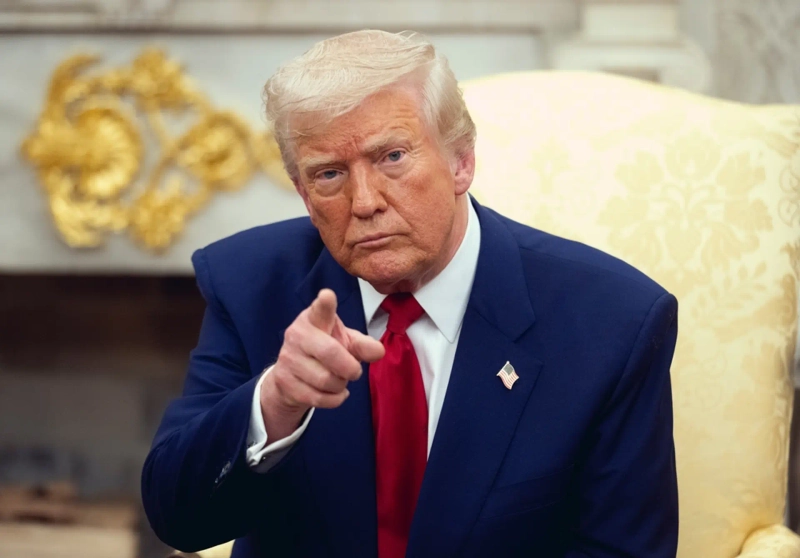
US President Donald Trump said on the 11th (local time) that he had struck a “historic trade deal to dramatically increase coal exports with South Korea, Japan, India, and other countries over the past few months.” This is the first time Trump has mentioned exports of US coal in connection with a trade deal with South Korea.
Speaking at a White House event aimed at revitalizing the US coal industry, Trump made the claim and said, “We are becoming a massive energy exporter.” He stressed that “coal is important to national security and essential for everything from steel production to shipbuilding to artificial intelligence (AI),” calling it “the most dependable and reliable energy.” He also criticized the previous Joe Biden administration’s closure of coal-fired power plants as a “disastrous path,” adding, “In just one year of the Trump administration, we approved more than 70 coal mines.” Trump said he is “directing the Department of Energy to provide funding to keep coal-fired power plants in West Virginia, Ohio, North Carolina, and Kentucky running and to keep them operating.”
In particular, he also signed an executive order directing the US Department of War (Department of Defense) to enter into power purchase agreements with coal-fired power plants and to conclude new electricity procurement deals. “The military will end up buying substantial amounts of coal,” Trump said, adding that “it will be far cheaper and effective.” The moves are seen as running head-on against the international community’s efforts—including the United States—to curb the use of fossil energy sources to combat global warming.
South Korea’s government, meanwhile, views Trump’s remarks as aimed at domestic politics, within the broader context of an existing understanding to expand energy imports. A joint fact sheet released by the White House after the South Korea-US summit on Nov. 13 last year does not include any content related to exports of US coal. The government believes Trump was referring to a point raised during South Korea-US tariff negotiations in July last year, in which South Korea agreed to import US energy. A government official said, “It was a general agreement to make efforts to purchase US energy, including liquefied natural gas (LNG), totaling $100 billion over the course of President Trump’s term.” The official explained that while there was an agreement to purchase US energy overall, there was no agreement to purchase coal specifically.
Still, there are concerns that if the United States steps up trade pressure contrary to Seoul’s intentions, South Korea—which has been pursuing a coal phaseout—could be put in a difficult position. Expanding imports of US coal runs counter to South Korea’s policy direction of reducing coal power generation under measures such as the 11th Basic Plan for Electricity Supply and Demand. Breaking down South Korea’s imports of US energy (as of last year) by item, crude oil accounted for $12.9 billion, followed by liquefied petroleum gas (LPG) at $3.9 billion and natural gas at $2.4 billion. Imports of coal (thermal coal basis) are less than $400 million.
By Kim Dong-hyun/Kim Ri-an, 3code@hankyung.com

Korea Economic Daily
hankyung@bloomingbit.ioThe Korea Economic Daily Global is a digital media where latest news on Korean companies, industries, and financial markets.