US turns up the pressure—bracing for a long haul? Iran says sanctions must be eased
Summary
- The US is preparing a military operation that would cover not only Iran’s nuclear facilities but also state and security facilities, and has deployed two aircraft carriers near Iran, according to reports.
- The US is seeking to block Iran’s oil exports to China, stepping up economic pressure while aiming to strengthen its leverage through a second senior-level meeting in Geneva.
- Iran has taken a conciliatory stance, offering nuclear-program compromises in exchange for sanctions relief and proposing agenda items including oil and gas fields, joint oilfield development, mining investment, and aircraft purchases.
Forecast Trend Report by Period


Talks between the two sides scheduled in Geneva on the 17th
Ahead of negotiations, US steps up pressure on Iran
Two aircraft carriers deployed near Iran
Trump also floats regime change in Iran
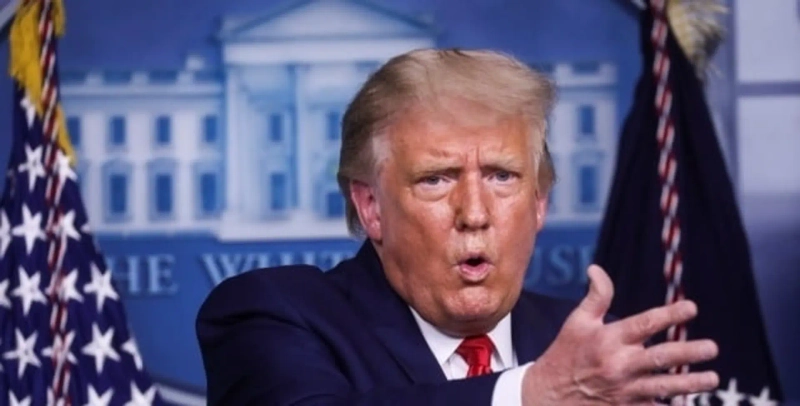
The Donald Trump administration is ratcheting up pressure ahead of a second round of talks with Iran. After deploying an additional aircraft carrier to the Middle East, President Trump has even raised the prospect of regime change in Iran—fueling a renewed rise in tensions across the region.
Iran, meanwhile, signaled a step back, saying it is prepared to compromise on its nuclear program if the United States moves to lift sanctions.
US ramps up pressure
On the 16th (local time), Reuters, citing sources, reported that the US government is preparing military operations in case President Trump orders an attack on Iran.
A source said the operation under consideration would be broader than the one carried out last June, when Iran’s nuclear facilities were attacked. The scope would extend beyond nuclear sites to include state and security facilities. “The United States fully anticipates Iranian retaliation,” the source said, adding, “Over time, it will turn into a back-and-forth exchange.”
Even as diplomatic talks proceed, Washington is not ruling out military action. The United States has already dispatched an additional aircraft carrier to the Middle East. The Wall Street Journal (WSJ) reported that the USS Gerald R. Ford is set to be deployed to the region. The Ford had been operating in the Caribbean since last October to support efforts including an operation to arrest former Venezuelan President Nicolás Maduro. Together with the nuclear-powered aircraft carrier USS Abraham Lincoln, which moved to the Middle East last month, a total of two carriers will be operating near Iran.
The Financial Times (FT) noted that “when the United States struck three Iranian nuclear facilities last June, it had two aircraft carriers positioned in the region.” President Trump said the Ford deployment “would be necessary in case negotiations fall apart.”
Trump has also openly mentioned the possibility of regime change in Iran. After an event on the 13th at Fort Bragg, an Army base in North Carolina, Trump was asked by reporters whether he wanted regime change in Iran and replied, “That seems like the best thing that could happen.” He added, “They’ve done nothing but talk for 47 years,” saying, “It’s been far too long.” The remarks were seen as referring to the 47 years of hostility between the two countries since Iran’s current theocratic system was established by the 1979 Islamic Revolution.
The United States is also pairing the pressure campaign with economic measures. Axios reported that Trump and Israeli Prime Minister Benjamin Netanyahu agreed at a leaders’ meeting last week to work to block Iran’s oil exports to China. As much as 80% of Iran’s oil exports are concentrated in China.
Will a second nuclear deal be reached?
Analysts say the US push to intensify military pressure on Iran reflects a calculation to strengthen its bargaining position ahead of the talks. The United States and Iran are set to hold a second senior-level meeting on the 17th in Geneva, Switzerland. On the US side, special envoy Steve Witkoff and Jared Kushner, President Trump’s son-in-law, will attend.
Iran, by contrast, has recently taken a more conciliatory stance than the United States. Majid Takht-Ravanchi, Iran’s deputy foreign minister, suggested in a BBC interview on the 15th that Tehran is prepared to compromise on its nuclear program in exchange for US sanctions relief. The Trump administration withdrew in 2018 from the 2015 Iran nuclear deal (JCPOA) and reimposed sweeping sanctions on Iran.
Takht-Ravanchi argued that it is now up to the United States to prove it wants an agreement, saying the ball is in Washington’s court. However, he reiterated that while Iran could agree to diluting highly enriched uranium, it cannot accept “zero uranium enrichment,” a core sticking point since earlier negotiations.
Hamid Ganbari, deputy head for economic diplomacy at Iran’s foreign ministry, said in an interview with the semi-official Fars News Agency that “for an agreement to be sustainable, it is essential that the United States also gains benefits in areas where it can secure substantial economic returns in the short term.” He added that “oil and gas fields, joint oilfield development, mining investment, and aircraft purchases” are included on the agenda.
By Han Myung-hyun wise@hankyung.com

Korea Economic Daily
hankyung@bloomingbit.ioThe Korea Economic Daily Global is a digital media where latest news on Korean companies, industries, and financial markets.