BOK warns of major economies’ monetary and fiscal policy stance; to assess impact on Korea
Summary
- The Bank of Korea said it assesses that caution persists over major economies’ monetary policy and fiscal expansion, including in the United States.
- It noted that during the holiday period government bond yields edged down, stocks rose, and the U.S. dollar strengthened while the Korean won weakened.
- The Bank of Korea said that as volatility in price variables has increased since early February, it will continue to monitor domestic and external risk factors and their impact on Korea’s financial and FX markets.
Forecast Trend Report by Period


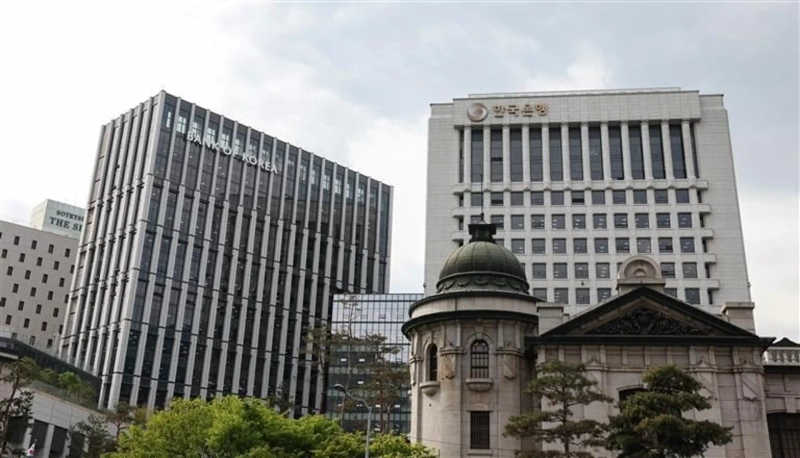
The Bank of Korea (BOK) said it sees heightened caution surrounding monetary policy in major economies such as the United States and the prospect of fiscal expansion. It also assessed that global financial markets were relatively stable during the Lunar New Year holiday.
On the morning of the 19th, the BOK held a “Market Conditions Review Meeting” at its headquarters on Namdaemun-ro in Seoul to review international financial market trends over the holiday period. The meeting, chaired by Deputy Governor Yoo Sang-dae, was attended by Choi Chang-ho, Director General of the Monetary Policy Department; Yoon Kyung-soo, Director General of the International Department; and Choi Yong-hoon, Director General of the Financial Markets Department, among others.
The BOK cited key events in international markets during the holiday period, including releases of major U.S. economic indicators such as the Consumer Price Index (CPI), publication of minutes from the Federal Open Market Committee (FOMC), earnings announcements by major companies, and nuclear negotiations between the United States and Iran. The BOK said “major price variables moved up and down under the influence of these factors.”
While U.S. economic indicators were released as solid, the FOMC minutes were interpreted as hawkish, with references to rate hikes alongside inflation concerns. With nuclear talks between the United States and Iran showing little progress, oil prices are rising.
During the holiday period, government bond yields in major economies generally edged down. As of the 18th, the yield on the 10-year U.S. Treasury fell 0.02 percentage points from the 13th. Over the same period, 10-year yields in Germany and the U.K. declined 0.04 percentage points and 0.08 percentage points, respectively. Equity markets posted gains, with the S&P 500 up 0.7%, the Nasdaq up 0.7%, and the Euro Stoxx 50 up 1.5%. In FX, the U.S. dollar strengthened 0.8%, while the Korean won weakened, down 0.7% in the offshore NDF market. Korea’s CDS premium, a gauge of sovereign risk, remained stable at 22.5bp.
Deputy Governor Yoo said, “International financial markets were relatively stable during the holiday period without major events, but global sources of uncertainty persist, including caution over major economies’ monetary policy stance and fiscal expansion, debate over AI profitability, and geopolitical risks.” He added, “With volatility in major price variables having increased since early February at home, we will continue to closely monitor developments in domestic and external risk factors and their impact on Korea’s financial and FX markets.”
By Kang Jin-kyu josep@hankyung.com

Korea Economic Daily
hankyung@bloomingbit.ioThe Korea Economic Daily Global is a digital media where latest news on Korean companies, industries, and financial markets.