European Central Bank to launch digital euro pilot next year... "Strengthening local payment systems"
Summary
- The European Central Bank (ECB) said it has unveiled a detailed roadmap for introducing the central bank digital currency (CBDC) “digital euro” and is targeting 2029 for its first issuance.
- It said the 12-month pilot—joined by a limited number of payment service providers (PSPs) and merchants—will help clarify future costs related to infrastructure buildout, regulatory compliance, and staffing.
- It said banks and payment providers will be exempt from certain network and processing costs, and with caps on merchant fees, all market participants are expected to benefit from cheaper and faster payment services.
Forecast Trend Report by Period


The European Central Bank (ECB) has moved to step up preparations for the introduction of the “digital euro,” a central bank digital currency (CBDC), by unveiling a detailed roadmap.
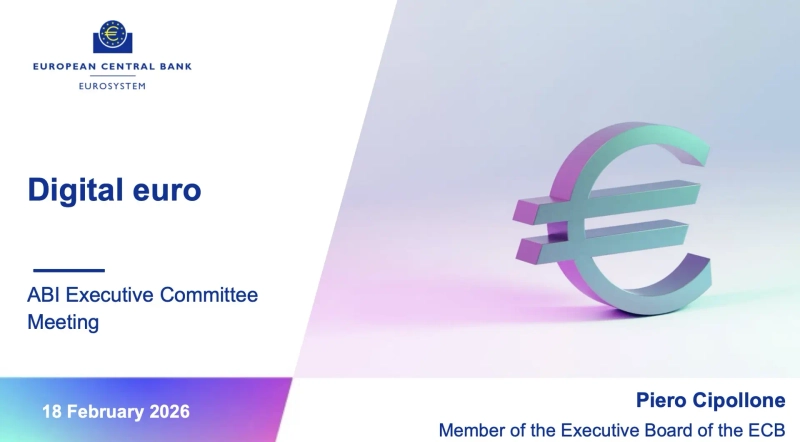
On the 18th (local time), Piero Cipollone, an ECB Executive Board member, said at a meeting of the Executive Committee of the Italian Banking Association (ABI) that the ECB “plans to run a 12-month digital euro pilot from the second half of next year.” The pilot will involve a limited number of payment service providers (PSPs), merchants, and Eurosystem staff, with the first official issuance targeted for 2029.
Payment service providers licensed in the European Union (EU) will play the central role in the digital euro distribution model. Firms selected for the pilot will be able to gain hands-on experience in areas such as user onboarding, payment processing, and liquidity management ahead of a full rollout. They are also expected to have an opportunity to clearly assess future costs related to infrastructure buildout, regulatory compliance, and staffing.
Consumers will be able to use the digital euro without making major changes to existing systems. In particular, banks and payment providers will be exempt from certain payment network and processing costs, while caps will also be applied to merchant fees. This is expected to enable all market participants to benefit from cheaper and faster payment services.
Above all, the digital euro will operate on a shared, pan-European general-purpose payment network. This will allow private payment providers to offer digital euro services smoothly across Europe without having to build separate, standalone infrastructure.
While the ECB views stablecoins in the virtual asset (cryptocurrency) market as a key threat, it is also wary of the market power of global card networks and private payment platforms that dominate Europe’s payment infrastructure, such as Visa and Mastercard.
Cipollone said, “Introducing the digital euro will help address these imbalances in market power and contribute to strengthening national local payment systems such as Italy’s Bancomat and Spain’s Bizum,” adding that “the digital euro will effectively work in favor of domestic payment systems within Europe.”

Doohyun Hwang
cow5361@bloomingbit.ioKEEP CALM AND HODL🍀