Even after checks on Trump’s ‘tariff blitz’… Korean companies locked in a bruising game of brinkmanship
Summary
- It reported that despite the U.S. Supreme Court’s ruling that reciprocal tariffs are unlawful, uncertainty persists due to President Trump’s 10% global tariff and the option of product-specific tariffs.
- It said that if Korea’s existing 25% reciprocal tariff disappears and a 10% global tariff is applied, the burden appears to ease, but it could increase if key products such as automobiles, steel and batteries become subject to separate product-specific tariffs.
- With the $350 billion investment agreement into the U.S. and the issue of tariff refunds emerging as new variables, it said the government will adjust the intensity of its response while monitoring developments in the United States.
Forecast Trend Report by Period


Prolonged uncertainty over U.S. tariffs… a ‘double-edged sword’ for Korea’s economy
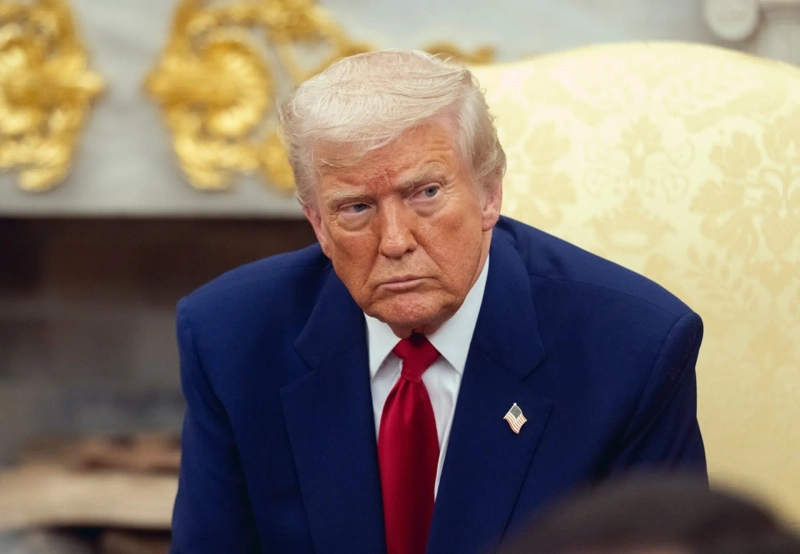
As uncertainty surrounding the tariff policy of the Donald Trump administration in the United States drags on and enters a protracted phase, it is emerging as a new variable for the Korean economy as well.
After the U.S. Supreme Court ruled reciprocal tariffs—imposed with country-by-country differentiated rates—to be unlawful by questioning their procedural legitimacy, the ‘tariff blitz’ has, for now, been put in check. However, some assessments say it is hard to conclude that the risk has been fully resolved, as President Trump immediately signed off on imposing a 10% ‘global tariff’ and has also left open the option of product-specific tariffs.
According to industry sources on the 22nd, the key from a macroeconomic standpoint is exports. Korea’s existing 25% reciprocal tariff was lowered to 15%, but it has recently faced threats of being raised again to 25%. If this ‘25% tariff’ threat disappears and a 10% global tariff is applied, it would appear on the surface that the tariff rate is falling.
However, the profit-and-loss calculation changes if key products such as automobiles, steel and batteries become subject to separate product-specific tariffs. If product-specific tariffs are set at levels higher than reciprocal tariffs, the burden could instead increase. Experts say that the tariff regime changing again in itself is a source of uncertainty for companies.
The $350 billion-scale investment agreement between Korea and the United States is also a variable. Some also argue that since reciprocal tariffs have been rendered legally invalid, the investment agreement likewise leaves room for reinterpretation.
Still, many believe it will not be easy for the Korean government to demand renegotiation first. This is because the pledge of U.S.-bound investment is intertwined with strategic cooperation in areas such as shipbuilding and nuclear-powered submarines. Accordingly, the National Assembly’s Special Committee on U.S.-bound Investment plans to proceed with the legislative process as scheduled.
The government says it will calibrate the intensity of its response while checking developments in the United States and responses by major countries. With the U.S. midterm elections in November approaching, it cannot be ruled out that President Trump may roll out a more hardline tariff policy.
Tariff refunds are also a task. While the Supreme Court ruling has opened a path to file refund claims, it is expected to take time for U.S. Customs and Border Protection (CBP) to establish detailed procedures. Companies that paid tariffs under DDP (Delivered Duty Paid) terms may be eligible to apply for refunds. According to the Korea Customs Service, about 24,000 companies exported goods to the United States that were subject to tariffs, and among them, about 6,000 companies exported under DDP terms.
By Lee Song-ryeol, Hankyung.com yisr0203@hankyung.com

Korea Economic Daily
hankyung@bloomingbit.ioThe Korea Economic Daily Global is a digital media where latest news on Korean companies, industries, and financial markets.