KOSPI Nears 6,000—Will US Ruling Voiding Trump’s Reciprocal Tariffs Move Markets? [Weekly Outlook]
Summary
- It said the US Supreme Court’s ruling that the Trump administration’s reciprocal tariffs are illegal—and the countering executive order imposing a 10% tariff worldwide—could become key variables for the KOSPI and global markets.
- It noted that this week’s Nvidia earnings release, and whether its guidance and profitability metrics hold up, could shift the tone for AI-related stocks and significantly influence the KOSPI’s trajectory toward 6,000.
- It said that as expectations rise for the National Assembly to pass the third round of Commercial Act revisions, an emphasis on stronger shareholder returns through a mandatory cancellation of treasury shares supports maintaining an overweight strategy in the securities and holding-company sectors.
Forecast Trend Report by Period


US Supreme Court: Trump’s reciprocal tariffs are “illegal”
Wall Street closes broadly higher
Trump counters with “10% tariffs worldwide”
Nvidia earnings and the 3rd round of Commercial Act revisions also in focus
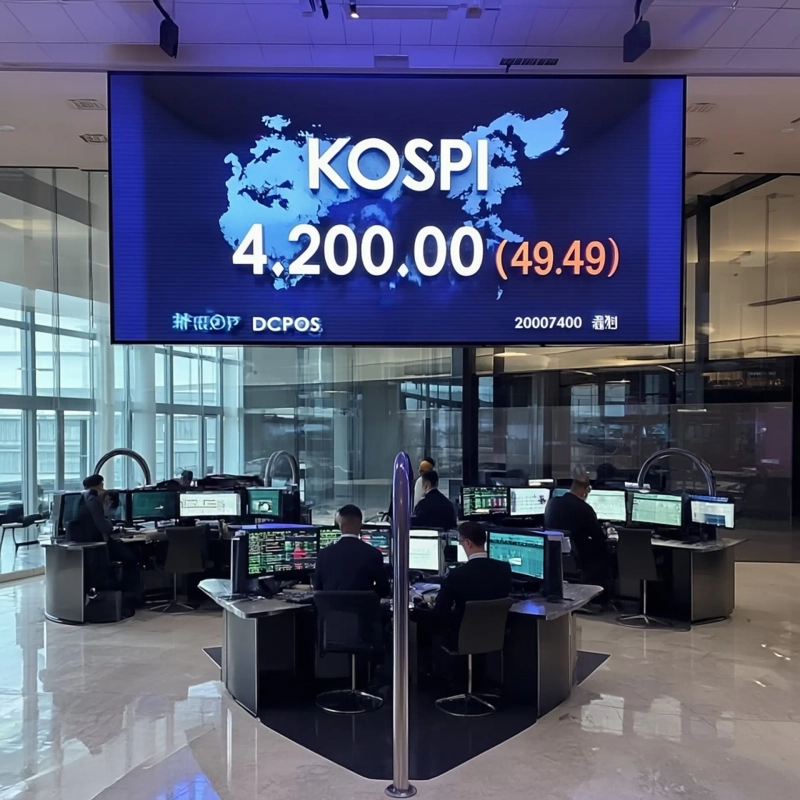
With the KOSPI eyeing the 6,000 level—uncharted territory—attention is turning to how Korea’s stock market may be affected after the US Supreme Court put the brakes on the Donald Trump administration’s country-by-country reciprocal tariffs.
According to the financial investment industry on the 22nd, NH Investment & Securities forecast this week’s (23–27) expected KOSPI range at 5,500–5,800.
Although the KOSPI closed above 5,800 on the last trading day of last week, it is difficult to predict direction this week, with major events lined up including earnings from Nvidia, a leading global artificial intelligence (AI) company, the Monetary Policy Board meeting, and the possibility that the third round of Commercial Act revisions will be placed on the National Assembly’s plenary agenda.
Against this backdrop, the Supreme Court’s ruling that the reciprocal tariffs are illegal is being cited as a key variable that could significantly affect equities. The Supreme Court ruled the previous day that President Trump’s reciprocal tariffs under the International Emergency Economic Powers Act (IEEPA), as well as the imposition of so-called “fentanyl tariffs” on Mexico, Canada and China, were unlawful—effectively upholding the lower courts’ first- and second-instance decisions.
The core reasoning was that the IEEPA does not explicitly grant the president authority to impose tariffs, making its use for that purpose contrary to law. Enacted in 1977, the IEEPA gives the president various powers to control economic transactions by declaring a national emergency if circumstances abroad are deemed to pose an unusual and extraordinary threat to US national security, foreign policy or the US economy.
Trump sharply criticized the Supreme Court decision and immediately fired back. After the ruling, President Trump announced that he had signed an executive order imposing a new 10% tariff on imports from countries worldwide. The new tariff is set to take effect at 2 p.m. Korea time on the 24th.
Trump also said that following the temporary tariff’s implementation, he would begin tariff investigations under Section 301 of the Trade Act. Section 301 allows tariffs to be imposed in response to unfair or discriminatory measures by foreign governments. The Office of the US Trade Representative (USTR) said it expects these probes to cover most major trading partners, raising the likelihood that South Korea will be included.
US stocks cheered the ruling. In the previous session, Wall Street’s three major indexes all ended higher on expectations that the decision could reduce corporate costs. CNN said, “The outlook that inflation concerns—one of the US economy’s chronic problems—could ease helped calm market jitters.”
Nvidia’s earnings are also expected to have a strong impact on Korea’s market this week. If Nvidia, which has led the “AI rally,” delivers strong results and issues guidance that tops market expectations, it could quell the renewed debate over AI profitability.
Na Jeong-hwan, an analyst at NH Investment & Securities, said, “With AI-related shares staying weak amid concerns over AI profitability, Nvidia’s earnings release is an important event that could open the door to a shift in momentum,” adding, “The key is not the headline numbers but the guidance and whether profitability indicators hold up.” He added, “If uncertainty eases somewhat, the market’s focus will shift from the profitability debate to growth visibility.”
There is also growing expectation that the third round of revisions to the Commercial Act—centered on mandating the cancellation of treasury shares—could act as another driver for local equities if it passes the National Assembly plenary session. The bill cleared the Legislation and Judiciary Committee’s bill review subcommittee on the 20th.
Na said, “With the ruling Democratic Party of Korea requesting the opening of a plenary session on the 24th, there is a high likelihood that the third round of Commercial Act revisions will be put on the agenda,” adding, “As expectations for passage grow, it is necessary to maintain an overweight strategy in the securities and holding-company sectors.”
Lee Jeong-woo, Hankyung.com reporter krse9059@hankyung.com

Korea Economic Daily
hankyung@bloomingbit.ioThe Korea Economic Daily Global is a digital media where latest news on Korean companies, industries, and financial markets.