EU: "US tariffs unclear…suspending ratification of trade deal with Washington"
Summary
- Major parties in the European Parliament said uncertainty has intensified following Washington’s announcement of a 15% tariff, and that they will suspend the ratification process for the U.S.-EU trade agreement.
- EU officials including Bernd Lange said the new tariffs could constitute a breach of the deal, and that they will propose suspending implementation until legal certainty and clear U.S. commitments are secured.
- With the U.S. signaling that a 15% global tariff under Section 122 of the Trade Act will remain in place, European stocks fell and India also moved to postpone talks on an interim trade agreement with the United States.
Forecast Trend Report by Period


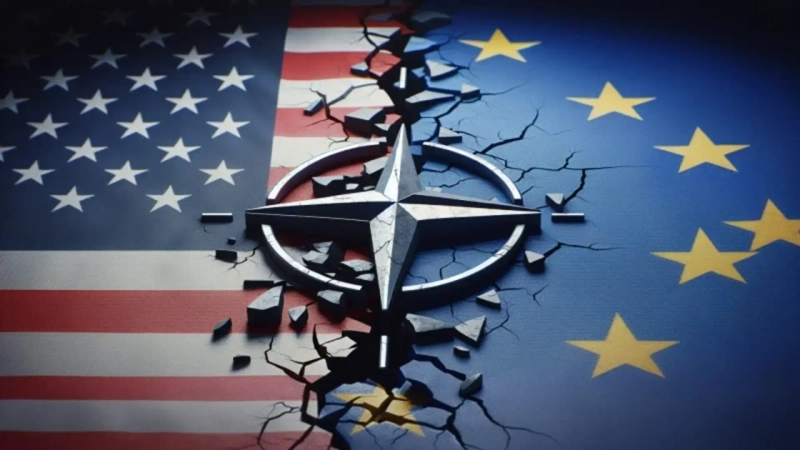
Major parties in the European Parliament said on the 23rd (local time) they would halt legislative work related to ratifying a trade agreement with the United States. They also warned that President Donald Trump’s weekend announcement—invoking Section 122 of U.S. trade law to impose a 15% tariff on all imports—could jeopardize the U.S.-Europe trade agreement concluded last year.
According to Bloomberg, CNBC and other foreign media outlets, Željana Zovko, a representative of the European People’s Party (EPP), the largest group in the European Parliament, told Bloomberg in an interview that “there is no choice but to delay the approval process to obtain a clear explanation of the situation.” The EPP is expected to back freezing the agreement’s approval process together with the Social Democratic Party (SDP) and the liberal Renew group.
Earlier, on the 22nd, Bernd Lange, chair of the European Parliament’s International Trade Committee, criticized the White House’s 15% tariff announcement as a “completely confusing measure.” In a post on X, he said, “New tariffs are a breach of the agreement, and moreover we do not even know whether the United States will comply with the agreement—or whether it can comply,” adding that “clarity and legal certainty are needed before taking additional steps.”
The U.S. Supreme Court ruled on the 20th that reciprocal tariffs under the International Emergency Economic Powers Act (IEEPA) were unconstitutional. In response to the ruling, Trump initially announced a blanket new 10% tariff under Section 122 of the trade law, later raising the rate to 15%. The tariff applies for up to 150 days and can be extended only with congressional approval.
Europe and the U.K. demanded a clearer explanation of what the new tariff policy framework would mean in practical terms for trade agreements with each country. Under trade agreements the U.S. concluded last year with the European Union, Japan and South Korea, among others, a 15% tariff is currently imposed on those countries’ exports to the U.S., while a 10% tariff applies to U.K. exports.
The European Parliament’s trade committee is set to convene an emergency meeting on the day. Committee chair Lange said he would propose suspending implementation of the U.S.-EU trade agreement until “a comprehensive legal assessment and clear commitments from the United States” are secured.
The EU agreed to an unbalanced deal to avoid a trade war with the United States and to maintain U.S. security support related to Ukraine. The European Parliament had planned to ratify the deal by March. EU lawmakers have previously paused the approval process once after Trump threatened to annex Greenland.
European stocks hit an intraday low on the day, with the Stoxx Europe 600 index down 0.4%.
Meanwhile, U.S. Trade Representative Jamieson Greer appeared on CBS’s public affairs program “Face the Nation” on the 22nd local time and said, “Trade agreements concluded with many countries—including China, the European Union (EU), Japan and South Korea—remain in effect.” Greer suggested U.S. trade partners should not expect tariff cuts following the Supreme Court ruling. He said the 15% global tariff Trump announced on the 21st is “roughly the same” as the type of tariffs under IEEPA that the Supreme Court invalidated.
Earlier, on the 20th, Greer appeared on Fox News and claimed that “goods exported to the United States from countries such as Malaysia and Cambodia will continue to face the negotiated rate of 19%, even if the overall rate is lower.”
According to Bloomberg, in addition to the EU, India also postponed talks scheduled in the United States this week to finalize an interim trade agreement for similar reasons.
Kim Jeong-a, contributing reporter kja@hankyung.com

Korea Economic Daily
hankyung@bloomingbit.ioThe Korea Economic Daily Global is a digital media where latest news on Korean companies, industries, and financial markets.