Why did Trump strike Iran? Regime change and ambitions for oil dominance [Lee Sang-eun’s Washington Now]
Summary
- It said a combination of objectives lay behind the U.S. attack on Iran, including blocking Iran’s nuclear capabilities, pursuing regime change, and securing energy dominance.
- It reported analysis that the strike could allow the United States to expand its leverage over Iranian crude, securing market influence that goes beyond OPEC.
- It said an overhaul of the energy market is expected, with China—which has a high share of Iranian crude imports—taking a hit, while the possibility of increased exports of Russian crude is being raised.
Forecast Trend Report by Period


[U.S. strike on Iran]
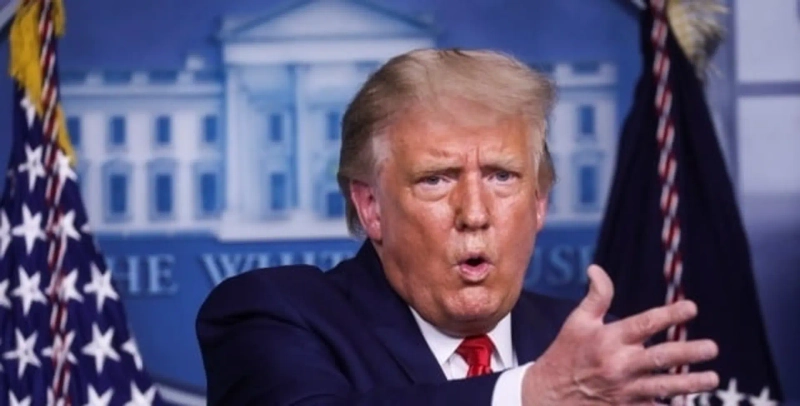
The decision by U.S. President Donald Trump to suddenly join Israel in attacking Iran is being described as the "biggest foreign-policy gamble of the Trump 2.0 administration" (Reuters). A combination of objectives appears to have been at work behind the move: completely blocking any possibility that Iran could acquire nuclear capabilities; changing the regime and sharply expanding U.S. influence in the Middle East; and gaining the upper hand in the struggle for energy dominance, including oil. Analysts also say the move was intended to check China, which imports most of Iran’s oil.
(1) Was there an 'imminent threat'?
In a video released after the strike, President Trump said the direct reason for the attack was that Iran had "rejected every opportunity to abandon its nuclear ambitions" and was "seeking to rebuild its nuclear program and continue developing long-range missiles."
He presented no specific evidence, but said Iran’s missiles "could threaten Europe, allies, and U.S. forces stationed overseas—and could soon reach the U.S. mainland," adding, "Imagine how bold this regime would become if it possessed nuclear weapons." If that assessment is correct, it suggests that destroying nuclear facilities in three locations in Iran last June did not fundamentally degrade Iran’s nuclear capability.
The United States has held eight rounds of nuclear talks with Iran since last year. Many expected an outcome broadly similar to the Joint Comprehensive Plan of Action (JCPOA), which Trump unilaterally withdrew from in 2018. With Iran at times offering the Trump administration major business benefits, there were even assessments on the 26th of last month that talks had made "significant progress" (Oman’s foreign minister). However, Iran did not pledge a complete abandonment of nuclear capabilities, and Washington appears to have concluded it would be difficult to achieve that without removing Iran’s top leadership—leading to the decision to strike.
(2) Is regime change possible?
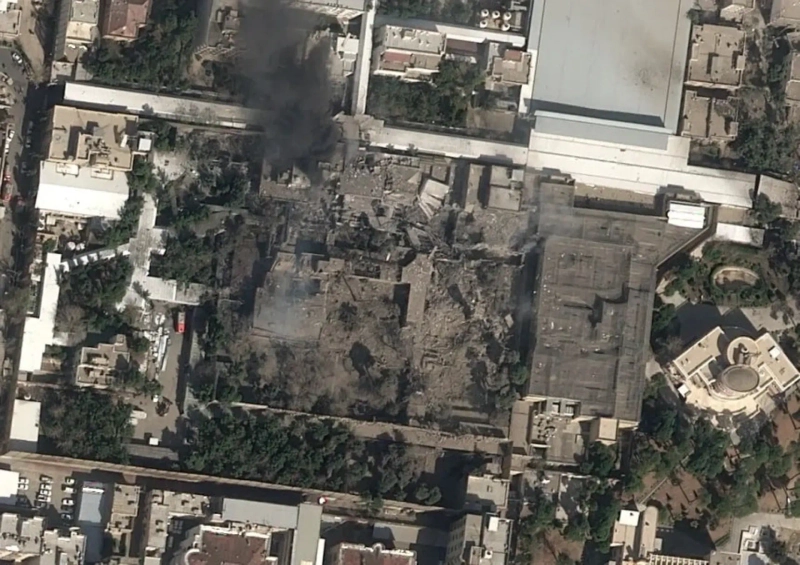
With most of Iran’s leadership—who have maintained iron-fisted rule for decades—having been killed in this attack, including Supreme Leader Ayatollah Ali Khamenei, it is obvious that Iran’s political landscape will shift dramatically.
The United States wants a regime change. After the military action, President Trump urged Iranians to "take control of your government." The expectation is not that the U.S. will directly step in to "change" the regime, but that if the flames of large-scale anti-government protests—like those in January—reignite, it could lead to the establishment of a pro-U.S. government.
It will not be easy. After the Arab Spring in the early 2010s, the region saw the emergence of theocracies rather than pro-U.S. democratic governments. Iran is not a single-ethnicity nation; it is a mix of Persians, Azerbaijanis, Kurds and other groups with diverse cultural backgrounds, and even during anti-government protests it was difficult to form a clear center of gravity. It is hard to predict which faction will seize the initiative.
Daniel Kurtzer, a professor of Middle East policy at Princeton University’s School of Public and International Affairs, said in an interview before the airstrikes that "if the administration’s goal is regime change, it must recognize that airstrikes alone will not bring down the Islamic Republic," adding that the Trump administration must decide whether to pull back after the initial attack or pursue a larger war (to bring about regime change).
(3) Upper hand in energy dominance
The Trump administration, which is pursuing global energy dominance, may gain a degree of leverage over Iranian crude as a result of this attack. Even if it does not seek to control everything indefinitely in the way it has with Venezuelan crude, whichever force ultimately takes political control in Iran will have considerable room to compromise by accepting U.S. influence on oil issues.
In that case, the United States—already the world’s largest oil producer—would, after Venezuela (which holds the world’s largest proven reserves), become involved in crude production in the Middle East as well. That would give it market influence far beyond the Organization of the Petroleum Exporting Countries (OPEC).
(4) What about China and Russia?
One clear effect the United States could gain from striking Iran is increased leverage over China. Iran produces 3.1 million barrels of oil per day and, after domestic consumption, exports the remaining 1.3 million barrels per day to China. After taking office last year, President Trump immediately decided on the highest level of economic sanctions on Iran and threatened to impose an additional 25% tariff on countries that import Iranian oil, but he was unable to carry this out against China.
China, which has been buying sanctioned Iranian crude to lower production costs, has taken a hit to some extent. Iranian oil accounts for 13% of China’s crude imports (10.27 million barrels per day on average).
China did not issue an official message condemning the United States. Fu Cong, China’s ambassador to the United Nations, stopped short of that, saying that "the sovereignty, security and territorial integrity of Iran and countries in the region must be respected," and calling for an immediate halt to military action and a return to dialogue and negotiations.
Russia, too, did not see President Vladimir Putin directly step forward to criticize the United States. However, former President Dmitry Medvedev (deputy chair of the Security Council) denounced the move strongly, saying "President Trump’s true colors have been revealed."
On oil, Russia’s position differs from China’s, because if China can no longer import Iranian crude, it may end up consuming more Russian oil.
(5) Is a long war possible?
The United States may continue additional attacks to contain Iran’s declaration of a major counterstrike and its series of attacks on nearby countries, including Dubai Airport. President Trump said, "Until we achieve our objective of bringing peace to the entire Middle East and beyond, to the whole world, powerful and precise bombing will continue without pause throughout this week—or for as long as necessary." With the Iran-backed Houthi rebels in Yemen beginning to attack vessels in an effort to block the Strait of Hormuz, U.S. forces could also undertake operations to break any blockade.
However, most experts share the view that it is unlikely to escalate into an all-out war involving major additional strikes and a ground campaign. The failures in Iraq and Afghanistan weigh heavily, and if discontent grows within Trump’s core "Make America Great Again (MAGA)" base, it could also affect the midterm elections.
Washington—Lee Sang-eun, Correspondent selee@hankyung.com

Korea Economic Daily
hankyung@bloomingbit.ioThe Korea Economic Daily Global is a digital media where latest news on Korean companies, industries, and financial markets.