Japan relies on the Middle East for 90% of its crude oil… “In the worst case, GDP could fall 3%”
Summary
- Following U.S. and Israeli air strikes on Iran, Japan’s three major shipping lines decided to halt transits through the Strait of Hormuz, raising concerns about disruptions to energy supplies.
- Japan depends on the Middle East for more than 90% of its imported crude oil, and with stockpiles in place, the short-term impact is expected to be limited.
- Researcher Yukihiko Togano estimated that if the Strait of Hormuz is blocked, crude prices could jump to around $120 a barrel, and Japan’s GDP could fall by about 3%.
Forecast Trend Report by Period


Japan’s three major shipping lines halt transits through the Strait of Hormuz
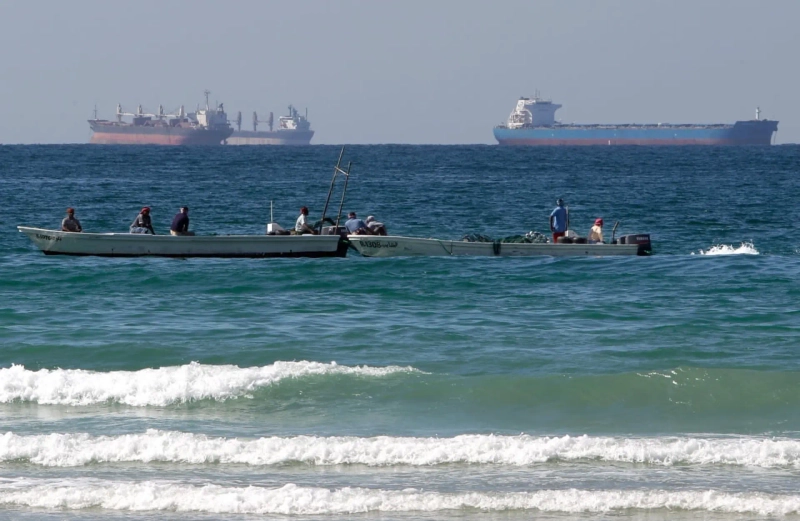
Japan’s three major shipping companies have suspended voyages through the Strait of Hormuz following U.S. and Israeli air strikes on Iran.
According to the Nikkei on the 2nd, Mitsui O.S.K. Lines, Nippon Yusen, and Kawasaki Kisen decided on the 1st to halt transits through the Strait of Hormuz. Japan has sourced crude oil and liquefied natural gas (LNG) from the Middle East via the strait. There are growing concerns that a prolonged suspension could hurt the economy by fueling inflation and other negative effects.
Mitsui O.S.K. Lines has been operating about 10 vessels—including LNG carriers and crude oil tankers—in the Persian Gulf, which connects to the Strait of Hormuz. The company told Nikkei that it is “stepping up monitoring around the clock, with the safety of crews, cargo and vessels as the top priority.” Nippon Yusen had been operating LNG carriers and car carriers, while Kawasaki Kisen had also been running multiple ships, but instructed them to wait in safe waters.
It is not only shipping. Reuters, citing sources, reported that oil majors and trading houses have also suspended operations. At least 150 tankers and other vessels are said to be anchored nearby. According to The New York Times, as of local time Feb. 28, the number of ships passing through the Strait of Hormuz had fallen by about 70%.
As transport begins to clog, concerns are rising over disruptions to energy supply and a spike in prices. Japan, in particular, relies on the Middle East—including Saudi Arabia and the United Arab Emirates (UAE)—for more than 90% of its imported crude. Most shipments pass through the Strait of Hormuz and take about 20 to 25 days to deliver.
According to the Agency for Natural Resources and Energy under the Ministry of Economy, Trade and Industry, as of the end of December last year Japan had stockpiled crude oil equivalent to 146 days of consumption. This has led to expectations that there will be no immediate impact. Japan sources LNG from Qatar and Oman, with Middle Eastern LNG accounting for about 10% of imports. The short-term impact is expected to be limited.
An analysis also suggested that Japan’s gross domestic product (GDP) could fall by about 3% if Iran were to block the Strait of Hormuz. Yukihiko Togano, a researcher at The Japan Research Institute, said, “If the Strait of Hormuz is blocked, crude prices—currently around $67 a barrel—could surge to around $120,” estimating that “in the worst case, Japan’s GDP could decline by about 3%.”
The Japanese government convened a late-night National Security Council (NSC) meeting on the 28th of last month to discuss future responses, including measures to ensure the safety of about 200 Japanese nationals staying in Iran. Prime Minister Sanae Takaichi held the NSC meeting alongside Chief Cabinet Secretary Minoru Kihara, Foreign Minister Toshimitsu Motegi, Defense Minister Shinjiro Koizumi, and Finance Minister Satsuki Katayama.
After the NSC meeting, Minister Kihara told a press conference, “Iran must stop actions that destabilize the region, including the development of nuclear weapons,” adding that Japan “will work with the international community and undertake the necessary diplomatic efforts to bring about an early de-escalation of this situation.” However, he did not clearly state whether Japan supports the U.S. and Israeli attacks on Iran.
Foreign Minister Motegi also said after the NSC meeting, “Maintaining peace and stability in the Middle East, ensuring energy security, and upholding the international nuclear non-proliferation regime are extremely important,” adding regarding the protection of Japanese nationals living in the region, including Iran, that “preparations for evacuation are already under way.”
Tokyo=Correspondent Kim Il-gyu black0419@hankyung.com

Korea Economic Daily
hankyung@bloomingbit.ioThe Korea Economic Daily Global is a digital media where latest news on Korean companies, industries, and financial markets.