Oil, Gold and the Dollar Rise as Global Stocks Fall Across the Board
Summary
- It said safe-haven assets including oil, gold, the U.S. dollar and the Swiss franc gained on fears the Strait of Hormuz could be blockaded amid the Middle East conflict.
- It said risk-off sentiment spread as stock markets in Asia and Europe and U.S. S&P 500 futures, Nasdaq futures and Dow futures fell across the board.
- It said U.S. Treasury yields rose on inflation concerns stemming from higher oil prices, and the likelihood of Fed rate cuts is expected to decline.
Forecast Trend Report by Period


Oil briefly tops $82 on fears the Strait of Hormuz could be closed
U.S. Nasdaq and S&P stock index futures fall more than 1%
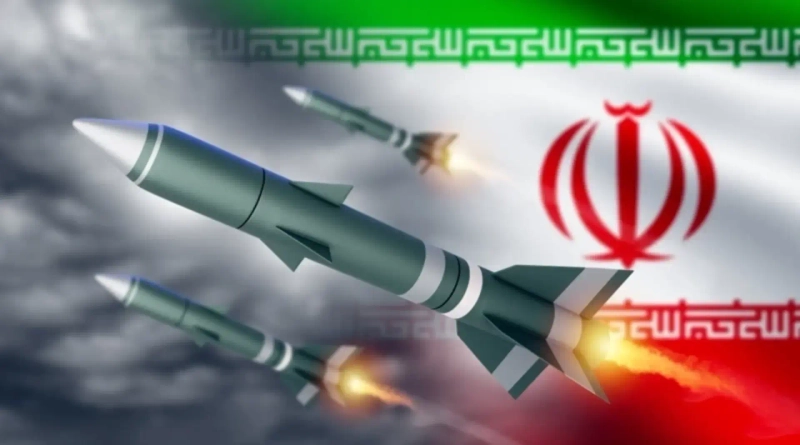
Oil prices surged on the 2nd (local time) amid conflict in the Middle East, while global equities fell in unison. Demand for safe havens lifted the value of gold, the dollar and the Swiss franc, while risk-off sentiment spread.
On the 2nd, Brent crude rose 6.4% to $77.57 a barrel and at one point briefly topped $82. U.S. West Texas Intermediate (WTI) climbed 6.2% to $71.17 a barrel. The oil market is concerned that a blockade of the Strait of Hormuz—which accounts for more than 20% of global crude and gas shipments and more than 70% of crude shipments bound for South Korea, Japan and China—could push prices higher.
Gold, a safe-haven asset, rose 1.6% to $5,360 an ounce. The U.S. dollar, backed by the United States’ status as an oil exporter, strengthened, with the ICE Dollar Index jumping 0.9% to 98.054, the highest level in five weeks. The Swiss franc gained 0.4% against the dollar and climbed to 0.9030 against the euro, its strongest level in 10 years.
Treasury prices, however, broadly fell on concerns that higher oil prices could stoke inflation. The yield on the 10-year U.S. Treasury note rose 2 basis points (1bp=0.01%) to 3.96%.
Asian stocks were broadly lower, with Japan’s Nikkei 225 down 1.35% to 58.057 and Hong Kong’s Hang Seng Index falling 2.14%. China’s Shanghai blue-chip index, which relies on the Middle East for a substantial share of its seaborne oil imports, slipped just 0.1%.
In Europe, the Stoxx 600 fell 1.71%, while the U.K.’s FTSE, Germany’s DAX and France’s CAC were down 0.9%, 1.9% and 1.7%, respectively, in early trading.
In New York, S&P 500 futures, Nasdaq futures and Dow futures were down 1%, 1.4% and 1.1%, respectively, at around 4 a.m. Eastern Time.
In the Middle East, the United Arab Emirates and Kuwait temporarily closed their stock markets, citing an "exceptional situation."
According to Reuters, U.S. and Israeli military strikes on Iran—dubbed the "Operation of Great Wrath"—have already surpassed 1,000, and Iran is responding with missile attacks across the Middle East.
Ayatollah Ali Khamenei, Iran’s supreme leader, was killed on the first day of the conflict, and Iran’s state media reported that more than 200 people have been killed in Iran.
President Trump said Iran’s new leadership would resume negotiations, but Ali Larijani, Iran’s top security official, said he has no plans to hold talks with the United States.
The United States confirmed that three U.S. service members were killed, and U.S. President Trump warned that additional casualties could occur and said the conflict could last up to four weeks.
This week in the United States, the ISM manufacturing index, retail sales and the monthly jobs report will be released.
Confidence in the broader economy could weaken after weak fourth-quarter earnings, while the likelihood of Federal Reserve rate cuts is also expected to diminish. Markets currently see a 50% chance of a June rate cut and price in about 58bp (basis points) of cuts this year.
Kim Jeong-a, contributing reporter kja@hankyung.com

Korea Economic Daily
hankyung@bloomingbit.ioThe Korea Economic Daily Global is a digital media where latest news on Korean companies, industries, and financial markets.