"A choke point for crude supply is blocked"…China watches oil prices closely as Hormuz closure looms
Summary
- Iran’s closure of the Strait of Hormuz and attacks on vessels have pushed crude shipping costs from the Middle East to record highs, the report said.
- Researchers and institutions said that if the situation drags on, global oil prices could rise to $100 per barrel, $120–$150, and in an extreme scenario $200.
- With Brent crude futures surging 13% intraday, volatility in global oil prices has increased and market uncertainty is growing, the report said.
Forecast Trend Report by Period


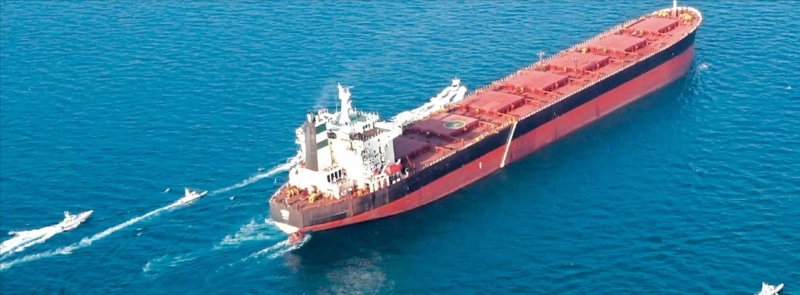
As Iran has played the card of closing the Strait of Hormuz—a key crude shipping lane—as a retaliatory measure to US attacks, China, which is heavily dependent on Middle Eastern crude, is also closely monitoring the fallout.
On the 2nd (local time), Bloomberg and other foreign media reported that the spillover from the war has pushed the cost of shipping crude from the Middle East to China to record highs. According to the London Baltic Exchange, the outlet said daily freight costs for a 2 million-barrel tanker on an industry benchmark route rose to $424,000 (about KRW 620 million).
With Iran announcing its intention to close the Strait of Hormuz, at least three vessels were reported to have been attacked along the Persian Gulf coast as of the morning, leaving one person dead. Iran’s semi-official Fars News Agency said that while no tankers were currently transiting the strait, 26 ships were loitering around it and 27 had halted operations.
The Strait of Hormuz is an export route for Middle Eastern oil producers such as Saudi Arabia, Kuwait, Iraq, Iran, and the United Arab Emirates (UAE). Roughly 20% of global oil consumption—about 20 million barrels a day—passes through the strait.
Moreover, the Middle East accounts for one-third of global crude production, and Iran ranks third in crude output within the Organization of the Petroleum Exporting Countries (OPEC). Depending on how the conflict unfolds, global oil prices could see sharp swings.
In an interview with Economic Observer, Liu Tao, a senior researcher under chief researcher Guang Kai, said that OPEC+ output increases and releases from strategic petroleum reserves by the US and others are "water from afar" that would not easily quench China’s immediate thirst, forecasting that global oil prices would stay firm in the near term.
He projected that if attacks remain limited to military targets and do not lead to a material disruption in crude supply, oil prices would trade in the $80–$100 per barrel range with daily moves of 5–10%. He also mentioned the possibility of prices reaching $120–$150, and in an extreme scenario, $200.
China News Network reported that if the Strait of Hormuz closure persists, oil prices could reach $120–$130 per barrel and, in severe cases, rise above $150.
Zou Zhichang, a researcher at Fudan University’s Center for Middle East Studies, also warned that if passage through the strait continues to be disrupted, oil prices could climb above $90, increasing uncertainty.
Market intelligence firm ICIS likewise projected that if the closure continues, global oil prices could move above $100 per barrel. On the ICE Futures Exchange, May-delivery Brent crude futures jumped as much as 13% intraday to $82.37 per barrel, before settling at $77.74, up 6.7% from the previous session.
Park Su-rim, Hankyung.com reporter paksr365@hankyung.com

Korea Economic Daily
hankyung@bloomingbit.ioThe Korea Economic Daily Global is a digital media where latest news on Korean companies, industries, and financial markets.