PiCK
Koo Yun-cheol: “U.S. sees Korea as having sufficient dollars… rates urgency for a currency swap as low”
Summary
- Deputy Prime Minister Koo Yun-cheol said the U.S. side views Korea as not lacking foreign exchange, and therefore rates the urgency of a Korea-U.S. currency swap as low.
- He said the U.S. considers a swap less necessary, citing Korea’s more than $400 billion in foreign-exchange reserves, the National Pension Service’s $500 billion, and more than $100 billion in the public’s foreign-currency assets—over $1 trillion in foreign-currency assets in total.
- Koo said the government is maintaining a high level of vigilance, checking and monitoring exchange-rate volatility and foreign-exchange market conditions daily, and that the situation could change if external variables stabilize.
Forecast Trend Report by Period


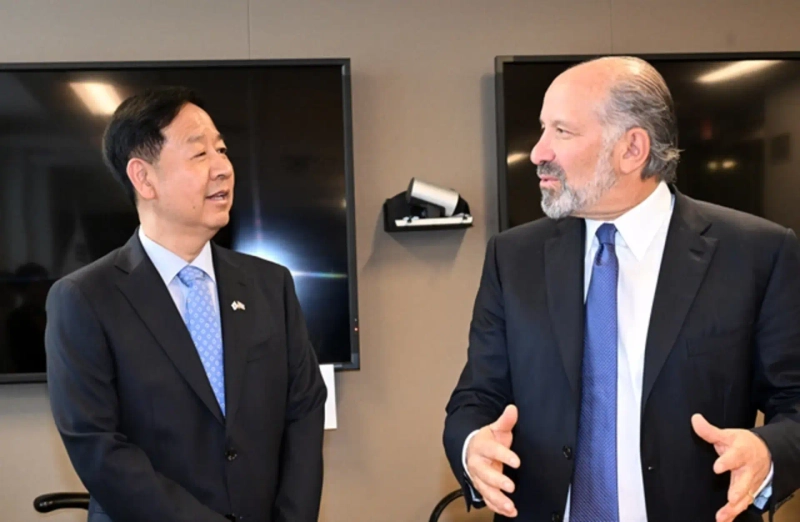
Deputy Prime Minister and Minister of Economy and Finance Koo Yun-cheol said regarding a Korea-U.S. currency swap that “the U.S. side holds the view that Korea is not short of foreign exchange.” He added that the government is staying alert and closely monitoring recent exchange-rate volatility.
Koo made the remarks on the 4th while attending a plenary meeting of the National Assembly’s Special Committee on Investment in the United States, in response to a question from Rep. Park Sung-hoon of the People Power Party about progress on a Korea-U.S. currency swap.
“A currency swap is intended for cases when Korea faces a foreign-currency liquidity shortage, so the United States can fill the gap,” he said. “From the U.S. perspective, Korea has more than $400 billion in foreign-exchange reserves, the National Pension Service has $500 billion, and the public holds more than $100 billion—amounting to over $1 trillion in foreign-currency assets—so why should a currency swap be provided?”
Asked in a follow-up whether it should be understood as something the government is unable to do rather than unwilling to do, Koo added, “We raised it with the U.S. side several times, but they reacted along the lines of, ‘Don’t Koreans already hold foreign exchange on the order of trillions inside Korea?’” This is interpreted to mean that, given the massive scale of foreign-currency assets held by the government and the private sector, the U.S. side is assigning low urgency or necessity to a currency swap.
Koo also stressed that the government is watching the foreign-exchange market with heightened vigilance. “It is still in the early stages, but we are checking and monitoring it day by day with a strong sense of alert,” he said. He added, “Part of the current situation reflects shocks driven by external variables,” and noted that “if those external shock factors stabilize quickly, things could change.”
Park Soo-bin, Hankyung.com reporter waterbean@hankyung.com

Korea Economic Daily
hankyung@bloomingbit.ioThe Korea Economic Daily Global is a digital media where latest news on Korean companies, industries, and financial markets.