Government: "Seven months’ worth of crude oil stockpiled… support measures for naphtha, with 54% tied to the Strait of Hormuz, to be prepared"
Summary
- The Ministry of Economy and Finance said it holds 208 days’ worth of strategic petroleum reserves under International Energy Agency standards, assessing that its capacity to respond to a supply disruption is sufficient.
- The ministry said it plans to prepare support measures such as shifting naphtha export volumes to domestic supply to guard against supply concerns for naphtha, 54% of which relies on passage through the Strait of Hormuz.
- The ministry said it will expand support for crude oil purchase financing and emergency working capital through the Supply Chain Stabilization Fund, and raise the support cap for crude oil purchase financing from regions outside the Middle East, such as North America and Central and South America, to 100%.
Forecast Trend Report by Period


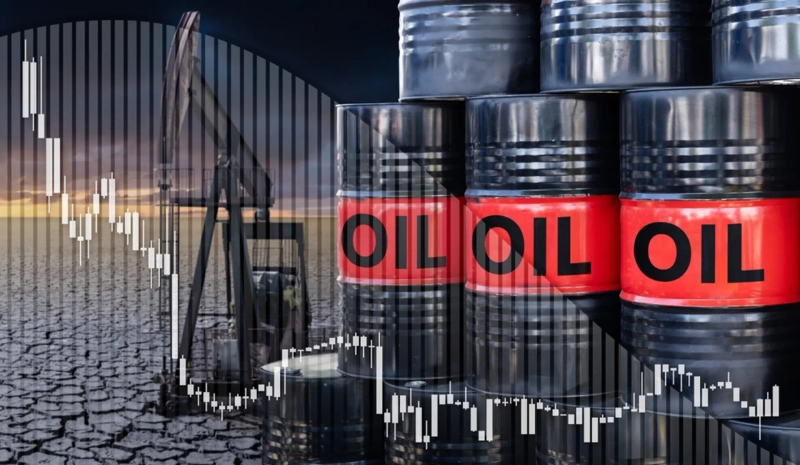
On the 4th, the government held a joint interagency inspection meeting to assess the impact of the U.S.-Iran war on domestic and global supply chains. For naphtha—of which a large share of import volumes relies on passage through the Strait of Hormuz—the government will prepare support measures, and will activate an “Emergency Response Task Force for the Supply Chain Fund” within the Export-Import Bank of Korea to provide support such as financing for crude oil purchases.
Kang Ki-ryong, deputy minister for fiscal and economic affairs, convened the joint meeting with the Ministry of Trade, Industry and Energy; the Ministry of Agriculture, Food and Rural Affairs; the Ministry of Oceans and Fisheries; the Ministry of Land, Infrastructure and Transport; the Export-Import Bank of Korea; and KOTRA, among others. The meeting reviewed import trends for economic security items with heavy dependence on the Middle East—such as energy, chemical products, and materials and equipment—along with substitutability and domestic production conditions.
Economists point to crude oil as the main flashpoint through which the latest Middle East situation could affect the real economy. Jeong Kyu-cheol, head of the economic outlook division at the Korea Development Institute (KDI), said, “Korea relies entirely on imports for crude oil, and in particular imports a large amount from the Middle East, so the supply-demand balance for crude is the biggest concern,” adding, “If procuring crude oil itself becomes difficult, not only will prices rise, but the real economy could also face hardship.”
The Ministry of Economy and Finance said it holds 208 days’ worth of strategic petroleum reserves under International Energy Agency (IEA) standards, concluding that its capacity to respond to a supply disruption is sufficient. Still, it said, “To respond to increased volatility, we will thoroughly prepare measures such as securing additional volumes outside the Middle East, bringing in overseas production, and exercising priority purchase rights for joint stockpiling.”
For naphtha, the ministry assessed that 54% of volumes depend on passage through the Strait of Hormuz, meaning that if the Middle East situation is prolonged, supply concerns could emerge. Naphtha is used as a feedstock for a wide range of basic petrochemical products and is also called the “rice of the petrochemical industry.” The ministry said it plans to prepare support measures, including shifting naphtha export volumes to domestic supply, and explained that it will strengthen communication with industry to quickly identify corporate difficulties, while providing tailored support through KOTRA’s business support help desk.
Separately, the ministry will expand support for crude oil purchase financing and emergency working capital through the Supply Chain Stabilization Fund, and will activate an “Emergency Response Task Force for the Supply Chain Fund” within the Export-Import Bank of Korea to raise the support cap for crude oil purchase financing from regions outside the Middle East—such as North America and Central and South America—from the current 90% to 100%. Deputy Minister Kang said, “We will continue to closely monitor supply and demand conditions for key items in close cooperation with relevant ministries,” adding, “We will respond proactively so that domestic companies can smoothly secure alternative supplies and domestic supply chains can be maintained in a stable manner.”
By Nam Jung-min peux@hankyung.com

Korea Economic Daily
hankyung@bloomingbit.ioThe Korea Economic Daily Global is a digital media where latest news on Korean companies, industries, and financial markets.