"Is Oil Headed for $100?"…Markets on High Alert as Prolonged Hormuz Blockade Emerges as Key Variable
Summary
- Following the Trump administration’s airstrike on Iran, international oil prices have surged, and the market says whether a Strait of Hormuz blockade becomes prolonged is the key variable.
- While Saudi Arabia and UAE output increases could in theory replace supplies, if the strait is effectively blocked, the risk of a further spike—such as $130 per barrel—is being raised.
- South Korea relies on the Middle East for more than 70% of its crude imports, making it difficult to secure alternative supplies if the strait is blocked, and rising international crude prices are reflected in domestic petroleum product prices with a 2–3 week lag.
Forecast Trend Report by Period


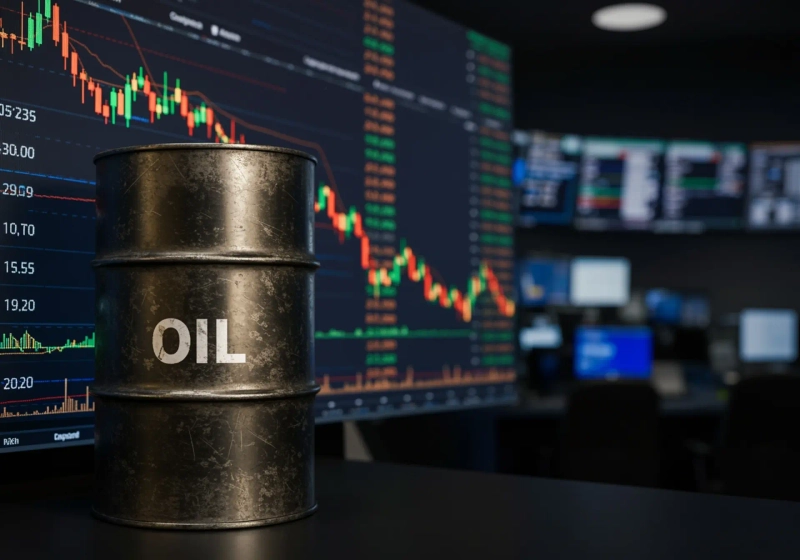
International oil prices are surging after the Donald Trump administration carried out a surprise airstrike on Iran. The market is increasingly viewing the direction of global crude prices as hinging on whether a blockade of the Strait of Hormuz becomes prolonged.
On the 4th, Kim Taehwan, head of the Petroleum Policy Division at the Korea Energy Economics Institute, said, "The virtually only variable that can push prices down is additional output from Saudi Arabia and the United Arab Emirates (UAE)," adding, "But if the strait is blocked, even higher production would be meaningless." On the day, West Texas Intermediate (WTI) on the New York Mercantile Exchange settled up $3.33 (4.67%) at $74.56 a barrel.
Iran’s crude exports currently stand at about 1.5 million barrels a day on average. Kim said, "Given Saudi and UAE spare capacity, this is a volume that is physically more than replaceable," adding, "If Iranian barrels are shut out of the market, the two countries could fill the gap and capture the profits."
However, that assumes normal maritime transport. Kim noted, "More than 20% of global crude flows pass through the Strait of Hormuz," adding, "If the strait is effectively blocked and shipping is halted for an extended period, global oil prices will have no choice but to spike further." Some in the market are even raising the possibility of "$130 a barrel."
In early 2022, Western sanctions following Russia’s invasion of Ukraine disrupted roughly 3% of global oil supply, and prices at the time jumped about 50%—from around $80 a barrel before the war to roughly $130. Current market projections are interpreted as assuming a supply shock similar to that episode. During the second oil shock, Middle Eastern supply fell by about 10%, and oil prices once surged by more than 150%.
Ahead of the outbreak of the latest conflict, oil was trading around $65 a barrel. Kim said, "This time there is the additional variable of a strait blockade, so a simple comparison is difficult," adding, "For prices to rise well above $100, the market would have to accept a 'prolonged Hormuz blockade' as reality."
A domestic hit is also expected. More than 70% of South Korea’s crude imports come from the Middle East. While some Saudi and UAE oilfields are linked to ports outside the Strait of Hormuz, volumes are limited, and the crude grades are known to differ from those optimized for domestic refining processes.
If the blockade drags on, securing alternative supplies will likely prove difficult for the domestic refining industry. Rises in international crude prices are typically reflected in domestic petroleum product prices with a lag of 2–3 weeks.
There is also analysis that downside pressure on prices is limited over the medium to long term. Kim explained, "The average breakeven point (BEP) for new U.S. shale wells is in the high $60s," adding, "If oil falls into the $50 range, new drilling shrinks and supply declines." He added, "The Trump administration needs low oil prices to stabilize inflation, but an excessive drop would burden the U.S. shale industry."
By Rian Kim knra@hankyung.com

Korea Economic Daily
hankyung@bloomingbit.ioThe Korea Economic Daily Global is a digital media where latest news on Korean companies, industries, and financial markets.