PiCK
Coupang steps up review of ‘stablecoins’… could it save hundreds of billions of won in fees?
Summary
- Coupang reportedly has moved to recruit digital-asset legal specialists for Coupang Pay’s legal team to assess the business viability of stablecoins and a won-denominated stablecoin.
- Coupang reportedly joined as an early partner of Tempo, a blockchain specialized for stablecoin payments, and is testing on-chain payment environments.
- The industry said that if Coupang replaces its payment system with stablecoins, it could potentially save about 500 billion won a year in payment fees and secure a new growth engine for Coupang Pay.
Forecast Trend Report by Period


Coupang hires legal-review experts in digital assets
Move seen accelerating prospects for a ‘KRW stablecoin’ launch
“Could cut annual payment fees by hundreds of billions of won if introduced”
In-house payments arm ‘Coupang Pay’ could become a new growth engine

Coupang, the country’s largest e-commerce company, is pushing to expand staffing to assess the business viability of stablecoins. As the institutionalization of digital assets accelerates, analysts say Coupang may be moving in earnest to prepare for the introduction of a won-denominated stablecoin.
According to industry sources on the 4th, the legal team at Coupang Pay, a fintech subsidiary under Coupang, has recently begun recruiting additional in-house legal experts. One of the goals of the hiring is to strengthen capabilities for legal review and advisory work in the digital-asset space, including stablecoins. Coupang Pay listed among key duties “reviewing services and business structures related to the issuance, use, and distribution of stablecoins.”
The industry views the recruitment as a sign Coupang has begun a full-scale evaluation of stablecoin business feasibility. That is because, as the government and the National Assembly pick up the pace of discussions on digital-asset regulation, the likelihood of permitting won-denominated stablecoins within the year is also rising.
Joining a ‘stablecoin-focused blockchain’ partner network
Coupang Pay’s legal team is also known to serve internally as a kind of “strategy unit,” including reviewing new businesses. Coupang Pay said the legal team is “pursuing collaboration with global payment networks while handling legal issues in new areas such as artificial intelligence (AI) and stablecoins,” adding that it “also plays a strategic role in designing new business models (BM) and driving innovation while complying with regulations.”
This is not the first time Coupang has looked into adopting stablecoins. In the second half of last year, Coupang joined as an early partner of ‘Tempo,’ a Layer 1 blockchain developed by global payments company Stripe. Tempo is a blockchain specialized for stablecoin payments. CoinDesk, a U.S.-based digital-asset outlet, reported, “Tempo was designed to process large-scale financial transactions,” adding, “Partners have been testing real payment environments on-chain since late last year.”
The incentive to adopt stablecoins is clear. Industry watchers say if major e-commerce players such as Coupang replace existing payment systems with stablecoins, they could save payment fees worth hundreds of billions of won annually. Given Coupang’s revenue of about 49 trillion won last year, a simple assumption of a 1% card fee rate suggests potential annual cost savings of roughly 500 billion won.
In-house payments arm ‘Coupang Pay’ could become a new growth engine
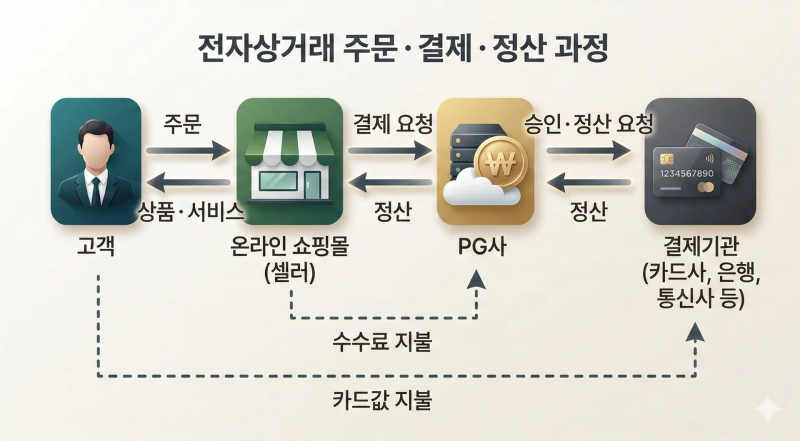
Another appeal is the potential to enhance the scalability of the existing payment ecosystem. Coupang is actively reviewing ways to expand its payment system, including a plan to turn Coupang Pay into a general-purpose service that can be used by external merchants as well. An industry official said, “If stablecoins are introduced, it would be possible to bypass intermediaries such as payment gateway (PG) firms, significantly improving payment efficiency,” adding, “Stablecoins could become a new growth engine for in-house payment systems such as Coupang Pay.”
Some also say last year’s personal-data leak incident could be a hurdle. That is because Coupang, following the recent incident, effectively took an adversarial stance toward authorities through what it called a “self-investigation.” Another industry official said, “It may still be burdensome for Coupang to push new businesses aggressively in Korea,” adding, “It could delay related plans domestically for now and watch how other companies proceed.”
Meanwhile, some analysts say stablecoin adoption by e-commerce companies is the next logical step. Global e-commerce companies such as Amazon and Shopify have already introduced stablecoin payment services or are considering doing so. Kim Min-seung, head of the research center at Korbit, said, “From the perspective of ordinary consumers, stablecoin payments may not offer a significantly greater advantage than existing card or simple-payment methods,” adding, “The key will be how to translate the ‘instant settlement’ effect of stablecoin payments into products or services.”

JOON HYOUNG LEE
gilson@bloomingbit.ioCrypto Journalist based in Seoul