Global kerosene prices ‘seize up’ after a 77% one-day surge... fears of a ‘spike in household fuel costs’
Summary
- Global kerosene prices surged 77.7% in a single day to $231.41 per barrel, making a broad hit to the real economy appear unavoidable.
- The sharp rise in global kerosene prices is likely to feed through to a consumer “price bomb” of around 3,000 won per liter in South Korea with a lag of about a week.
- With concerns over a kerosene and jet fuel supply shortfall, a domino impact on the real economy is expected, including higher airfares and logistics costs, and rising fresh-food prices and consumer inflation.
Forecast Trend Report by Period


Fallout from the Strait of Hormuz blockade
Market ‘panic’ as prices hit $230 a barrel in a single day
Experts: “Floriculture farms among those likely to be hit hardest”
From greenhouse heating to airfares
Countdown to a ‘domino blow’ to the real economy
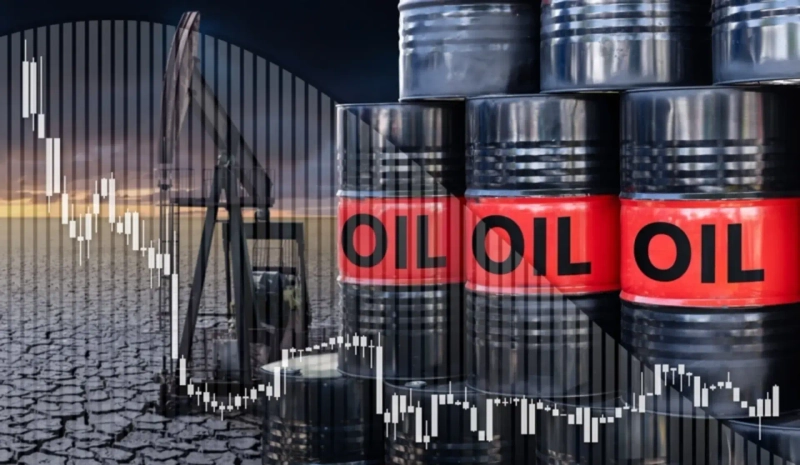
In the wake of Iran’s blockade of the Strait of Hormuz, global kerosene prices posted an unprecedented “price seizure,” jumping 77% in a single day. Observers say a hit to household heating bills and to flower growers and other farmers who rely on kerosene for greenhouse fuel is unavoidable. Analysts add that if the Hormuz disruption drags on, the combined impact of higher airfares and logistics costs will make broader damage to the real economy inevitable.
‘Price seizure’ as prices jump $100 a barrel in a day
According to Opinet, the Korea National Oil Corporation’s oil price information service, international kerosene rose from $130.24 a barrel on March 3 to $231.41 on March 4—up 77.7% in just one day. Analysts describe this as an “abnormal move,” with the increase outpacing gasoline (9.2%) and diesel (15.3%) by a factor of three to four.
The international refined-product prices published by Opinet are based on the Singapore spot market price (MOPS), the benchmark for Asian markets. This Singapore price, combined with the exchange rate, is also used to calculate the supply prices domestic refiners charge to distributors and gas stations.
An official at the Korea Petroleum Association said, “A $100 one-day rise is a level hard to find precedent for in the history of the global oil market, and we are analyzing the precise cause.” A range of explanations is being floated for the anomalous spike in kerosene, including preemptive action by refiners, a surge in jet fuel, and stockpiling by some global “big hands.” Another view is that with Middle Eastern exports of middle distillates (mid-distillates such as kerosene and diesel) disrupted, fear in the market concentrated on kerosene, for which substitutes are limited.
Hwang Gyu-won, an analyst at Yuanta Securities, said, “In preparation for a potential halt in crude tanker arrivals, policy-level reviews are under way in places such as South Korea and Japan to cut utilization rates at major refining facilities by around 10%.” He added, “Lower run rates immediately reduce output of kerosene and jet fuel, and concerns over a supply shortfall triggered a rush of buying on the Singapore exchange, leading to a temporary price spike.”
The jump in international kerosene prices is reflected in domestic retail prices with a lag of about a week. Domestic refiners set supply prices based on the Singapore refined-product price (MOPS) and the exchange rate; if the current surge persists, there is a strong possibility that a “price bomb” will hit consumers within a week. Industry sources say, “Some have already notified that next week’s kerosene supply price, based on spot prices, will be 3,000 won per liter.”
Cho Hong-jong, a professor of economics at Dankook University, said, “As countries have been retiring facilities related to jet fuel and kerosene on the grounds of environmental policies (SAF and the like), dependence on Arab producers has deepened.” He added, “In particular, with refining facilities concentrated inside the Strait of Hormuz, supply volatility for kerosene and jet fuel tends to be far greater than for other products during geopolitical crises.”
Refiners in practice provide advance notice of price hikes to distributors (such as agencies), which is then reflected in consumer prices the following week. Distributors need an indication of the upcoming supply price to adjust inventories. Some observers also say the current “abnormal surge” could ease somewhat after a few days.
From greenhouses, a ‘bombardment’... heading to 3,000 won per liter?
The problem arises if this kerosene rally stays in place. Analysts warn that the blow from higher kerosene prices will arrive first in rural areas and among energy-poor households.
Kerosene is essential for greenhouse heating at flower and vegetable farms and for operating small factories. A kerosene price spike could go beyond a simple increase in production costs and lead to shutdowns, which in turn would inevitably feed into higher prices for fresh foods and broader consumer inflation.
Industry is also seen as being on alert. As jet fuel—which has the same composition as kerosene—soars, airlines’ fuel-cost burdens could reach a tipping point, and a range of logistics costs could rise in tandem.
Even if the Strait of Hormuz blockade is lifted early, observers say it could take time for supply and demand to normalize due to shipping lags. An official in the refining industry said, “Domestic refiners will not reflect day-to-day price moves immediately, but considering the 10-day average price, supply-price increases to distributors from next week are unavoidable.”
By Kim Dae-hoon / Kim Ri-an / Ha Ji-eun, daepun@hankyung.com

Korea Economic Daily
hankyung@bloomingbit.ioThe Korea Economic Daily Global is a digital media where latest news on Korean companies, industries, and financial markets.