Koo Yun-cheol: "Raising fuel prices is an act that undermines livelihoods…we will use every administrative measure"
Summary
- Deputy Prime Minister Koo Yun-cheol said that, amid volatility in international oil prices, the sharp rise in domestic gasoline and diesel prices has led him to strongly criticize that "profiteering through excessive price hikes is a shameless act that undermines livelihoods."
- Koo stressed that the government would respond thoroughly by using all available administrative measures, including designating a maximum gasoline price.
- The government said it will carry out more than 2,000 special planned inspections per month in cooperation with the Korea Petroleum Quality & Distribution Authority and the National Police Agency, in addition to the pan-government oil market inspection task force, and will strictly punish hoarding or collusion that exploits a crisis under a zero-tolerance principle.
Forecast Trend Report by Period


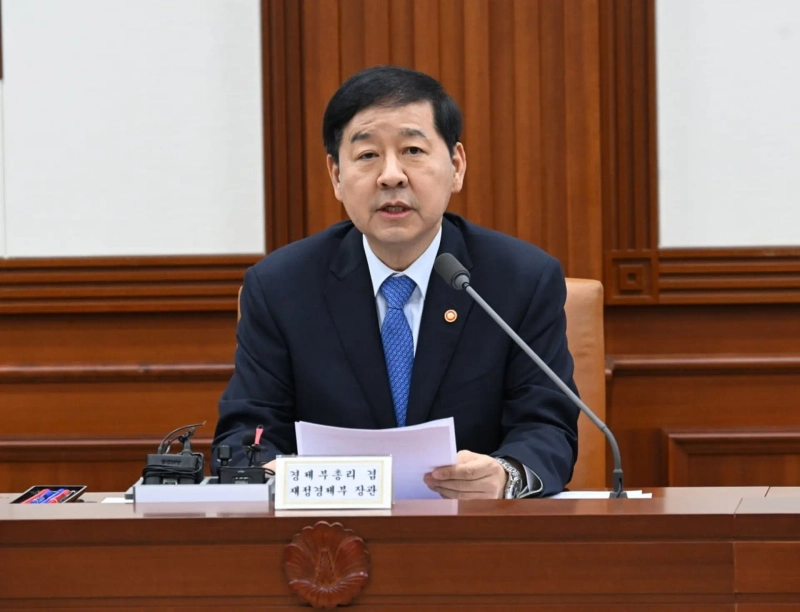
As volatility in international oil prices has increased and domestic gasoline and diesel prices have surged, Deputy Prime Minister and Minister of Economy and Finance Koo Yun-cheol (pictured) strongly criticized the practice, saying, "Profiteering through excessive price hikes is a shameless act that erodes people’s livelihoods." Koo warned the government would deploy all available administrative measures, including setting a maximum price for gasoline.
On the 5th, Koo chaired the third meeting of the "Inter-ministerial TF for Special Management of Cost of Living" and discussed energy price trends and response measures stemming from the Middle East situation, as well as steps to eradicate market-disrupting behavior that rides on the Middle East tensions.
In his opening remarks, Koo said, "The current domestic supply-and-demand situation for petroleum products is stable," adding, "Korea holds sufficient oil stockpiles that significantly exceed internationally recommended standards."
However, as fuel demand has risen on heightened anxiety over the Middle East situation, fuel prices are surging. According to Opinet, the Korea National Oil Corporation’s price information system, the nationwide average gasoline price as of 3 p.m. that day was tallied at 1,821 won per liter. It is the first time the nationwide average gasoline price has exceeded the 1,800-won level since August 2022—about 3 years and 7 months.
Koo cautioned, "Given the lag in reflecting international prices domestically, this is by no means the point at which they should have a material impact on domestic prices," and warned, "Even so, excessively raising prices to reap windfall profits is a shameless act that undermines livelihoods." He added, "The government will respond thoroughly by using every possible administrative measure, including designating a maximum price for petroleum products."
The government is currently operating a pan-government oil market inspection task force involving the Ministry of Economy and Finance, the Ministry of Trade, Industry and Energy, the Fair Trade Commission, the National Tax Service, and local governments. Starting on the 6th, it plans to work with the Korea Petroleum Quality & Distribution Authority and the National Police Agency to conduct more than 2,000 special planned inspections per month.
Koo said, "Markets are autonomous, but hoarding or collusion that exploits a crisis is clearly criminal," adding, "We will also intensively inspect other items closely tied to livelihoods, and if violations are detected, we will punish them strictly under a zero-tolerance principle."
Reporter Nam Jeong-min peux@hankyung.com

Korea Economic Daily
hankyung@bloomingbit.ioThe Korea Economic Daily Global is a digital media where latest news on Korean companies, industries, and financial markets.