"Isn’t gold supposed to be a safe haven in wartime?" Why gold ETF returns have been lackluster
Summary
- It said that despite the war involving the U.S. and Israel and Iran, gold prices and returns on major gold ETFs have been weak, meaning the usual rule of “gold in a crisis” is not holding.
- It noted that shifts in the U.S. policy-rate outlook and a stronger dollar are putting downward pressure on gold prices, which are sensitive to rates and the dollar.
- It said that gold has recently taken on more of an investment asset character than a safe haven, and profit-taking via ETFs has increased gold price volatility.
Forecast Trend Report by Period


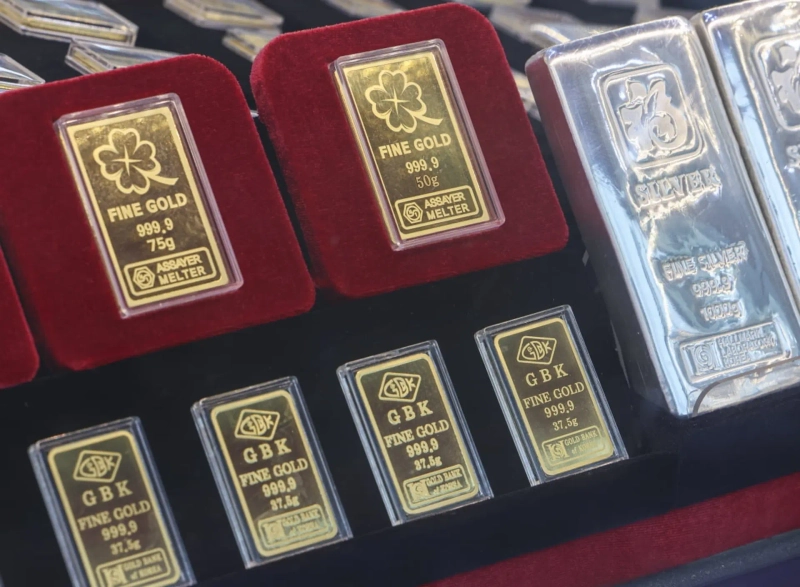
"‘Gold when war breaks out’—wasn’t that basically an ironclad rule?"
As Korea’s stock market has been swinging on the impact of the war involving the U.S. and Israel and Iran, the price of gold—widely seen as a flagship safe-haven asset—has continued to weaken. Some major gold-related exchange-traded funds (ETFs) have posted negative returns so far this month. In other words, the usual rule of thumb—“gold in a crisis”—isn’t holding right now.
Gold ETFs ‘lackluster’ after U.S. strikes
According to the Korea Exchange on the 6th, since the U.S. strike on Iran on the 28th of last month through today, major gold ETFs have posted negative returns of around 1%. Among domestic gold-related ETFs, the largest by size, ‘ACE KRX Physical Gold,’ rose 0.89%. ‘KODEX Gold Active’ gained 1.18%, and ‘SOL International Gold’ rose 0.92%.
By contrast, funds that track international gold futures—‘TIGER Gold Futures (H)’ (-1.59%) and ‘KODEX Gold Futures (H)’ (-1.57%)—have fallen compared with levels before the U.S.-Iran clash. The same goes for ‘HANARO Global Gold Mining Companies’ (-7.51%), which invests in gold miners.
U.S.-listed gold ETFs have shown a similar tone. So far this month, ‘SPDR Gold Shares (GLD)’ is down 3.64%, and ‘iShares Gold Trust (IAU)’ has fallen 3.58%. That means ETFs typically favored as shelters from a “downpour” of global bad news have instead generated losses.
These ETFs are delivering weak returns because the international gold price has been sluggish. In Singapore’s international futures market, spot gold futures traded at $5,134.60 per troy ounce on the day. That is 2.1% lower than the price on the 27th of last month ($5,247.90), right before the U.S. strike. It is the opposite of the usual pattern, in which gold prices tended to surge when geopolitical crises such as wars erupted.
Shifting rate outlook and dollar demand combine
The financial investment industry says three major factors are at work behind this phenomenon. The biggest is the shift in expectations for the U.S. policy rate. As oil prices jumped, forecasts spread that U.S. rate cuts could be delayed. West Texas Intermediate (WTI) futures have surged about 20% since late last month. When crude oil—an essential input for key industries—rises, consumer prices can climb, adding inflationary pressure. Because gold is a non-interest-bearing asset, the higher rates remain, the more investors tend to prefer bonds and similar assets, making it easier for downward pressure to weigh on gold prices.
A stronger dollar is also weighing on gold. The U.S. dollar index (DXY), which measures the dollar against six major currencies, stood at 99.068 on the day, up 1.31% over the past week. The move reflects a sharp increase in investment demand to sell risk assets such as equities and secure cash dollars. Global investment bank JPMorgan said, “Even as the dollar is rising, funds are not moving into other assets,” adding that it “means short-term demand for cash is increasing in the market.”
Another reason gold has not jumped sharply on the war is that it has increasingly taken on the character of an investment asset. Gold prices rose about 65% in price last year alone. Previously, most demand for gold investment came from safe-haven demand, but recently a growing share of investors has been seeking active returns via ETFs and other vehicles. According to the World Gold Council (WGC), global gold ETF holdings increased by 222 tonnes year-on-year in the third quarter of last year alone—roughly matching central banks’ gold purchases over the same period.
Unlike in the past, the industry says that once gold prices rise to a certain level, profit-taking selling pours in, increasing price volatility. Ok Ji-hoe, a researcher at Samsung Futures, said, “Recently, gold has shown a clearer tendency to respond more sensitively to monetary policy expectations and the dollar’s value than to its safe-haven role for risk aversion,” adding that “the price direction will depend on factors such as whether the war becomes prolonged.”
Reporter Seon Han-gyeol always@hankyung.com

Korea Economic Daily
hankyung@bloomingbit.ioThe Korea Economic Daily Global is a digital media where latest news on Korean companies, industries, and financial markets.