Iran war sends FX rates whipsawing… repeated threats to 1,500 won
Summary
- It said that daily volatility in the won-dollar exchange rate hit the highest level since the COVID-19 pandemic due to fallout from the U.S.-Iran war.
- It reported that the average daily trading range of the won-dollar rate this month widened to 13.2 won (0.91%), and the won’s value fell 2.81% against the dollar.
- It said FX-market volatility is rising as after-hours trading repeatedly threatens the 1,500 won level, with the rate spiking as high as 1,505.8 won.
Forecast Trend Report by Period


Average daily move this month: 13.2 won·0.91%
Biggest volatility since the COVID-19 pandemic
Depreciation rate also the highest among major currencies
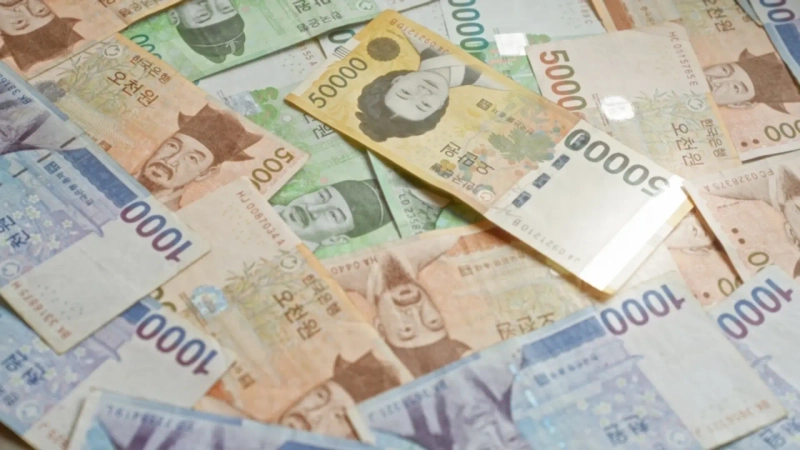
Daily volatility in the won-dollar exchange rate has reached its highest level since the COVID-19 pandemic, amid fallout from the U.S.-Iran war.
According to the Bank of Korea’s Economic Statistics System on the 8th, the average daily trading range of the won against the U.S. dollar from the start of this month through the 6th came to 13.2 won. The figure is based on Seoul’s onshore FX market daytime session (9:00 a.m. to 3:30 p.m.).
Compared with past monthly average daily ranges, it is the highest since 13.8 won in March 2020, when COVID-19 fears were intensifying.
Instances of the monthly average daily range exceeding 10 won are rare. Even in April last year, when the exchange rate swung sharply on the shock of U.S. reciprocal tariffs, it was limited to 9.7 won.
Recent volatility in percentage terms has also been unusually high. Over the same period, the average daily fluctuation rate of the won-dollar exchange rate was 0.91%, also the highest since 1.12% in March 2020. After 0.36% in December last year, it rose to 0.45% in January, 0.58% in February, and has continued for three months of a marked uptrend in volatility.
As geopolitical risks have widened and major currencies have weakened against the dollar, the won has remained among the laggards.
In fact, according to Yonhap Infomax, the won’s value (based on Korea’s closing rates) fell 2.81% against the dollar over the period. Over the same period, major currencies also declined—the euro of the European Union (-1.69%), Australian dollar (-1.24%), Japanese yen (-1.21%), Swiss franc (-1.02%), British pound (-0.84%), and offshore Chinese yuan (-0.81%)—but all outperformed the won. The Canadian dollar rose 0.03%.
Since the Iran situation, exchange-rate volatility has repeatedly tended to widen sharply during after-hours trading (3:30 p.m. to 2:00 a.m. the next day). On the 3rd, it surged to 1,505.8 won at 12:22 a.m., marking the first time it hit 1,500 won since March 12, 2009 (intraday high of 1,500.0 won) during the global financial crisis.
In the early hours of the 6th as well, it jumped to 1,486.4 won at 1:27 a.m., and later that night at 11:09 p.m. it again approached 1,500 won at 1,495.0 won. In effect, it repeatedly rose by more than 20 won from the daytime-session close.
Analysts say that because after-hours trading has fewer participants than the daytime session and liquidity is relatively thin, even small orders can drive sizable moves in the exchange rate. Limited market intervention by FX authorities compared with the daytime session also appears to have played a role.
Ko Jeong-sam, Hankyung.com reporter jsk@hankyung.com

Korea Economic Daily
hankyung@bloomingbit.ioThe Korea Economic Daily Global is a digital media where latest news on Korean companies, industries, and financial markets.