Kuwait decides to cut oil output… declares force majeure amid Middle East turmoil
Summary
- Kuwait’s state oil company KPC said it has declared force majeure and will cut crude output and refining throughput, citing the Strait of Hormuz blockade and Iranian attacks.
- Disruptions to crude and petroleum product transport in the Gulf are spreading output cuts across Kuwait, Iraq, Saudi Arabia and Qatar, raising the risk of a shortfall in crude supplies, it said.
- Qatar moved to halt LNG supplies after a drone strike hit its largest LNG production facility, and said normalization could take at least one month.
Forecast Trend Report by Period


"Virtually no vessels available to transport crude oil and petroleum products due to fallout from armed clashes"
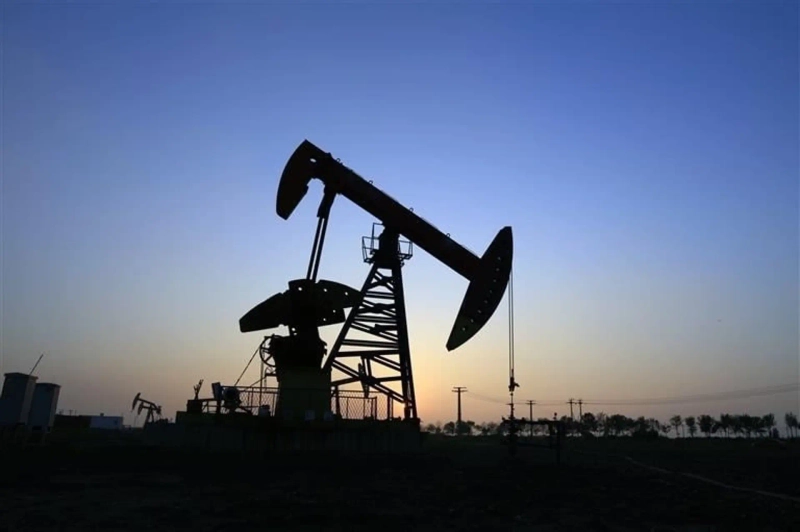
Kuwait has decided to curb oil production after taking into account Iran’s move to block the Strait of Hormuz amid the war in the Middle East.
Kuwait’s state oil company Kuwait Petroleum Corp. (KPC) said in a statement on the 7th (local time) that it had declared force majeure, Reuters reported. “As a precautionary measure, we are reducing crude output and refining throughput in response to Iran’s continued attacks on Kuwait and threats to shipping through the Strait of Hormuz,” the statement said.
A force majeure clause is a mechanism that exempts liability or allows performance to be deferred when contractual obligations cannot be met due to uncontrollable extraordinary events such as war or natural disasters.
According to KPC, the military clashes between the United States and Israel and Iran have left the Arabian Gulf with virtually no ships available to transport crude oil and petroleum products.
KPC added that the measure is part of its crisis management and business continuity strategy, saying it is “fully prepared to restore production levels if conditions allow, depending on how the situation unfolds.”
On the 3rd, Kuwait’s key refining facility, the Al Ahmadi complex, was hit by missiles and drones launched from Iran, reducing petroleum product output. As of January this year, Kuwait’s crude production stood at about 2.6 million barrels per day, with refining capacity of 800,000 barrels per day.
Unlike other Gulf oil producers such as Saudi Arabia and the United Arab Emirates (UAE), which have overland export pipelines, Kuwait—located deep inside the Gulf waters (Persian Gulf)—effectively must ship virtually all crude and petroleum product exports through the Strait of Hormuz.
Kuwait is not alone: multiple Gulf oil producers have previously halted operations at energy-related facilities following Iranian attacks. In Duhok province in Iraq’s northern Kurdistan Region, crude production of about 30,000 barrels per day at the Sarsang oil field operated by U.S.-based HKN Energy was suspended after a drone strike.
Saudi Arabia also temporarily halted operations after a drone attack on the Ras Tanura complex, home to state oil company Aramco’s largest refinery.
Qatar, the world’s second-largest producer of liquefied natural gas (LNG), halted supplies after its largest LNG production facility was hit by Iranian drones, invoking a force majeure clause. Some forecasts also say it could take at least one month to normalize Qatar’s LNG output.
In the Gulf region, oil storage facilities have become saturated as tankers have been unable to enter Gulf waters via the Strait of Hormuz, forcing producers to cut output. Oil fields where production has been reduced take time to restore, meaning that even if the Strait of Hormuz blockade is lifted, crude supplies could remain tight for a certain period.
Ko Jeong-sam, Hankyung.com reporter jsk@hankyung.com

Korea Economic Daily
hankyung@bloomingbit.ioThe Korea Economic Daily Global is a digital media where latest news on Korean companies, industries, and financial markets.