Summary
- It said Iran’s blockade of shipping through the Strait of Hormuz and output cuts by Gulf producers are expected to drive a further surge in global oil prices.
- It noted Goldman Sachs and Qatar’s energy minister warned oil could reach $100–$150 a barrel and exceed the 2008 peak.
- It said the oil spike is heightening worries in the U.S. and China over stagflation, delayed rate cuts, and slower growth.
Forecast Trend Report by Period


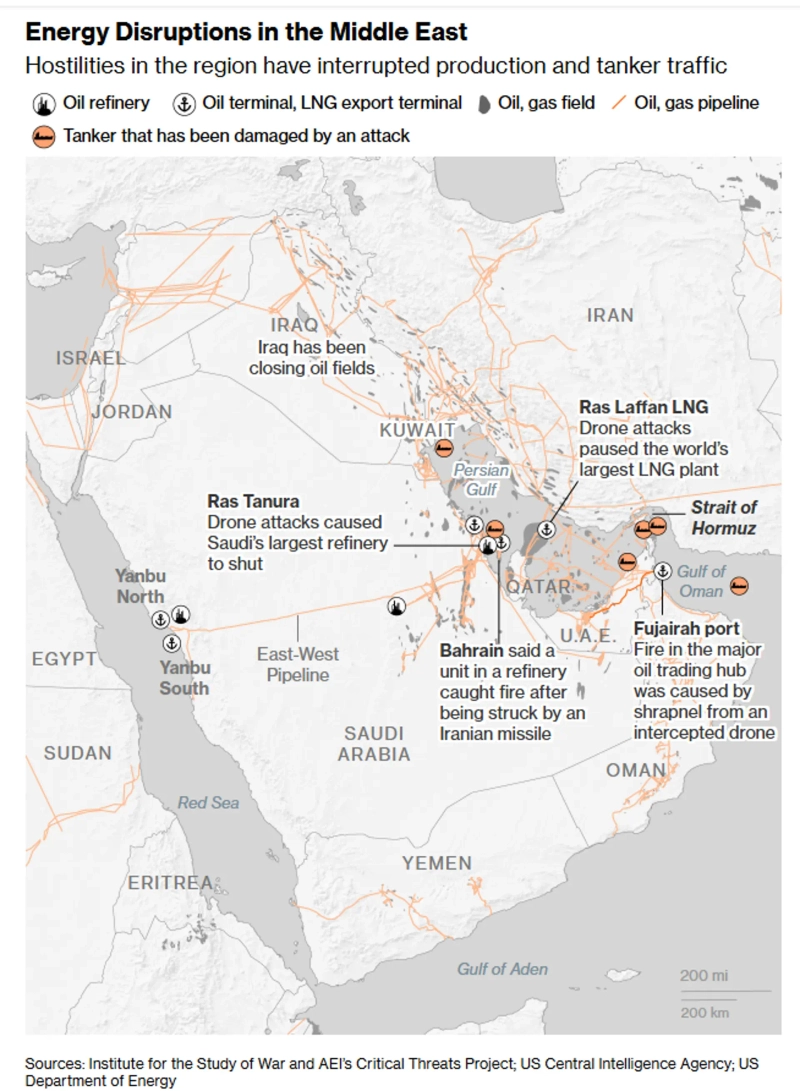
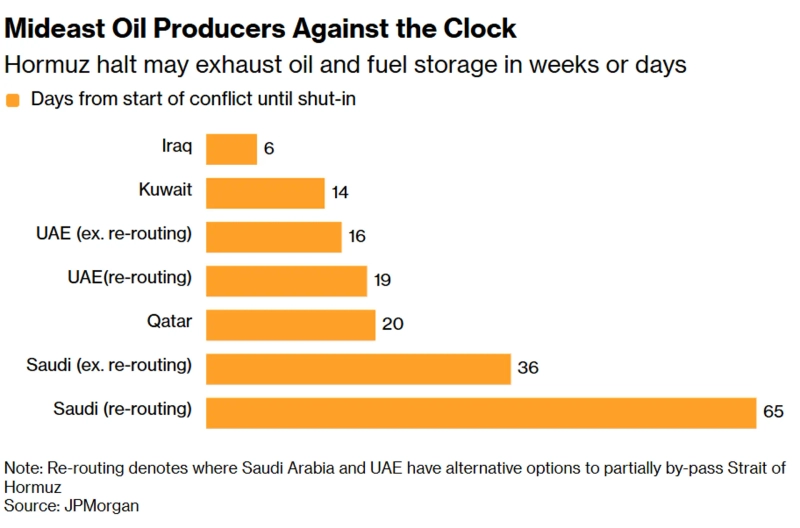
As the war between the U.S. and Israel on one side and Iran on the other escalated, Iran moved to block shipping through the Strait of Hormuz, prompting Gulf producers to begin cutting output in quick succession. With export routes effectively shut, there are limits to how much crude they can stockpile even if they keep producing. The move is expected to further push up already surging global oil prices. If output cuts persist, restarting production is also likely to take a long time—meaning the longer this drags on, the more it will weigh on global growth.
According to Bloomberg, the United Arab Emirates (UAE) and Kuwait have recently begun curbing output. Abu Dhabi National Oil Company (ADNOC) said it is “managing offshore (field) production to address storage requirements (constraints).” Kuwait Petroleum Corporation (KPC) also said it is reducing both upstream output and refinery production. Citing an unnamed source, Bloomberg reported that Kuwait began cutting output by 100,000 barrels a day from the 7th and is expected to triple the scale of cuts from the 8th.
As Qatar’s liquefied natural gas (LNG) facilities halted production after drone attacks, Saudi Arabia’s Shaybah field—producing 1 million barrels a day—was also exposed to drone strikes. Saudi Arabia said on the 7th it intercepted 10 drones.
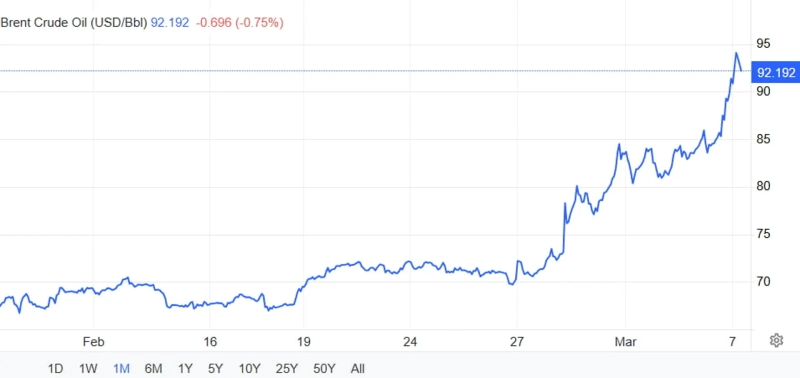
Oil prices continue to surge. Saad al-Kaabi, Qatar’s energy minister, said on the 6th that if the war does not end quickly, crude could jump to $150 a barrel within 2–3 weeks. Goldman Sachs forecast on the 6th that oil would top $100 this week if there is no breakthrough toward reopening passage through the Strait of Hormuz. Goldman Sachs added that “prices of refined products are highly likely to surpass the 2008 peak (Brent at $140 a barrel).”
In the U.S., stagflation is increasingly being discussed. The Bureau of Labor Statistics (BLS) under the U.S. Department of Labor said nonfarm employment fell by 92,000 in February from the previous month—far below the consensus forecast of a 50,000 increase. Employment figures for last December and this January were also revised down by 65,000 and 4,000, respectively, from previously reported levels.
However, the oil-price spike triggered by the Iran war is making it increasingly difficult to expect rate cuts from the U.S. central bank (Fed) and others. JPMorgan Chase said it expects that for every 10% rise in oil prices, U.S. inflation would increase by 0.1% point and economic growth would fall by 0.2% point.
According to the CME FedWatch Tool, the share of expectations that the Fed will cut its policy rate only once by year-end (35.7%) is higher than the share pricing in two cuts (30.4%). This suggests market participants believe inflation will make it difficult to lower rates.
China is facing similar pressure. Hong Kong’s South China Morning Post (SCMP) said “rising oil prices are translating directly into higher energy costs in China,” adding that “economic growth could stagnate and push up prices, potentially leading to stagflation.”
Some also foresee the possibility of falling inflation driven by weaker demand rather than cost-push inflation. David Rosenberg, founder of Rosenberg Research, said, “In the short term it causes inflation, but in the longer term consumers will find it harder to spend, demand will shrink, and inflation will decline.”
Paul Krugman, a professor at Princeton University, said that unlike during the 1970s oil shocks, inflation expectations are now relatively stable, making a wage-price spiral less likely. Still, he warned the war could tip the U.S. economy over “like the straw that makes a camel carrying a heavy load collapse.”
Washington = Correspondent Lee Sang-eun selee@hankyung.com

Korea Economic Daily
hankyung@bloomingbit.ioThe Korea Economic Daily Global is a digital media where latest news on Korean companies, industries, and financial markets.