PiCK
China eyes a new hegemonic order, yet remains mindful of Trump's planned visit to Beijing
Summary
- Foreign Minister Wang Yi said he had refrained from direct criticism of the U.S., while emphasizing China-U.S. exchanges and coexistence.
- China presented a multipolar world order, pluralism and symbiosis, and multipolarity and coexistence as the rightful shape of the international configuration.
- Wang described the Iran war as “a war that benefits no one,” calling for an immediate ceasefire and a political resolution.
Forecast Trend Report by Period


Indirect criticism of the U.S. and Israel at NPC-CPPCC press briefing
Dials back U.S. criticism, stresses global multipolarity
"Multipolarity and coexistence are the rightful international configuration"
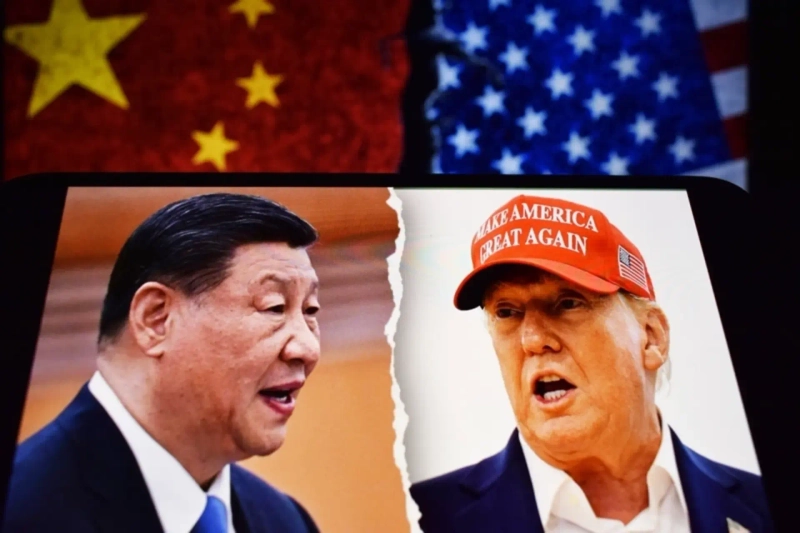
Wang Yi, China’s top foreign-policy official and foreign minister, has moved to foster a more dialog-oriented atmosphere with the United States. The shift is widely seen as restraint from direct criticism of Washington over the Iran strikes ahead of U.S. President Donald Trump’s expected trip to China.
With Middle East tensions escalating following U.S.-Israeli attacks on Iran and unilateralism persisting under the Trump administration, Beijing is opting against a head-on clash with Washington and instead promoting a new China-centered multipolar world order.
Wang, director of the Chinese Communist Party Central Foreign Affairs Commission Office (concurrently serving as foreign minister), said at a press conference on March 8 on the sidelines of the annual “Two Sessions”—the National People’s Congress and the Chinese People’s Political Consultative Conference—that “if China and the U.S. do not engage, it will only lead to misunderstandings and miscalculations, and move toward conflict and confrontation that would bring harm to the world.”
He added, “China and the United States are both major countries. We cannot change each other, but we can change the way we coexist.”
Since the Iran war began, global attention had focused on China’s public stance at the Two Sessions, as Wang had made Beijing’s opposition clear in calls with the foreign ministers of Russia, Iran, Israel and other countries from March 1 to 3, criticizing the U.S. and Iranian attacks as violations of international law.
Contrary to expectations, he refrained from explicit criticism aimed at the U.S., emphasizing only that “what reassures us is that the two heads of state have directly taken the lead and maintained good high-level exchanges, providing an important strategic safeguard for the improvement and development of China-U.S. relations.”
He did, however, describe the Iran war as “a war that should never have happened,” urging an immediate ceasefire and a political resolution.
Wang said, “With the Middle East engulfed in the flames of war, what I want to say is that this is a war that should never have happened and a war that benefits no one.” He added that “history has repeatedly shown that problems cannot be solved by force,” noting that “armed conflict only breeds new hatred and crises.”
As basic principles for resolving the Iran and Middle East issues, Wang cited respect for national sovereignty, opposition to the abuse of force, non-interference in internal affairs, and a political solution, adding that “sovereignty is the foundation of the current international order, and the sovereignty and security of Iran and the Gulf countries, as well as their territorial integrity, must all be respected.”
He also stressed that “might does not necessarily make right,” adding that “the world must not run on the law of the jungle where the strong prey on the weak.”
Yet while criticizing the U.S. invasion of Iran, Wang did not mention the U.S. directly. He said “countries should return to the negotiating table as soon as possible and resolve differences through equal dialogue,” adding that “major countries, in particular, should play a constructive role.”
Instead of sharpening criticism of the U.S., Wang more forcefully laid out China’s push for multipolarity. “China and the United States naturally have a major impact on the world, but we must not forget that there are more than 190 countries on this planet,” he said. “Pluralism and symbiosis are the natural state of human society, and multipolarity and coexistence are the rightful shape of the international order.”
He further emphasized that “China will never take the old path of inevitably seeking hegemony after becoming a great power, nor does it accept the logic of ‘joint rule by great powers.’” Since April last year, following the “Conference on Diplomatic Work with Neighboring Countries,” China has been placing greater weight on “neighborhood diplomacy,” including toward Asian nations.
Meanwhile, he delivered a sharp rebuke to Japan, where relations have deteriorated after comments by Japanese Prime Minister Sanae Takaichi suggesting “intervention in the event of a Taiwan contingency.”
“History is giving Japan another chance to reflect on itself,” Wang said, adding that “the Japanese people must keep their eyes wide open so that no one can repeat the path of the past.” He also said the Taiwan issue is “entirely China’s internal affair,” asking, “If something happens in China’s Taiwan region, on what grounds would Japan be qualified to exercise the right of self-defense?”
Beijing=Correspondent Kim Eun-jung kej@hankyung.com

Korea Economic Daily
hankyung@bloomingbit.ioThe Korea Economic Daily Global is a digital media where latest news on Korean companies, industries, and financial markets.