Summary
- It said international oil prices climbed above $90 a barrel as Middle Eastern countries moved to cut crude output.
- It noted that concerns over a slide into stagflation are growing, compounded by a cooling U.S. labor market.
- It reported that domestic gasoline prices have surged, with forecasts that they could exceed 3,000 won per liter if the situation is prolonged.
Forecast Trend Report by Period


Prolonged U.S.-Iran war…stagflation alarm bells
Kuwait, UAE cut crude output…WTI breaks above $90
U.S. job market slows…domestic gasoline prices jump more than 10%
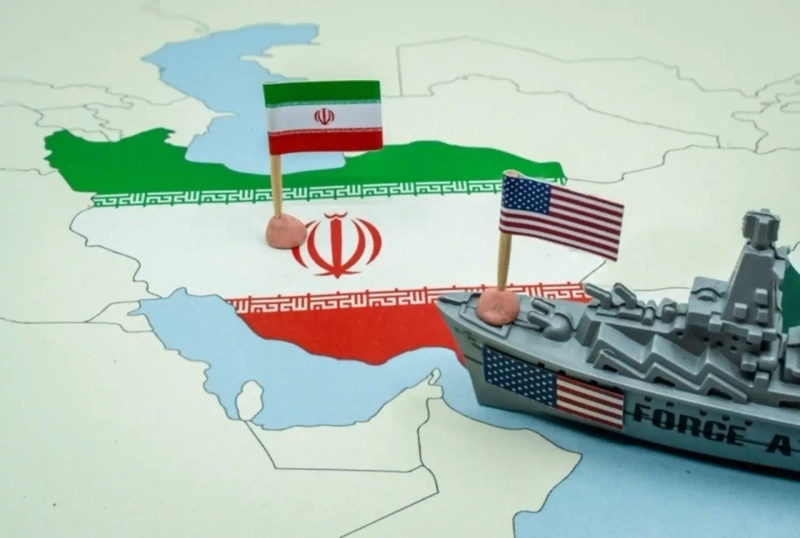
As fallout from the blockade of the Strait of Hormuz triggered by the U.S.-Iran war, Middle Eastern countries are moving one after another to curb oil production. With supply reductions gaining traction, international crude prices have swiftly surged past $90 a barrel. Concerns are rising that soaring oil prices will simultaneously fuel inflation and suppress consumption, ushering in stagflation (an economic slump amid high inflation).
According to Bloomberg on March 7 (local time), Abu Dhabi National Oil Company (ADNOC) said in a statement, "We are reducing crude oil production to address storage constraints." The UAE is the world’s third-largest crude producer, having produced more than 3.5 million barrels a day. Kuwait, the world’s fifth-largest oil producer, also said it is "cutting output at both oil fields and refineries." It reduced production by 100,000 barrels that day and increased the cut to 300,000 barrels starting March 8.
Earlier, Iraq—hit by Iranian missile and drone attacks—also reduced crude output. Saudi Arabia shut its largest refinery, and Qatar closed the world’s largest liquefied natural gas (LNG) export terminal.
The drop in energy supply is expected to further stoke crude’s rally, which posted the biggest weekly gain on record. West Texas Intermediate (WTI) on the New York Mercantile Exchange jumped as high as $93 a barrel on March 6, the highest level in two years. The weekly gain reached 35.63%, the largest since data began in 1983. On the same day, Brent futures (for May delivery) on London’s ICE Futures Exchange settled at $92.69 a barrel, up 8.52%. It was the biggest rise since March 2022.
Meanwhile, with the U.S. labor market cooling faster than expected, voices warning of an economy sliding into stagflation are growing louder. U.S. nonfarm payrolls for February, released on March 6, fell by 92,000 from the previous month, far below market estimates that had projected an increase of 50,000. Stephanie Roth, a strategist at Wolfe Research, said, "For every $20 rise in oil prices, U.S. GDP growth will fall by 0.1% and prices will rise by 0.4%."
Critics say South Korea is also entering stagflation territory. According to Opinet, the Korea National Oil Corporation’s oil price information system, the nationwide average gasoline price at service stations rose 11.9% from Feb. 28 to 1,895.34 won per liter.
Some experts also forecast that if the situation drags on, domestic gasoline prices could top 3,000 won per liter.
By Ahn Sang-mi saramin@hankyung.com

Korea Economic Daily
hankyung@bloomingbit.ioThe Korea Economic Daily Global is a digital media where latest news on Korean companies, industries, and financial markets.