Summary
- It said global oil prices rose above $100 a barrel after Israel struck Iranian oil storage sites.
- It noted that talks on a G7 strategic reserve release trimmed gains in Brent and WTI, while Asia’s benchmark Dubai crude was at $99.14.
- It said that if prices stay above $100, concerns about stagflation are rising and financial markets are being shaken, with a global stock selloff and a firmer dollar index.
Forecast Trend Report by Period


G7 talks on releasing emergency reserves curb gains
Prolonged surge raises risk of stagflation
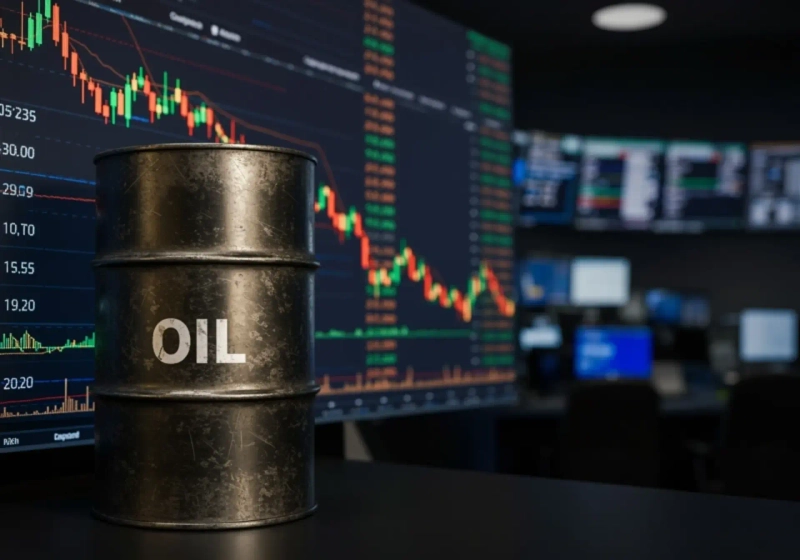
After Israel launched indiscriminate air strikes on 30 Iranian oil storage sites on the 8th local time, global oil prices rose above $100 a barrel on the 9th (local time).
In the ICE market on the 9th, Brent futures were up 10.4% at $102 a barrel as of 12:18 p.m. GMT (10:18 p.m. Korea time). U.S. West Texas Intermediate (WTI) futures traded on NYMEX also briefly topped $100, but as of 10 a.m. U.S. Eastern time they were up 9% at $99. Earlier in the European morning, Brent and WTI briefly surged past $119 a barrel, but pared gains after reports that the G7 was discussing a release of strategic reserves.
According to S&P Global Platts, Dubai crude—Asia’s benchmark for physical crude sold to countries including South Korea—stood at $99.14 a barrel in the Singapore market that day. Unlike Brent and WTI, Dubai crude has a higher share of real-time spot trading, meaning Brent and WTI futures prices could influence its trading on the 10th.
According to Reuters and other foreign media, if oil prices above $100 persist, the U.S. and global economies could face serious headwinds, and central banks could be pushed toward their worst nightmare: stagflation.
With global stock markets sliding, South Korea’s KOSPI—one of this year’s top performers—fell 5.96%, while Japan’s Nikkei, which had declined less than others last week, dropped 5.2%.
As investors sought safe havens and piled into dollar liquidity, the ICE U.S. Dollar Index—measured against six major currencies—rose 0.2% to 99.277. Gold, long regarded as the most reliable safe-haven asset, failed to extend its gains amid a stronger dollar and rising government bond yields.
G7 finance ministers are expected to discuss a coordinated release of emergency stockpiles that day. Chuck Schumer, the U.S. Senate Democratic leader, urged President Trump to release oil from the U.S. Strategic Petroleum Reserve, but President Trump has not agreed.
Retail fuel prices are also rising sharply in the United States. Gasoline has climbed above $3 a gallon, adding pressure on the Trump administration ahead of the November midterm elections.
After the U.S. and Israel began a war with Iran, the spike in fuel prices could become a political headache for Republicans ahead of the November midterms. On the 8th local time, President Trump wrote on his social media that the rise in oil prices was a “very small price” to pay for victory in the war. However, U.S. voters are unlikely to agree.
As the crisis deepens, Gulf oil producers are continuing to cut output amid persistent threats to maritime shipments passing through the Strait of Hormuz.
Kim Jung-a, contributing reporter kja@hankyung.com

Korea Economic Daily
hankyung@bloomingbit.ioThe Korea Economic Daily Global is a digital media where latest news on Korean companies, industries, and financial markets.