Why has Bitcoin risen more than gold since the Iran war began?
Summary
- It said that in March Bitcoin rose about 7%, while gold fell more than 3%.
- Experts said a surge in oil prices, inflation, and high interest rates overwhelmed safe-haven demand for gold, driving its weakness.
- Bitcoin was analyzed as showing relative strength on factors including the digital gold narrative, a short squeeze and deleveraging, dip-buying via spot ETFs, and its highlighted strategic value.
Forecast Trend Report by Period


Bitcoin up 7% since March, gold down 2%
Gold: inflation and high-rate fears overwhelm safe-haven demand
Bitcoin: short squeeze and deleveraging set the stage for a rebound
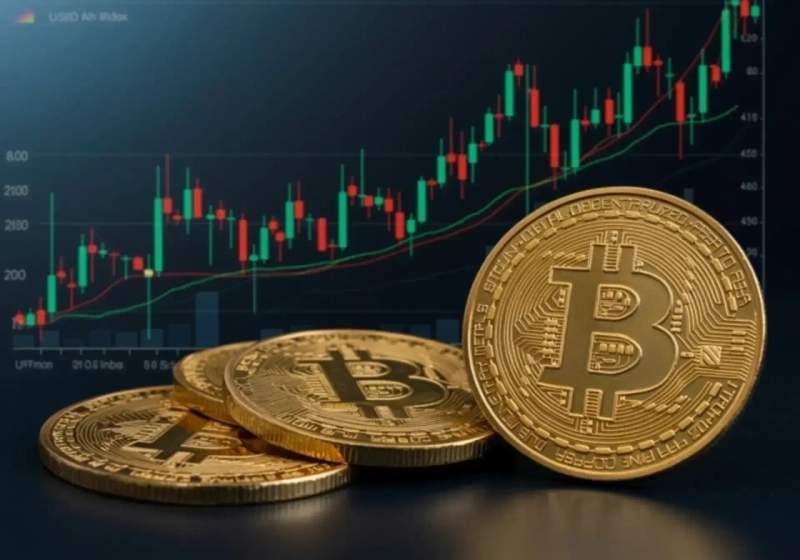
Bitcoin climbed above $71,000 on the 10th (local time), rising more than gold—traditionally a safe haven—since the Iran war began.
On the morning of the 10th U.S. time, expectations grew that the war with Iran could end sooner than anticipated, pushing Bitcoin up as much as 3.1% at one point in U.S. markets to $71,088. It later pared gains and was trading around $70,542 as of about 9 a.m. Eastern Time. The move tracked the prior day’s risk-on rally in U.S. stocks and other risky assets after President Trump said that “the conflict will end soon.”
Other cryptocurrencies also advanced. Ether, the second-largest digital asset, rose as much as 2.2%, while XRP and Solana gained as much as 2.8% and 1.9%, respectively. Those coins also trimmed gains over time alongside Bitcoin.
Gold was trading at $5,230 an ounce, up 2.4% from the previous session.
Right after the U.S. and Israel launched airstrikes against Iran on Feb. 28, gold topped $5,400 an ounce, but fell more than 3% in March. Bitcoin, by contrast, rose about 7% this month after an initial drop.
JPMorgan and Goldman Sachs cited a surge in oil prices as stoking inflation concerns and pushing back expectations for rate cuts, which in turn reduced the relative appeal of non-yielding gold—pointing to this as a key driver of gold’s weakness. JPMorgan said it was a case where a “macro transmission mechanism”—war → higher oil prices → persistent high inflation/high rates → a stronger dollar → lower gold prices—overwhelmed safe-haven demand.
Some also noted that “paradoxical selling,” as investors liquidated gold to meet margin calls following a sharp equity selloff, may have played a role.
By contrast, factors behind Bitcoin’s more resilient performance versus gold include its “digital gold” narrative as well as a short squeeze and deleveraging.
10X Research and RootData said excessive derivatives leverage was flushed out when Bitcoin initially fell into the $63,000 range, and that conditions for a rebound took shape as short sellers covered positions (a short squeeze).
They also pointed to the fact that, unlike gold or stock markets that cannot be traded over the weekend, the 24/7 crypto market saw U.S. institutional investors step in to buy the dip via spot ETFs and other vehicles.
Deutsche Bank said Bitcoin’s “strategic value” was partly highlighted as it can be transferred freely, unlike gold, which is difficult to move physically, amid financial instability in the Middle East and concerns over internet shutdowns.
Separately, Bloomberg cited Pratik Kala, head of research at Apollo Crypto, as saying, “Bitcoin has shown very strong momentum since the downturn began, and the area around $68,000 is acting as a strong support level.” He added that he expects “Bitcoin to break firmly above $73,000 and then make an attempt toward the next major resistance at $87,000.”
Even so, Bitcoin’s volatility has jumped sharply this week. The 30-day implied volatility index for Bitcoin hit its highest level in two weeks.
A lack of conviction about the rebound in Bitcoin’s price has also kept recurring for months. After the sharp selloff following its record high of $126,000 last October, even short-term rebounds have not produced large gains. Bitcoin remains down more than about 40% from last October’s peak.
Traders lacking confidence in the rebound have also continued to trade hedges against downside risk in the options market. Bitcoin put options traded on Deribit were concentrated around the $60,000 level.
Kim Jeong-a, contributing reporter

Korea Economic Daily
hankyung@bloomingbit.ioThe Korea Economic Daily Global is a digital media where latest news on Korean companies, industries, and financial markets.